
%20(50).png)
You've spent weeks perfecting your LTI plan. Multiple vesting schedules are mapped out. Performance metrics are carefully defined.
Then Monday morning arrives – your spreadsheet freezes with 500+ employees, each with different grant dates and vesting timelines. Your inbox fills with confused messages about RSUs. And the manager can't figure out when their team's equity vests.
No wonder your carefully crafted retention strategy is quietly falling apart in the chaos.
Here's what I've noticed working with compensation teams: The problem isn't designing LTIs or following the LTI trends—it's making them work day-to-day.
When employees don't understand what they're getting, and tracking becomes a nightmare, trust erodes. And without trust, forget retention.
If you want LTI to retain talent, your plan needs to work like a system—not survive on a spreadsheet.
What does an LTI Plan Need to Drive Retention?
Forget arguing about RSUs versus options for a moment. The successful LTI programs share four fundamentals that have nothing to do with which instrument gets chosen.
Coverage + eligibility (who gets it and why)
The days of reserving LTIs for the C-suite are over. Mid-level employees now expect equity participation – in some industries, LTIs make up 20-40% of total comp for these roles. But throwing equity at everyone isn't the answer either.
Smart eligibility comes down to four factors:
- Role criticality: Will losing this person hurt operations?
- Skills scarcity: how hard are they to replace?
- Performance/potential matrix positioning
- Market flight risk
This logic needs clear documentation – managers need to explain why someone got equity while their peer didn't.
Value clarity (if employees can't explain it, they won't retain it)
Too many employees nod politely during LTI announcements, then privately admit they have no idea what they're worth. Vesting schedules should fit on a sticky note. Expected values should be visible, not buried in legal documents.
Show scenarios – what happens if the stock goes up 20%? Down 10%? If employees can't explain their LTI to their partner over dinner, the retention value is already lost.
Line-of-sight (connecting individual grants to company outcomes)
Total shareholder return used to be enough. Now it's TSR plus profit metrics, revenue targets, cash flow goals, capital efficiency ratios, and increasingly, ESG metrics. Pick what drives the business. Then explain it simply.
Administrative reliability (where retention goes to die)
One calculation error, one mismatched grant letter, one "wait, that's not what HR said last month" – and trust crumbles. When employees doubt the numbers, they discount the value. And discounted LTIs don't retain anyone.
Choose the Right LTI Instrument Mix for Retention (Quick Decision Guide)
The instrument debate gets too much attention, but here's what really matters for retention: matching your company context to the right tool. Here are the most common LTI tool examples:
ESOP/Options work when employees genuinely believe in the upside story. But explaining strike prices, exercise windows, and tax implications? That's where retention value gets lost. Stock price drops below grant price? Watch motivation evaporate.
RSUs are gaining ground for good reason – employees understand "you'll own X shares after Y years." No exercise decisions, no upfront cost. Perfect for broader retention programs where simplicity beats everything else.
SARs are losing popularity globally, though they still make sense for specific tax structures or when you want option-like benefits without actual equity dilution.
Phantom stock/retention bonuses solve the private company puzzle. No messy valuations, no cap table complications. Just cash tied to performance milestones or tenure.
How to create and run your LTI plan without breaking retention
Here's the operational playbook that works, with the right LTI software as your execution layer.
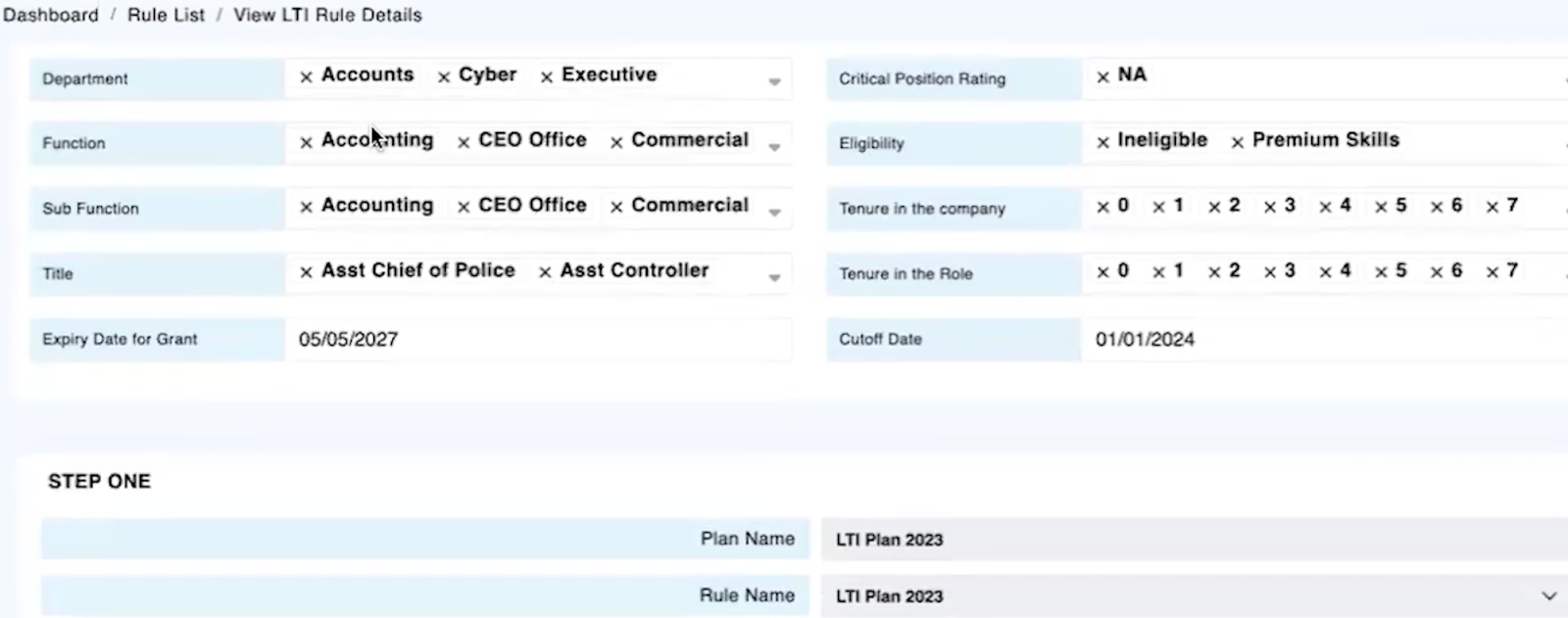
Step 1: Define LTI-eligible groups
Start by mapping eligibility criteria for each instrument. Role criticality, performance ratings, tenure requirements, flight risk scores – document these explicitly.
Different groups get different instruments based on retention objectives. Senior engineers might have upside potential options, while customer success leads get RSUs for stability.
Build this logic into your system, not spreadsheets that break when someone sorts incorrectly.
Step 2: Configure plan rules
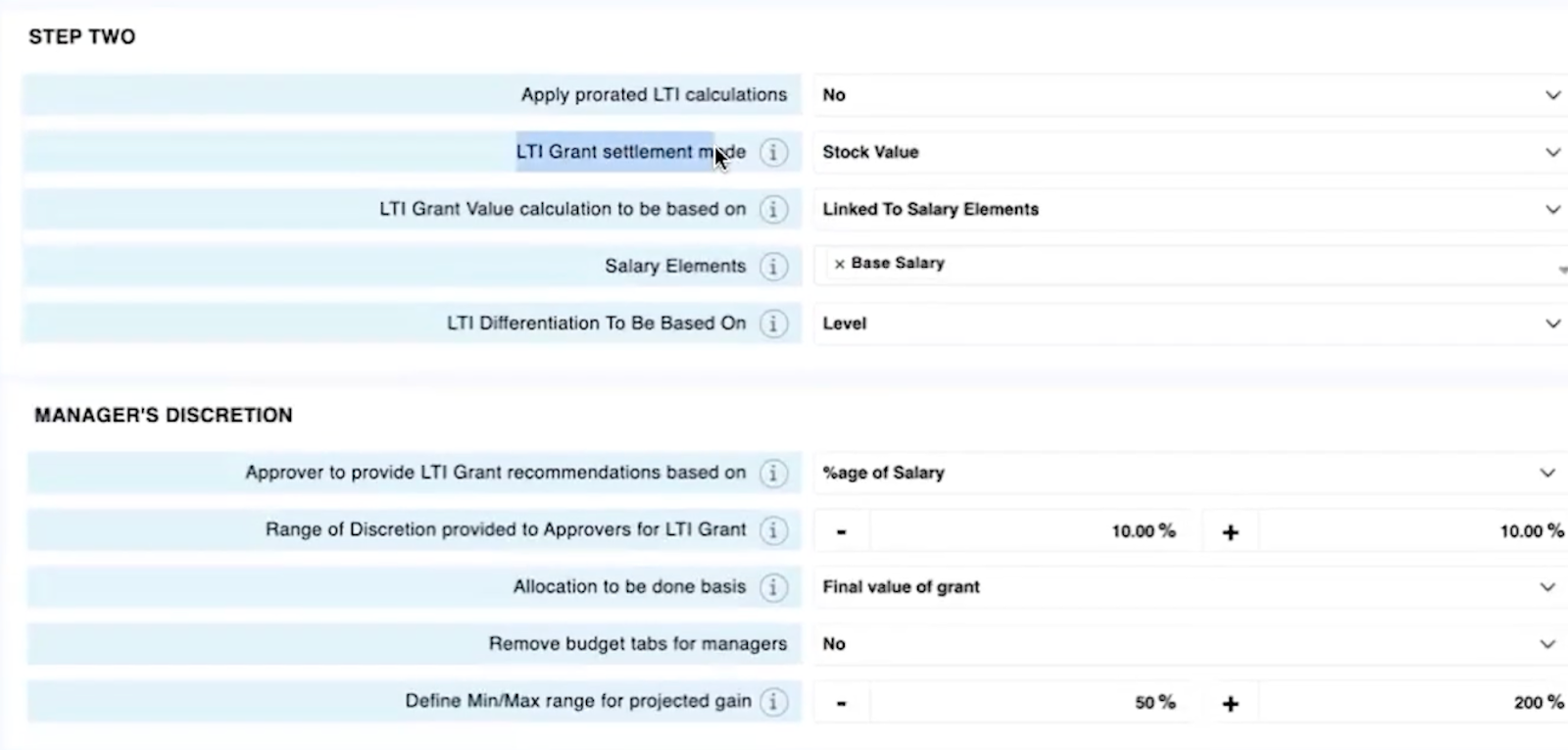
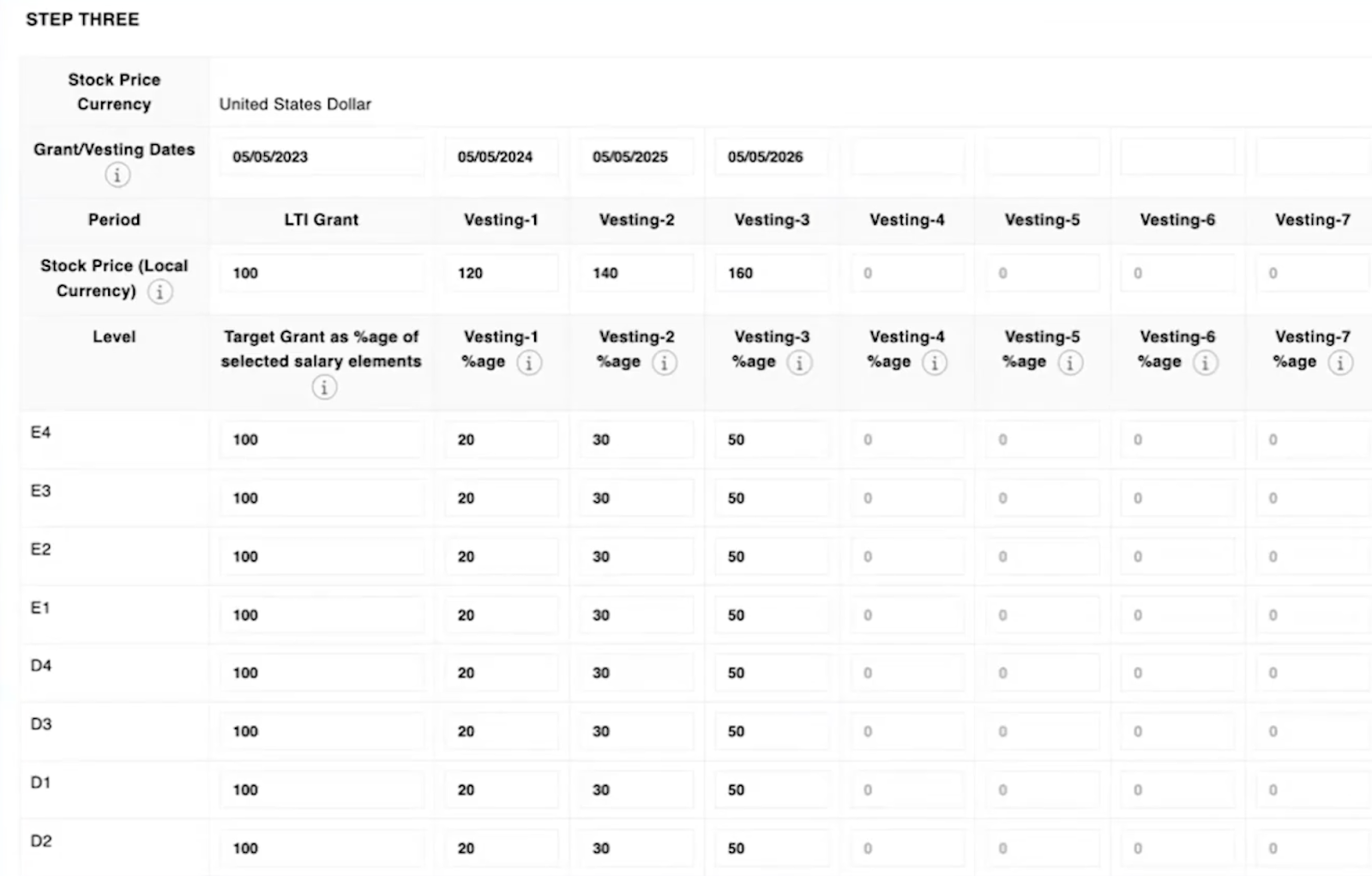
Lock down the fundamentals: grant mode (stock-based vs. cash-based), vesting schedule (3-year cliff vs. 4-year graded), and target grant percentages by level.
Create vesting tables that show year-by-year progression. These become system rules that calculate automatically, replacing manual formulas that no one trusts after the third revision.
Step 3: Model outcomes with scenarios
Employees need to visualize their potential wealth.
Build simulators that show: current grant value, vesting timeline, projected gains at different stock prices. When someone can see "if stock hits $50, my year 3 value is $75,000," retention becomes tangible.
Step 4: Budget impact + guardrails
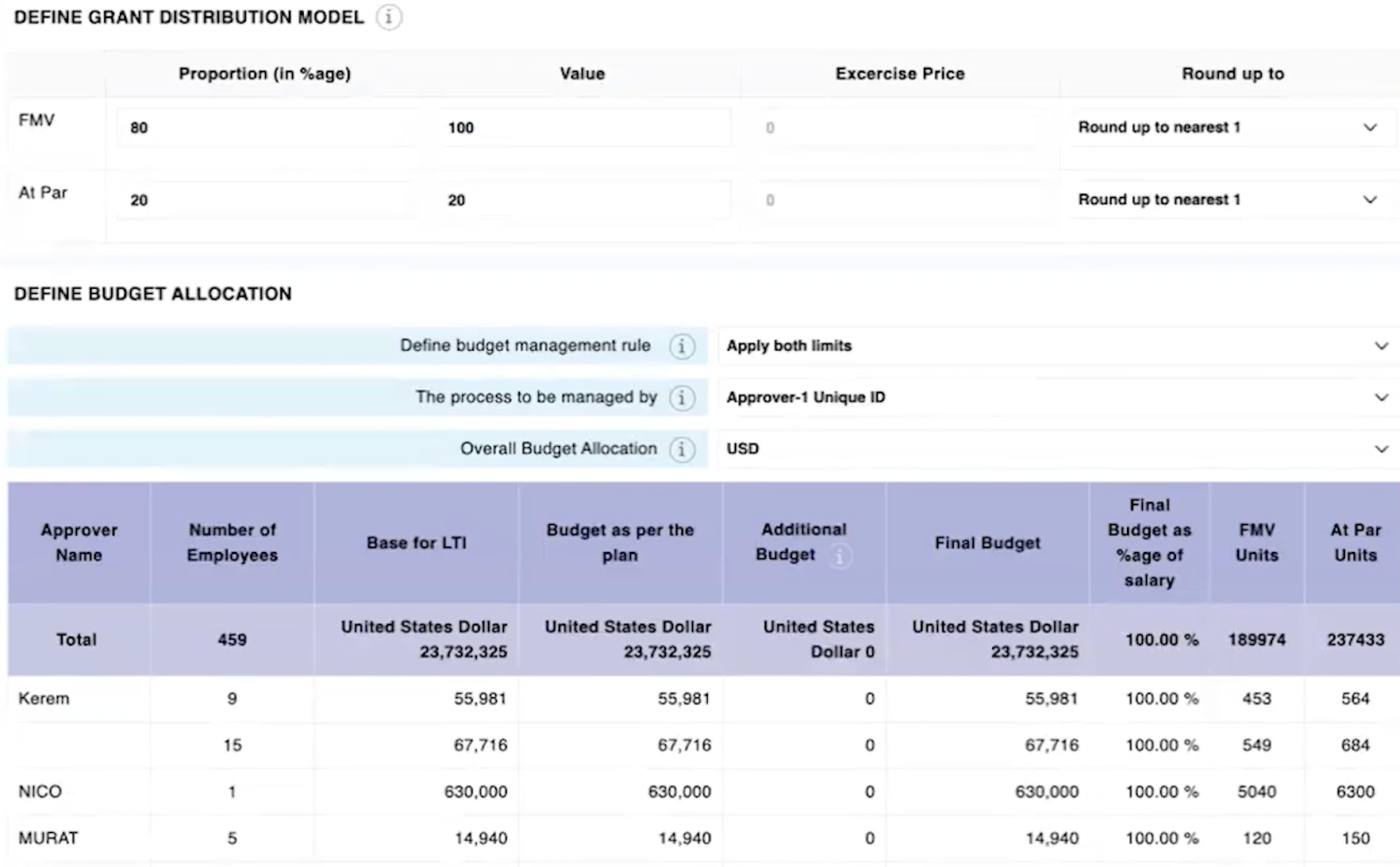
Every manager needs three numbers: total LTI budget, current allocation, and remaining capacity. Set hard limits at the department level. Track real-time as managers make decisions. This prevents the classic "we're 40% over budget" surprise in month 11.
Making LTI retention work with Compport
The gap between LTI strategy and execution doesn't have to exist. With LTI platforms like Compport, you can transform those spreadsheet nightmares into systematic processes that drive retention.
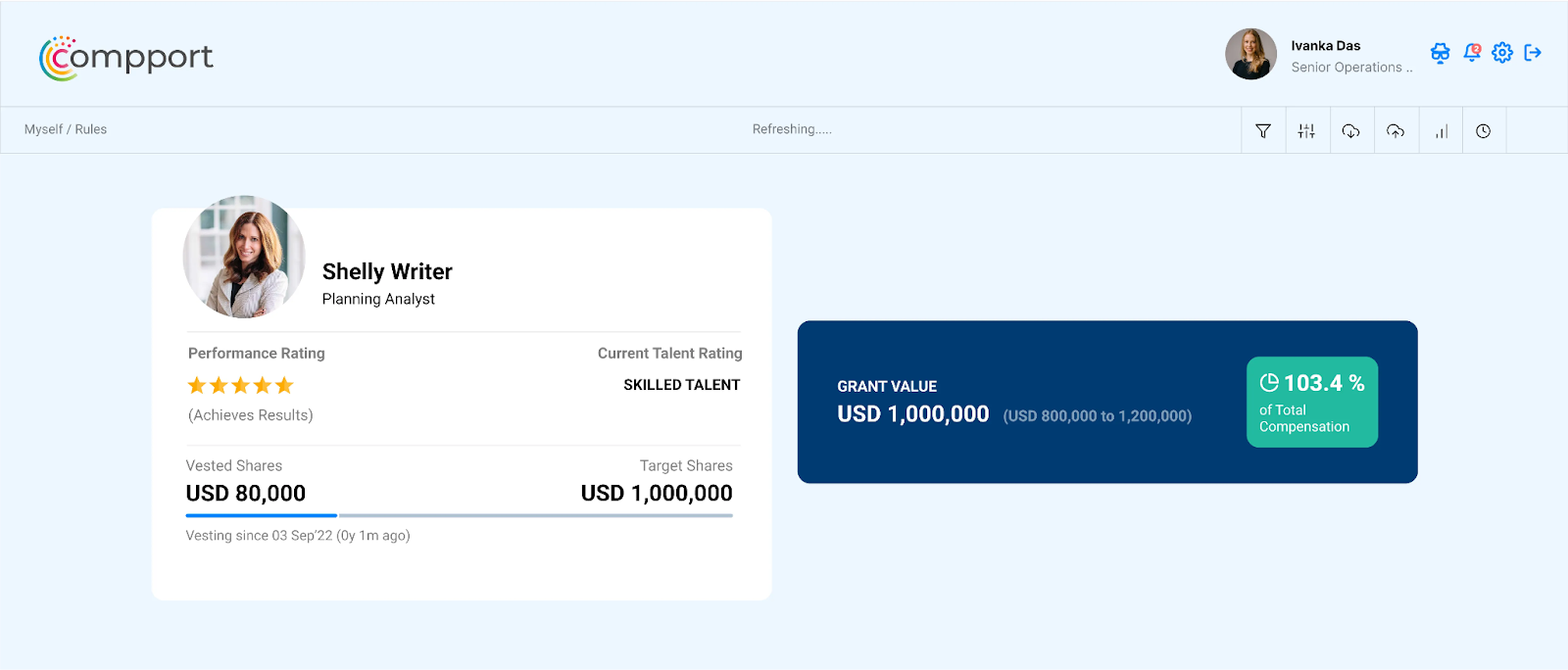
With Compport, you can solve the following:
Ready to fix your LTI operations?

FAQs
When does an LTI plan start driving retention?
When employees can clearly see vesting timelines, future value, and how their rewards connect to company outcomes—not just when the plan is announced.
At what scale do spreadsheets stop working for LTI management?
Once you have multiple instruments, vesting schedules, or 200+ employees in scope, spreadsheets become error-prone and difficult to govern.
How do managers make better LTI decisions without overspending?
By giving them real-time budget visibility, system recommendations, and clear guardrails during allocation—rather than static numbers in spreadsheets.
How can employees better understand the value of their LTIs?
By providing a self-serve view of vesting schedules, year-by-year value, and scenario simulations instead of relying only on grant letters.
How long does it take to implement a structured LTI system?
For organizations with around 1,000 employees, implementation typically takes about two to three months, including setup, testing, and training.
%20(47).avif)
%20(46).avif)
%20(45).avif)