US Pay Transparency Laws by State [2026 Compliance Guide]

%20(34).avif)
Pay transparency in the US is no longer a fancy " good-to-have " trend. It’s a law, and it's spreading faster than you thought.
In 2025, Illinois became the latest to join the list of states mandating salary range disclosures. Others like Texas, Florida, and Georgia have draft bills under review. And in most cases, compliance isn’t optional once the law kicks in — it’s required on day one.
So, if you're hiring in the U.S. — or for remote roles that could be based in these states — here’s what you need to know.
Most of these laws take effect immediately on their enforcement date—there is no buffer or grace period.
If you're still figuring out where to start, this guide will cover 2025 US Pay Transparency law updates with effective dates, current state requirements, pending legislation to watch, and why most recruiter scripts and job postings need a rewrite.
TL;DR — What Changed in 2026
- California tightened the definition of “pay range”
Employers must now publish the actual expected compensation range on hire — not broad or placeholder ranges. - Massachusetts & New Jersey moved from policy to enforcement
Active audits, penalties, and warnings are now being issued for non-compliant job postings in 2026. - Washington added a temporary cure period
Employers get a short window to fix non-compliant postings after notice — before penalties apply. - Remote jobs are explicitly in scope
If a role can be performed from a pay-transparency state, disclosure requirements apply — regardless of HQ location. - Penalties are escalating
What started as warnings is now turning into fines, employee complaints, and litigation risk for repeat violations.
At-a-Glance: State-by-State Pay Transparency Requirements 2026
| State | 2026 Status | What Changed | Who It Applies To | Remote Jobs Covered? |
|---|---|---|---|---|
| California | Enforcement refined | Pay range must reflect the actual expected compensation on hire; overly broad placeholder ranges risk non-compliance | Employers with 15+ employees | ✅ Yes — if the role can be performed in CA |
| Massachusetts | Fully enforced | Salary range disclosure now enforced for postings, promotions, and transfers | Employers with 25+ employees | ✅ Yes — if role is tied to MA |
| New Jersey | Active enforcement | Mandatory pay range and benefits disclosure in job ads; internal posting requirements enforced | Employers with 10+ employees | ✅ Yes — if role reports to or is based in NJ |
| Minnesota | New law in effect | Good-faith minimum and maximum pay required; open-ended ranges prohibited | Employers with 30+ employees | ✅ Yes — if remote role can be based in MN |
| Vermont | Newly effective | Written job ads must include compensation or range; commission-only roles must be labeled | Employers with 5+ employees (with at least one in VT) | ✅ Yes — if work is primarily done in VT |
| Washington | Law amended | Temporary cure period introduced before penalties apply; fine structure adjusted | Employers with 15+ employees | ✅ Yes — explicitly includes remote roles |
| Delaware | Passed, future-dated | Pay range and benefits disclosure mandated; record-keeping required | Employers with 26+ employees (effective 2027) | ⚠️ Yes — except international remote roles |
US Pay Transparency Laws by State
Alabama
While Alabama has taken steps to address pay equity, it does not currently have a comprehensive pay transparency law as seen in some other states. The existing law focuses more on preventing pay discrimination and protecting employees' rights to discuss wages.
| Active | No active Pay Transparency Law |
| Similar Law | Alabama Equal Pay Act (Act 519, HB 225) |
| Active Since | 1st September 2019 |
| Related Mandates |
|
| Penalties | Employers may be liable for wage differences plus interest |
| Future Developments | None announced |
Alaska
| Active | No active Pay Transparency Law |
| Future Developments | Considering a law in the future. A bill was proposed in the Alaska legislature in 2021, but it has not yet passed. |
| Mandates of Proposed Bill |
|
| Penalties (If Any) | Proposed fines ranging between $100 and $2,000 per violation |
| Similar Laws | Existing protections against pay discrimination based on protected characteristics |
Arizona
| Active | No active Pay Transparency Law |
| Future Developments | No law being considered |
| Similar Laws |
|
| Notes | Multi-state employers may need to comply with pay transparency laws in other jurisdictions where they operate or hire remote workers. |
Arkansas
| Active | No active Pay Transparency Law |
| Future Developments | No law being considered at this time |
| Similar Laws |
|
| Notes | Employers should also monitor potential federal legislation such as the proposed “Salary Transparency Act,” which could mandate wage range disclosure for all open roles. |
California
If you want to understand the mandates of California's Pay Transparency Laws in greater depth, here's a detailed guide for you.
📌 2026 Update Pay ranges must now reflect the actual expected compensation on hire. Overly broad or placeholder ranges may be treated as non-compliant during enforcement reviews.
| Effective Date | January 1, 2023 (enforcement clarified in 2026) |
| Name of Law | California Pay Transparency Act (SB 1162), amending the California Equal Pay Act |
| Who It Applies To | Employers with 15 or more employees |
| Salary Range Disclosure | Required in all job postings, including third-party and internal postings |
| 2026 Clarification | Pay ranges must reflect the actual expected compensation on hire. Broad, placeholder, or unrealistic ranges may be treated as non-compliant. |
| Remote Jobs Covered? | Yes — if the role can be performed in California |
| Employee Rights | Employees may request the pay scale for their current role at any time |
| Salary History Ban | Employers may not ask about or rely on an applicant’s salary history |
| Pay Data Reporting | Employers with 100+ employees must submit annual pay data reports to the California Civil Rights Department |
| Record Retention | Job titles, wage rates, and pay scale history must be retained for 3 years |
| Penalties for Non-Compliance | Civil penalties ranging from $100 to $10,000 per violation; no automatic cure period for repeat violations |
| Enforcement Authority | California Civil Rights Department (CRD) |
Colorado
To know more about Colorado's Equal Pay for Equal Work Act, check out this article.
| Effective Date | 1st January 2021 (with amendments effective 1st January 2024) | ||
| Name of Law | Colorado Equal Pay for Equal Work Act | ||
| Important Mandates |
|
||
| Penalties for Non-Compliance |
Employers may be fined between $500 and $10,000 per violation |
Connecticut
If you want to know more about Connecticut's Pay Transparency Laws, we've got an article just for you.
| Effective Date | 1st October 2021 | ||
| Name of Law |
Connecticut Pay Transparency Act (HB 6380) or Public Act 21-30: An Act Concerning the Disclosure of Salary Range for a Vacant Position |
||
| Important Mandates |
|
||
| Penalties for Non-Compliance |
|
||
| Future Developments | Considering expanding the law (Proposed H.B. No. 5243) to require salary range disclosure in all job postings |
Delaware
| Active Law | No active Pay Transparency Law |
| Future Developments | No planned mandates |
| Similar Laws | Delaware Equal Pay Law |
| Mandates |
|
Florida
| Active Law | No active Pay Transparency Law |
| Future Developments | No planned mandates |
| Similar Laws |
|
| Important Notes | Florida businesses hiring employees from states with pay transparency laws may need to comply with those states' regulations |
Georgia
| Active Law | No active Pay Transparency Law |
| Future Developments | No planned mandates |
| Similar Laws |
|
| Important Notes |
Georgia businesses hiring employees from states with pay transparency laws may need to comply with those states' regulations. |
Hawaii
| Effective Date | 1st January 2024 |
| Name of Law | Act 203 (Senate Bill 1057) |
| Important Mandates |
|
| Penalties for Non-Compliance |
|
| Important Note |
Some aspects of the law may need clarification, such as whether the 50-employee threshold refers to employees in Hawaii or a company's total employee count. |
Idaho
| Active Law | No active Pay Transparency Law |
| Future Developments | No planned mandates |
| Similar Laws |
|
| Important Notes | Idaho businesses hiring employees from states with pay transparency laws may need to comply with those states' regulations for remote positions. |
Illinois
We've also got a detailed article about Illinois Pay Transparency Laws, if you're looking for more information.
| Effective Date | 1st January 2025 | ||
| Name of Law | Amendment to the Illinois Equal Pay Act (HB 3129) | ||
| Important Mandates |
|
||
| Penalties for Non-Compliance |
|
Indiana
| Active Law | No active Pay Transparency Law | ||
| Future Developments |
|
||
| Similar Laws | While Indiana doesn't have a specific pay transparency law, it follows federal labor laws that prohibit pay discrimination based on protected characteristics. | ||
| Important Notes |
Neighboring states and cities, such as Ohio (Toledo and Cincinnati), have passed pay transparency laws, which could influence Indiana's future decisions. |
Iowa
| Active Law | No active Pay Transparency Law | ||
| Future Developments | No mandates at the moment | ||
| Similar Laws | While Iowa doesn't have a specific pay transparency law, it follows federal labor laws, including the Fair Labor Standards Act (FLSA), which sets standards for minimum wage and overtime pay. | ||
| Important Notes |
|
Kansas
| Active Law | No active Pay Transparency Law | ||
| Future Developments | No mandates at the moment | ||
| Similar Laws | Kansas City has a local law that prohibits employers with at least six employees from asking about or relying on job applicants' salary histories. This law went into effect on October 31, 2019. | ||
| Important Notes |
While Kansas has a pay equity law, it doesn't appear to have a comprehensive pay transparency law requiring salary range disclosures in job postings, as seen in some other states. |
Kentucky
| Active Law | No active Pay Transparency Law | ||
| Future Developments | Kentucky is considering a salary transparency law that was introduced to the state legislature in 2023, but it has not yet been approved | ||
| Similar Laws |
|
Louisiana
| Active Law | No active Pay Transparency Law | ||
| Future Developments | No law being considered | ||
| Similar Laws |
Workers are legally allowed to share pay information with each other. Under the Equal Pay for Women Act, employees are allowed to ask about, disclose, compare, and discuss their wages with coworkers. New Orleans specifically has some restrictions
|
Maine
| Active Law | 17th September 2019 (Not a formal transparency law but close) |
| Future Developments |
Maine has introduced a holistic pay transparency legislation, but it has not yet been passed.
|
| Similar Laws | Amendment to the Maine Human Rights Act and Equal Pay Law (LD 278) |
| Mandates of Law |
|
Maryland
Want to stay informed about Maryland's Pay Transparency Laws? Don't miss our comprehensive article!
| Effective Date | 1st October 2024 |
| Name of Law | Maryland Wage Transparency Law (House Bill 649) |
| Important Mandates |
|
| Penalties for Non-Compliance |
|
| Important Note | The Maryland Department of Labor has provided guidance, including FAQs and template forms, to help employers comply with the new requirements. |
Massachusetts
Looking to dive into Massachusetts Pay Transparency Laws? Our article has all the insights you need.
| Effective Date | 31st July 2025 |
| Name of Law | Frances Perkins Workplace Equity Act |
| Important Mandates |
|
| Penalties for Non-Compliance |
|
| Important Note | The first EEO and pay data reports are due by February 1, 2025, for employers with 100 or more employees. |
Michigan
| Active Law | Michigan has introduced Pay Transparency Legislation, but it has not yet become law. A bill is currently pending in the Michigan Senate. | ||
| Laws being considered |
|
||
| Similar Laws |
|
||
| Additional Notes |
Michigan employees can discuss their compensation and cannot face disciplinary action for doing so. |
Minnesota
| Effective Date | 1st January 2025 |
| Name of Law | Omnibus Labor and Industry Policy Bill (specifically the pay transparency provision) |
| Important Mandates |
|
| Penalties for Non-Compliance | Penalties not specified. The Minnesota Department of Labor and Industry and Minnesota Attorney General have authority to investigate and enforce this law. |
| Important Notes | Minnesota already has a wage disclosure law that prohibits employers from inquiring into an applicant's pay history, effective January 1, 2024. |
Mississippi
| Active Laws | No active Pay Transparency Law | ||
| Future Developments | No law being considered. | ||
| Similar Laws | No statewide law, but Jackson, Mississippi, has city agencies that prohibit asking job applicants about their salary history. | ||
| Important Note | Mississippi has an Equal Pay for Equal Work Act, however the law provides fewer protections than the federal Equal Pay Act of 1963. The law also does not require employers to disclose wage ranges for job positions. |
Missouri
| Active Laws | No active Pay Transparency Law |
| Future Developments | A bill was proposed during Missouri's 2023 legislative session but stalled in commit. |
| Similar Laws |
No statewide law, but certain cities have local laws.
|
| Important Note | Employers may still need to consider pay transparency when posting remote work positions. |
Montana
| Active Laws | No active Pay Transparency Law |
| Provisions of unpassed bill |
Montana considered a pay transparency bill during its 2023 legislative session, but it didn't pass.
|
Nebraska
| Active Laws | No active Pay Transparency Law | ||
| Future Developments | No Bills being considered |
Nevada
Do you require more details on Nevada's Pay Transparency Laws? We've written the perfect guide for you.
| Effective Date | 1st October 2021 |
| Name of Law | Senate Bill 293 (SB293) |
| Important Mandates |
|
| Penalties for Non-Compliance | Employers can be fined up to $5000 per violation |
| Important Note | Employers are still permitted to ask applicants about their wage or salary expectations for the position |
New Hampshire
| Active Laws | No active Pay Transparency Law |
| Future Developments | No Bills being considered |
| Similar Laws |
|
New Jersey
| Effective Date | The law is expected to take effect seven months after being signed by Governor Phil Murphy. The exact date is not yet known, but it's anticipated to be in 2025. | ||
| Name of Law | Senate Bill 2310 (S2310) | ||
| Important Mandates |
|
||
| Penalties for Non-Compliance |
|
||
| Important Notes |
Jersey City already has a more stringent local pay transparency ordinance in place for employers with five or more employees.
|
Learn more about New Jersey Pay Transparency Laws here.
New Mexico
| Active Law | No active Pay Transparency Law |
| Future Developments | No bills being considered |
| Similar Laws | Federal protections: Most workers in New Mexico are still protected by federal laws that allow them to discuss pay. |
New York
You can find out more my reading this post on New York's Pay Transparency Laws.
| Effective Date | 17th September 2023 |
| Name of Law | Amendment to the Illinois Equal Pay Act (S.9427-A/A.10477) |
| Important Mandates |
|
| Penalties for Non-Compliance |
|
| Important Note |
The law does not supersede local laws, such as those in New York City, Westchester County, and Ithaca. |
North Carolina
| Active Law | No active Pay Transparency Law |
| Future Developments | No bills being considered |
| Similar Laws |
While North Carolina doesn't have a comprehensive law, there are a few regulations:
|
North Dakota
| Active Law | No active Pay Transparency Law | ||
| Future Developments | No bills being considered | ||
| Similar Laws | North Dakota Equal Pay for Men and Women Act. This law aims to prevent wage discrimination based on sex. |
Ohio
| Active Law | No active Pay Transparency Law |
| Future Developments | No bills being considered, but some states have local legislations. |
| Similar Laws |
Local laws applicable in 3 states
|
| Important Notes |
Applicants have a two-year window from when the violation occurs to seek damages. |
Oklahoma
| Active Law | No active Pay Transparency Law |
| Future Developments | No law being considered |
| Similar Laws |
SB 1527: This law prohibits employers from discriminating against employees who discuss or disclose their own wages or the wages of other employees. This law helps to create a transparent workplace and identify and correct wage disparities. |
Oregon
| Active Law | No active Pay Transparency Law |
| Future Developments | Senate Bill 925 was considered in the Oregon Legislature in 2023 but did not pass. |
| Similar Laws |
|
| Important Information |
Oregon was one of 16 states to consider pay transparency bills in 2023 |
Pennsylvania
| Active Law | No active Pay Transparency Law |
| Future Developments |
Senate Bill 601 (S.B. 601) has been proposed
|
| Similar Laws |
|
Rhode Island
You can read more about Rhode Island's Pay Transparency laws here.
| Effective Date | 1st January 2023 |
| Name of Law | Rhode Island Pay Equity Act (amendment to the Rhode Island Equal Pay Law) |
| Important Mandates |
|
| Penalties for Non-Compliance |
|
South Carolina
| Active Law | No active Pay Transparency Law | ||
| Laws being considered | A bill titled “Act to Establish Pay Equity” (H. 4212) was introduced in the South Carolina General Assembly on March 29, 2023. The bill is currently in committee. | ||
| Similar Laws |
|
South Dakota
| Active Law | No active Pay Transparency Law | ||
| Laws being considered |
A pay transparency law was introduced during the 2023 legislative session, but it did not pass. Senate Bill 109: This bill would have required private employers with at least 100 employees to disclose compensation or a range of compensation to applicants and employees. The bill would have also required employers to:
|
||
| Important Information |
|
Tennessee
| Active Law | No active Pay Transparency Law | ||
| Laws being considered | The Tennessee General Assembly has introduced a bill called the “Tennessee Pay Equality Transparency Act” (Senate Bill 1105/House Bill 477). | ||
| Important Information | The proposed Tennessee Pay Equality Transparency Act:
|
Texas
| Active Law | No active Pay Transparency Law | ||
| Laws being considered | No law being considered | ||
| Similar Laws |
Texas Bill HB723, effective September 1, 2023, makes it illegal to discriminate against applicants based on their requests for salary information or against those who refuse to provide salary history. |
Utah
| Active Law | No active Pay Transparency Law | ||
| Laws being considered | No law being considered | ||
| Similar Laws |
Salt Lake City has implemented a limited pay transparency measure
|
||
| Important Information |
The state has whistleblower protection laws that prohibit employers from retaliating against employees who report violations of state or federal laws in good faith. |
Vermont
| Effective Date | 1st July 2025 | ||
| Name of Law | H.704, An Act Relating to Disclosure of Compensation in Job Advertisements | ||
| Important Mandates |
|
||
| Penalties for Non-Compliance | The Vermont Attorney General or State's Attorney can enforce violations of this law, including:
|
Virginia
| Effective Date | 2020 | ||
| Name of Law | Virginia Pay Transparency Law (VPTL), VA Code 40.1-28.7:9 | ||
| Important Mandates |
|
||
| Penalties for Non-Compliance |
|
||
| Future Developments |
Virginia’s current pay transparency law is said to be on the less-transparent end of the pay transparency scale. Senator Jennifer Boysko has introduced SB 370, which would require employers to disclose salary ranges in public job postings and prohibit inquiring about an applicant's wage history. However, this bill has been introduced seven times before without success. |
Washington
If you're looking to understand Washington's Pay Transparency Laws in greater depth, you can read this article.
| Effective Date | 1st January 2023 | ||
| Name of Law | Washington Equal Pay and Opportunities Act (EPOA) | ||
| Important Mandates |
|
||
| Penalties for Non-Compliance |
|
West Virginia
| Active Law | No active Pay Transparency Law | ||
| Laws being considered |
House Bill 4272, also known as the Katherine Johnson and Dorothy Vaughan Fair Pay Act It would require employers to provide a pay range and description of benefits and other compensation to an applicant upon request, and prohibit employers from inquiring into an applicant’s salary history. |
||
| Important Information |
|
Wisconsin
| Active Law | No active Pay Transparency Law | ||
| Laws being considered |
No name yet, but a legislation is being considered to require employers to include pay information in job listings. State Representative Jimmy Anderson has introduced Assembly Bill 905, which proposes pay transparency requirements. |
||
| Important Information |
In the proposed law
|
Wyoming
| Active Law | No active Pay Transparency Law | ||
| Laws being considered | No Law being considered | ||
| Similar Laws |
However, Wyoming does have some laws that protect employees' rights to disclose their wages:
|
||
| Important Information | Wyoming is an at-will employment state, which means that employers can generally terminate employees at any time, for any reason or no reason at all. |
Transparency Isn’t Optional Anymore
Standing in 2025, pay transparency has moved from a progressive ideal to a legal expectation across many U.S. states. It doesn’t matter if you're hiring in California, onboarding remotely from New York, or planning a future expansion into Illinois or Georgia, one thing is clear: compensation transparency is now a critical compliance and talent strategy issue.
For compensation and HR leaders, the stakes are higher than ever. And the last thing you want to do is navigate through all these with a disconnected spreadsheet. It could mean both legal and reputational risks.
What’s you rather need is a centralized, intelligent approach that ensures consistency, compliance, and clarity at every step.
🔖 Download Compport's Pay Equity Audit e-book!
Introducing Compport - a Pay Equity Software
Compport helps enterprises to manage pay ranges, job architecture, approvals, and location-specific transparency requirements in one unified platform. Whether planning a new role, publishing a job post, or running a pay equity audit, Compport helps you stay compliant while building the kind of trust that attracts and retains top talent.
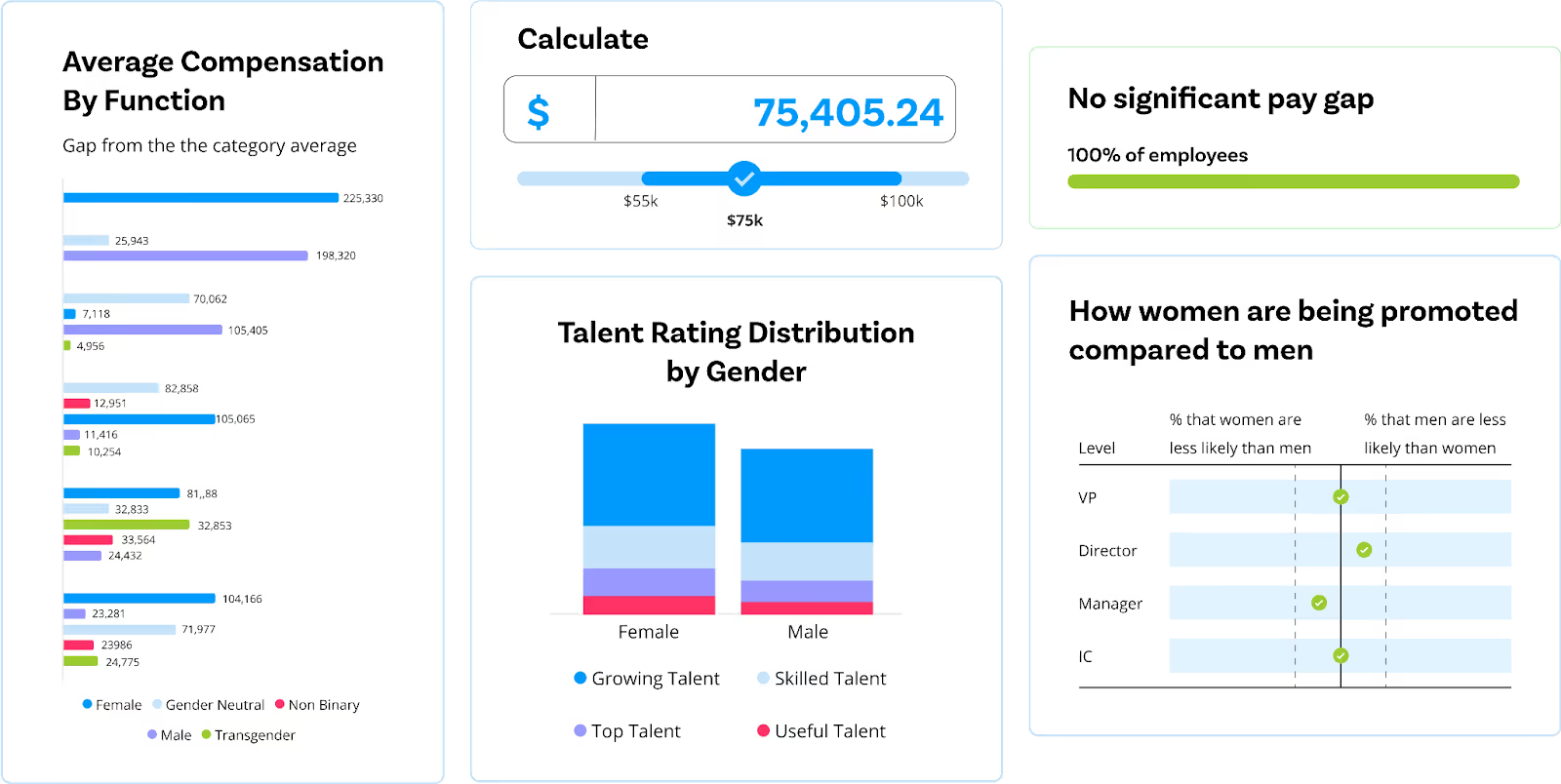
With Compport, you can experience:
- Geo-specific range configuration
- Centralized audit trails for internal reviews
- Built-in workflows for recruiter and manager training
- Seamless pay transparency integration across job postings

FAQs
What is the US Pay Transparency Act?
There is no single federal Pay Transparency Act, but multiple state-level laws now require employers to disclose salary ranges in job ads, promotions, and hiring. A proposed federal law, the Paycheck Fairness Act, aims to standardize these rules but hasn’t passed yet.
What is the equal pay law in the USA?
The Equal Pay Act of 1963 prohibits wage discrimination based on sex for similar work within the same organization. Many states have since expanded on this with additional protections based on race, age, or job location, and now increasingly tie it to pay transparency requirements.
Do I need to disclose my salary if I post a remote job from Florida?
Yes—if the remote role could be filled by someone living in a state with pay transparency laws (like New York or California), you must comply with that state’s disclosure requirements, even if your company is based in Florida.
What if we hire via an agency?
Your company still has responsibility. Even if an agency posts the role or negotiates pay on your behalf, you're still liable for ensuring the job ad and process meet applicable state transparency laws.
How can I ensure compliance across multiple states?
Use a compensation platform that supports geo-specific salary range management, keeps audit logs, and enforces posting rules by location. Also, recruiter templates should be regularly updated, and hiring teams should be trained on evolving state laws to avoid compliance gaps.
Recommended articles


The Link Between Compensation and Diversity Strategies for Creating Inclusive Pay Practices