


%20(82).png)


.svg)



Payscale is a market-data company at its core, with configurable planning added through Paycycle and market pricing through Payfactors and MarketPay.
Strongest differentiators: crowdsourced and validated market data, deep rule-based configurability, and budget management for stable, complex comp structures.
Recurring pain points from verified reviews: support-ticket dependency for basic changes, lengthy data-dependent implementation, rigid multi-year contracts, and a dated admin interface.
Payscale is strong on data, but running the full cycle (LTI, STI, total rewards statements, native pay equity) sits outside its core.
Compensation software is a high-stakes buy. Get it wrong, and the cost shows up as cycle delays, reconciliation errors, and pay decisions nobody can defend. This Payscale review looks at whether the platform delivers the market data, planning, and execution that enterprise pay programs actually require.
Payscale is worth taking seriously for one specific reason: its market data is a genuine category strength, and Paycycle layers configurable, rule-based planning on top of it. This review draws on verified user reviews from G2, Capterra, and Gartner Peer Insights, Payscale's own product documentation for capability claims, and our analysis of where users go looking for Payscale alternatives.
You're reading this if
- Your pay ranges must anchor to deep, survey-validated market data
- You want configurable, rule-based planning on top of your market data
- Basic mid-cycle changes in your current tool require a support ticket
- Your implementation timeline keeps slipping because of data readiness
- You're building the evaluation shortlist and need to know where Payscale actually lands
How we evaluated Payscale
📊 Sources: G2 and Payfactors reviews, Capterra, Gartner Peer Insights, Reddit community discussions, Payscale's published product documentation for capability claims, and Compport's analysis of Payscale alternatives.
✅ Criteria: market data depth, configurable planning, budget management, admin autonomy and self-service, implementation, contract flexibility, analytics, HRIS integration, and support quality.
🚫 Excluded: any capability or scale figure sourced only to Payscale's own marketing.
What is Payscale and what does it actually do?
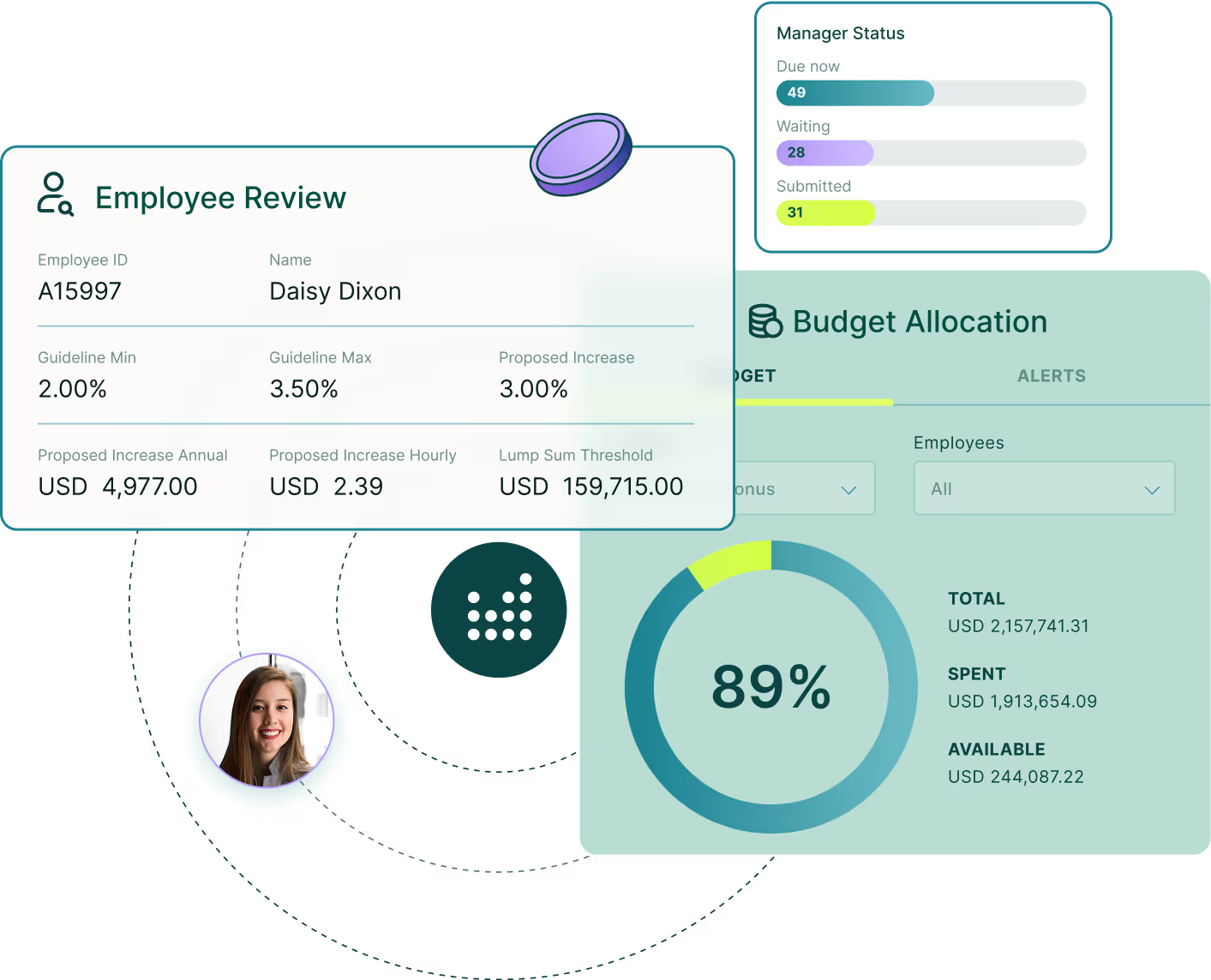
Payscale is, at its core, a compensation data company. It's best known for large market datasets, crowdsourced and survey-validated, surfaced through Payfactors and MarketPay for market pricing. On top of that data, Paycycle adds configurable compensation planning, with a visual rule builder, recurring cycle support, and budget management.
According to Payscale's product documentation, the platform spans:
- Market data and benchmarking through Payfactors and MarketPay
- Market pricing and pay range building tied to that data
- Configurable, rule-based compensation planning through Paycycle
- Budget management and recurring cycle support
- Pay equity analytics on top of the underlying data
Its center of gravity is data and market pricing, with planning layered on, rather than a purpose-built, end-to-end cycle engine.
Where Payscale is genuinely strong
Payscale's depth is real, and it's concentrated on data and configurability. Three things stand out:
- Market data depth. Large crowdsourced and validated datasets through Payfactors and MarketPay, a genuine category strength.
- Configurable planning. Paycycle's visual rule builder handles complex, stable comp structures with granular control.
- Budget management. Rule-based budgeting tied directly to market data, useful for established pay philosophies.
How does Payscale actually perform?
Reviewers value Payscale for its market data breadth and the depth of configuration Paycycle allows. But the same reviews surface a consistent set of frustrations, and they cluster in three places.
What the review platforms show
We reviewed G2, Payfactors reviews, Capterra, and Gartner Peer Insights to find where Payscale users actually hit walls. Three challenges came up again and again.
Basic changes route through support
Self-service is limited, so even routine updates, like changing job information, often mean raising a ticket rather than making a quick edit. During a live cycle, that rigidity can turn a ten-minute task into a multi-day one, and teams end up dependent on the vendor for changes they'd rather own.
“We have the comp planning module as well and that is not going well. Many features we had with teams has now gone away - we can distribute the budget evenly between divisions. We can't distribute money based on the suggested increase matrix and have it respect our overall budget. We can't upload job information ourselves. I have to always put in a ticket if the job information changes. It's hard to make any changes to the cycle itself.” - Mekenzie B. (Source)
Implementation can drag on
Getting Payscale live depends heavily on how organized and accessible your data is, and reviewers report that setup can stretch out while comp deadlines keep moving.
"Implementation can be a bit lengthy depending on how easy and fast you can access your own data." - A verified user on G2 (Source)
Rigid contracts and a dated interface
Some users report inflexible, multi-year commitments alongside admin and planner interfaces that feel dated and take training to learn. One reviewer described being locked in with no room to renegotiate.
"Our company inherited a Payscale contract signed by a predecessor who was unaware that it was a locked-in, non-cancellable three-year agreement totaling $12,000. When we discovered this, we reached out to Payscale to discuss termination options and even offered to buy out of the contract—but they refused to negotiate in any capacity." - Cassandra R
How does Payscale integrate with your existing stack?
Payscale connects to common HRIS and payroll systems through Payfactors, feeding market data and pay ranges into planning. Because self-service is limited, ask specifically how mid-cycle data changes are handled for your HRIS, who does that work, and how long implementation took for the last customer at your size, since setup is data-dependent.
Who is Payscale best suited for, and who should look elsewhere?
The clearest signal Payscale is the wrong primary tool: if your defining challenge is running the cycle quickly and self-serving your own changes rather than sourcing market data, its support-ticket dependency and lengthy setup will show up every cycle.
How Payscale compares to Compport
Both are used by serious compensation teams, but they lead in different places. Payscale leads on market data and configurable planning on top of it. Compport is built to run the whole cycle natively, with self-service. The difference shows up wherever execution meets data.
Compport's honest tradeoffs: it's a newer platform than legacy vendors, and it doesn't generate market data natively, so it ingests external benchmarking rather than owning a dataset. If your defining need is deep market data, Payscale leads there. If it's running merit, bonus, incentives, statements, and pay equity in one self-service cycle, Compport is built for that.
Will Payscale or Compport fit your team?
Answer one question about your biggest priority, and the tool below points you to the platform that fits.
The bottom line on Payscale
Payscale is a capable, data-rich platform, and for some teams it's genuinely the right call. If your priority is deep market data with configurable planning on top, and you have stable structures and the patience for a data-dependent rollout, Payscale does that well.
If what's slowing you down is execution, though, it's worth looking around. Teams that keep raising tickets for basic changes, waiting on lengthy implementations, or feeling boxed in by rigid contracts tend to be the ones exploring alternatives.
That's the situation a platform like Compport is built for, since it runs the full cycle natively, in-house, in one place.
Here's what Storable Compport 👇
Which way you lean really comes down to whether your gap is data or execution. If you're weighing the two, the quickest way to tell is to line them up against the priorities that matter most to you and see where each one lands.

FAQs
Who are the best Payscale alternatives for salary benchmarking?
Salary.com offers deep benchmarking too. For teams that also want to run planning, incentives, and pay equity in one cycle, Compport pairs data with execution.
What are the best Payscale alternatives in the US?
For US teams, Compport is a strong alternative, covering merit, bonus, LTI, and pay equity in one self-service cycle. Salary.com suits pure benchmarking needs.
What is a scalable compensation platform for large companies?
Compport scales to large enterprises, running merit, bonus, LTI, and STI in one cycle across 37+ countries, with native integrations and strong admin self-service.
What are Payscale's weaknesses?
Verified reviews cite limited self-service that routes basic changes through support, lengthy data-dependent implementation, rigid multi-year contracts, and a dated admin interface.
Is Payscale good for compensation cycle management?
Payscale offers configurable Paycycle planning, but reviewers cite support-ticket dependency and slow setup. Compport runs the full cycle natively with in-house self-service.
%20(93).png)
%20(92).png)
%20(91).png)