




%2520(69).png)


.svg)



Pay discrimination lawsuits cost Goldman $215M, Google $118M, and Oracle $25M, not because they set out to discriminate but because they never audited closely enough
91% of candidates say a posted salary range affects their decision to apply, but ranges too wide to be meaningful do more brand damage than having none
Employees who see their pay as inequitable are 15% less likely to stay and 13% less engaged, and perceived fairness predicts engagement more strongly than pay amount
The EU Pay Transparency Directive transposition deadline passed in June 2026, with first reports due June 2027 based on current payroll data
Audit before you announce: transparency without equity infrastructure backfires, and 52% of companies cite managers being unable to explain pay decisions as their biggest implementation blocker
In 2019, Citigroup did something no major US bank had done before. They published their gender pay gap. Not the adjusted figure companies usually lead with, but the raw, unadjusted median: 29% lower pay for women than men across the organization.
The reaction from markets was largely neutral. Which, if you think about it, tells you everything. Investors had already priced in the assumption that a gap existed. What surprised them was that Citigroup chose to say it out loud.
That decision didn't cost Citigroup. What costs companies is the alternative.
Goldman Sachs settled a gender discrimination lawsuit for $215 million (Reuters, 2023). Google settled a similar case for $118 million (U.S. Department of Justice, 2022). Oracle for $25 million (EEOC). These weren't companies that set out to discriminate. They were companies that didn't look closely enough, didn't correct what they found, or didn't communicate what they knew.
Pay transparency, done well, is what closes that gap between what you don't know and what a court eventually finds out.
This article looks at the organizations that have done it well, the ones that haven't, and what the data shows about the difference in outcomes.
Pay transparency isn't one thing
Ask five compensation leaders what "pay transparency" means and you'll likely get five different answers. That's part of the problem.
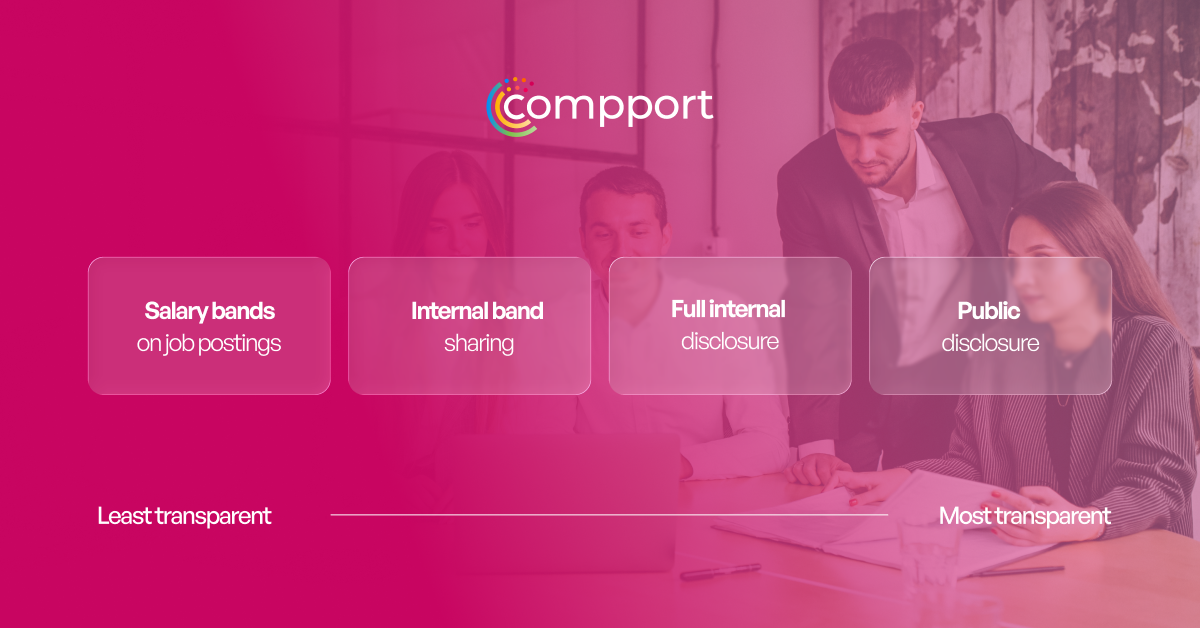
For some, it means posting a salary range on a job listing, sometimes so wide it tells candidates nothing (SHRM found that before state laws forced the issue, only 45% of US companies were sharing salary ranges in postings at all). For others, it means employees can see the band they sit in, but not what their colleagues earn. A smaller group has gone further: full internal disclosure, where anyone can look up anyone's pay. And a handful, like Citigroup with its gap disclosure, have taken it public.
These aren't four versions of the same thing. They're four different business decisions, each with its own risk profile and its own payoff.
Most Fortune 500s sit somewhere in the first two categories right now, largely because regulation forced their hand. Colorado, New York, and California didn't ask companies to disclose everything. They asked for ranges on job postings. The EU Pay Transparency Directive goes further, requiring it at the application stage across member states by 2026.
But the companies seeing measurable ROI are the ones who picked a level of transparency deliberately, then built the infrastructure to support it.
What happens to your talent pipeline when you post salary ranges
Microsoft didn't wait for a law to tell them to add salary ranges to job postings. They started doing it across most US states before it was required, and the reasoning was simple. Candidates were already asking. Recruiters were already fielding the question in the first call. Might as well answer it upfront.
That instinct lines up with LinkedIn's own research. In a survey of over 1,000 US-based members, 91% said a posted salary range affects their decision to apply, and 82% said it leaves a more positive impression of the company.
LinkedIn's Workforce Insights found 85% of Gen Z candidates say pay transparency affects where they choose to apply. For a generation that's about to make up a third of the workforce, that's not a preference. It's a filter.
Salesforce saw something similar from the inside. After they began publishing internal pay bands, offer acceptance rates improved, and so did the trust scores candidates reported during the hiring process.
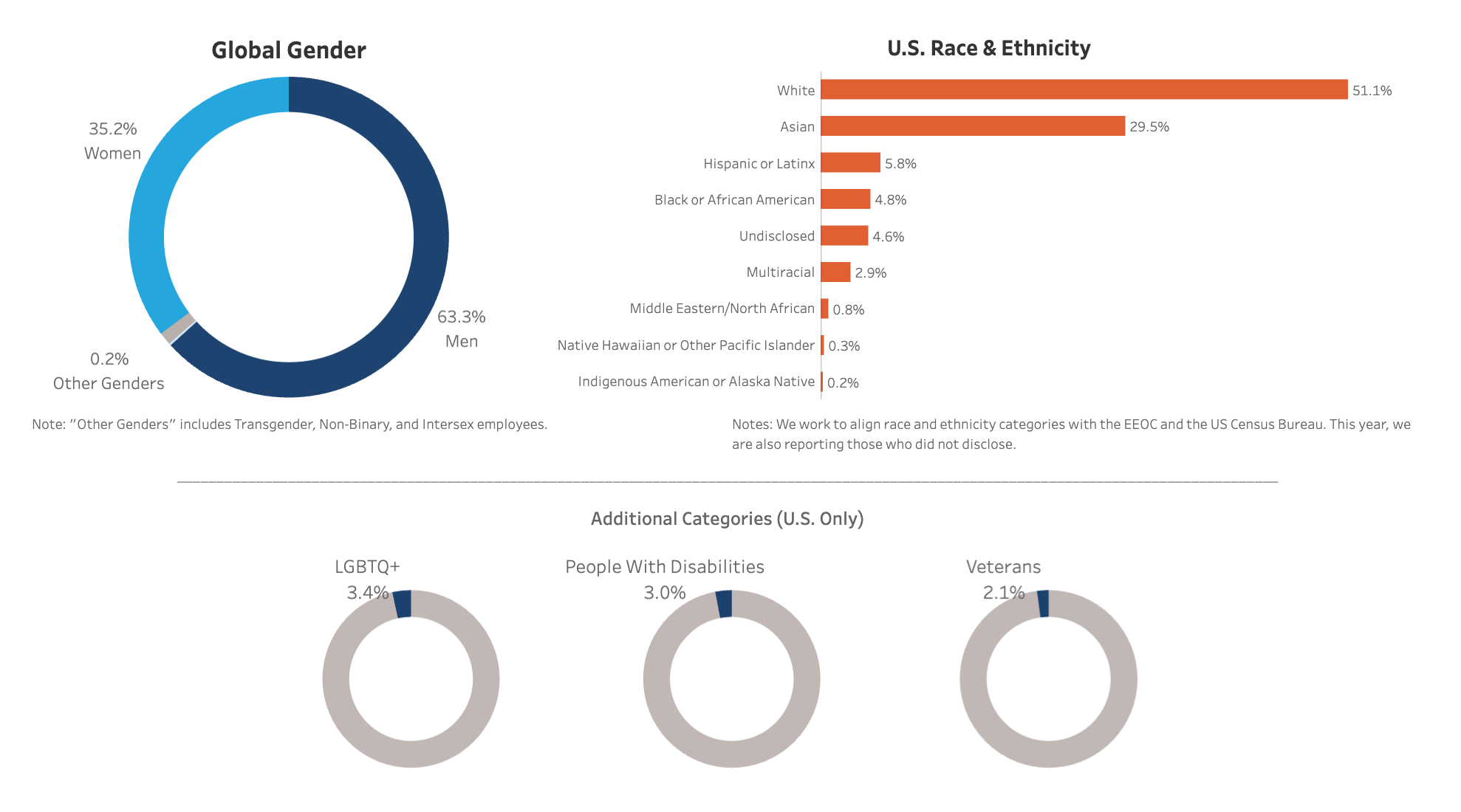
Glassdoor's data backs this up from the other direction. Pay-related topics now show up in 51% of employee reviews on the platform, up 9% year-over-year, meaning candidates are already forming a view on your pay practices before you've said a word.
But posting a range isn't the same as posting a useful one. Plenty of companies now list salary bands so wide they say nothing at all, $80,000 to $200,000 for the same role, and get called out for it publicly. Candidates notice. It reads as compliance theater, and it can do more damage to the employer brand than having no range at all.
For EU employers, this stops being a choice in 2026. The EU Pay Transparency Directive requires salary range disclosure at the application stage, before a candidate even walks into an interview.
| Transparent done right | Transparent done wrong |
|---|---|
| A range tied to a specific job level, e.g. "$95,000–$115,000 for Senior Product Manager, L5" | A range so wide it tells candidates nothing, e.g. "$80,000–$200,000" |
| Consistent across similar roles and locations | Varies unpredictably between nearly identical postings |
| Reflects what the company will actually pay | Padded to preserve negotiating room, not to inform candidates |
| Builds candidate trust before the first interview | Reads as compliance theater and gets called out publicly |
Here’s how you can plan and structure salary bands with Compport’s compensation planning tool:
Employees who understand their pay stay longer
Gartner's HR research team surveyed over 3,500 employees in 2022 and found a clear split. Employees who saw their pay as inequitable reported 15% lower intent to stay and were 13% less engaged at work than employees who saw their pay as fair.
What's notable is what actually drives that perception. Gartner's researchers found it often isn't the pay number itself. It's organizational trust. Employees who don't trust their employer generally don't believe their pay is fair either, regardless of what they're actually earning.
Academic research points in the same direction. Obloj and Zenger's study on pay transparency found that perceived pay fairness predicts engagement more strongly than compensation amount itself. An employee earning less but understanding why can end up more engaged than one earning more with no context at all.
But this cuts both ways. Transparency without equity creates its own kind of attrition. When employees can suddenly see a gap that hasn't been fixed yet, they don't wait around for the correction. They leave. This is the implementation risk most organizations underestimate: disclosure has to follow the audit, not precede it.
|
15%
lower intent to stay
among employees who see their pay as inequitable
|
13%
less engaged at work
for employees who perceive their pay as inequitable
|
Fairness > pay amount
Perceived pay fairness predicts engagement more strongly than compensation itself
|
Closing the gap isn't just the right thing. It's measurable.
Goldman Sachs disclosed its gender pay gap under UK reporting rules and found its own gap wider than its peers. The bank spent years managing the fallout publicly. Then, in 2023, it settled a separate gender discrimination lawsuit for $215 million, the largest pre-trial settlement of its kind, covering roughly 2,800 women and 13 years of litigation.
Google settled a similar pay discrimination case for $118 million in 2022.
Oracle settled for $25 million in 2024.
The pattern across all three: none of these companies set out to discriminate. They simply never audited closely enough, or found the gap and didn't act on it fast enough.
Blundell, Duchini, Simion, and Turrell studied the UK's mandatory pay gap reporting law and found it closed 19% of the gender pay gap at affected firms.
But the mechanism matters: the gap closed because men's pay growth slowed, not because women's pay rose faster. Transparency didn't create a new budget. It changed who got raises.
The EU Pay Transparency Directive raises the stakes further. Where a gender pay gap exceeds 5% in any job category and can't be objectively justified, a joint pay assessment becomes mandatory, and the burden of proof shifts to the employer in any resulting litigation.
Estimate what unresolved pay equity gaps could cost your organization.
|
$215M
Goldman Sachs
gender discrimination settlement, ~2,800 women, 13 years of litigation
|
$118M
Google
gender pay discrimination settlement, ~15,500 women
|
$25M
Oracle
pay discrimination settlement, ~4,000 employees
|
The compliance cost you're already paying
- US Pay Transparency Laws: 18 states + DC require salary ranges in job postings, with penalties from $100 to $250,000 per violation depending on jurisdiction.
- UK Pay Transparency Laws: Employers with 250+ employees have reported gender pay gaps annually since 2017; no fixed fine, but non-compliance is publicly listed and enforced by the Equality and Human Rights Commission.
- Australia Pay Transparency Laws: Employers with 100+ employees report gender pay gap data to WGEA annually, and from 2024, individual employer results are published publicly.
- EU Pay Transparency Directive: The Directive's transposition deadline was 7 June 2026; reporting deadlines follow by company size, starting 2027.
Eighteen US states plus DC now require some form of pay transparency, with penalties ranging from $100 to $250,000 per violation depending on the jurisdiction. Colorado, New York, California, Washington, and Illinois each set their own triggers, and none of them align. A posting that's compliant in one state can be a violation in another.
New York City sits at the extreme end. Penalties start at $250 for a first violation and climb to $250,000 for repeated ones. For a multi-state employer, patching compliance state by state isn't a strategy. It's a way to guarantee you're non-compliant somewhere at all times.
The EU adds a second layer. The Pay Transparency Directive's transposition deadline was 7 June 2026, and it has already passed, with most member states still catching up. The reporting deadlines that follow are tied to company size: organizations with 250 or more employees file their first report by 7 June 2027 and then annually after that. Organizations with 150 to 249 employees file by the same 2027 date, but only every three years. Smaller organizations, 100 to 149 employees, get until 2031.
None of this is free to retrofit. Building a compliant, defensible pay structure after the fact costs more than building it in from the start, largely because retrofitting means auditing years of pay decisions under public and legal scrutiny at the same time.
The compression problem sits underneath all of it. Once ranges go public, gaps between tenured employees and new hires become visible fast. Fixing that is expensive. Not fixing it is more expensive, because the employees most likely to notice and leave are usually the ones you can least afford to lose.
The implementation failures nobody publishes a press release about
Buffer made its salaries fully public in November 2013, starting with just 12 employees. Within the first month, the company received more than twice the job applications it had the month before.
But going public was the easy part. The company has since had to rebuild its salary formula multiple times, including a full overhaul in 2023, because a formula that looks fair on paper doesn't always hold up once people can actually compare their number to someone else's. Buffer's own retrospective on a decade of transparency puts it plainly: they got things wrong along the way and had to keep adjusting.
Whole Foods took a different approach starting in 1986, giving every employee access to what everyone else in the company earns, right up to the executives. John Mackey has been open that this doesn't eliminate disputes. It surfaces them.
In his words, "sometimes things aren't just, and people will complain about it, and that gives you an opportunity to correct it."
The lesson isn't that disclosure creates conflict. It's that disclosure without a mechanism to act on what it surfaces just creates noise.
Reddit took the most structural approach in 2015. Under interim CEO Ellen Pao, the company eliminated salary negotiation entirely for new hires, on the reasoning that men negotiate more aggressively than women and that gap was quietly built into every offer. It was a genuine attempt to fix bias at the point of hire. It was also controversial. Critics argued that removing negotiation removed the one tool women and minority candidates had to correct a lowball offer, while leaving the actual source of the bias, how the offer gets set in the first place, untouched.
Three different approaches, three different lessons. Full disclosure needs a formula that can survive scrutiny. Internal transparency needs a real mechanism to act on what it uncovers. Structural fixes can solve one problem while creating another if they don't address the root cause.
What ties them together: transparency works when there's an established process to respond to what it reveals. It backfires when disclosure runs ahead of that process.
|
😬 What most companies do
📣 Announce the transparency policy
📢 Disclose ranges or pay data
🔥 Scramble to explain gaps after employees or candidates react
|
✅ What actually works
🔍 Audit pay data before saying anything publicly
🛠️ Fix what the audit finds
🏗️ Build the infrastructure to explain how pay decisions get made
💬 Communicate the approach internally
📢 Disclose
|
What the companies that got it right did first
The order matters more than any individual step.
Audit before you announce
Run the internal pay equity analysis and job architecture review first, privately. This is what tells you whether you have a real problem to fix before anyone outside HR knows you're looking.
Define your transparency level, and get board alignment on it
Posting ranges, sharing internal bands, and full disclosure are three different commitments with three different risk profiles. Decide which one you're actually making before you start building toward it.
Build manager capability before you build anything else
This is the step most companies skip, and it's the one WTW's own Pay Transparency Survey flags as the biggest blocker: 52% of respondents cited a manager's inability to explain the compensation program as their top implementation challenge. Managers are the ones fielding "why does my colleague earn more" in real time. If they can't answer it, the disclosure creates more distrust than the secrecy did.
Design the communication infrastructure
A band by itself doesn't explain anything. Employees need to understand the criteria behind it: how progression works, how the range was benchmarked, where they sit and why.
Phase the disclosure
Internal first, external where it's required or strategically useful. Don't do all of it at once.
For EU-based organizations, the clock is already running. The transposition deadline was 7 June 2026, and it's already passed. The first reporting deadline, 7 June 2027 for 250+ employee organizations, is based on 2026 payroll data. That means the numbers being reported next year are the numbers you're generating right now.
How to build the business case internally
The mistake most compensation teams make is presenting one number to the board and expecting it to land the same way it does in HR. Finance, HR, and the board are looking for different evidence, and the strongest internal case gives each of them what they actually need.
For finance: voluntary attrition rate by pay band, offer acceptance rate, time-to-fill, litigation cost avoidance, compliance penalty avoidance. These are the numbers that map directly to budget.
For HR: internal pay equity ratio, manager confidence scores on pay conversations, employee trust as measured in engagement surveys, and pay-related grievance volume. These are the leading indicators that show whether the program is actually working before the lagging financial metrics catch up.
Longer term, 12 to 24 months out: gender and racial pay gap trend lines, employer brand NPS, and external hire compensation efficiency, meaning whether you're paying a premium to attract talent or competing on equal footing.
Here's a way to make the finance case concrete.
Gallup estimates that replacing an employee costs roughly 100% to 200% of their annual salary, depending on the role. Take a 5,000-person organization with an average salary of $75,000. A 1% reduction in voluntary attrition means about 50 fewer departures a year. At a conservative 100% replacement cost, that's $3.75 million in avoided replacement costs annually. That's not a promise pay transparency guarantees. It's the size of the number worth testing against your own attrition data before you bring it to the board.
The framing that tends to land best: pay transparency isn't a cost center. It's a risk mitigation investment with a measurable upside, and the upside shows up in attrition, hiring efficiency, and litigation exposure long before it shows up as a line item labeled "ROI."
| Finance | HR | Long-term (12–24 months) |
|---|---|---|
| Voluntary attrition rate by pay band | Internal pay equity ratio | Gender/racial pay gap trend |
| Offer acceptance rate | Manager confidence scores | Employer brand NPS |
| Time-to-fill | Employee trust (engagement survey) | External hire compensation efficiency |
| Litigation cost avoidance | Pay-related grievance volume | |
| Compliance penalty avoidance |
Pay transparency is raising the bar for every employer.
Whether you're preparing for the EU Pay Transparency Directive, adapting to US pay transparency laws, or strengthening your compensation practices, one question matters:
Can you confidently explain why people are paid what they're paid?
That starts with a pay equity audit.
Before sharing salary ranges or responding to employee questions, make sure you can:
→ Identify unexplained pay gaps
→ Validate pay decisions with data
→ Review job structures and salary ranges
→ Build a defensible, consistent compensation framework
When you're ready to move beyond spreadsheets, Compport's Pay Equity Management solution helps you design pay bands, monitor pay equity metrics, manage compensation data securely, and make equitable pay decisions at scale.
Schedule a demo to see how Compport can help you operationalize pay equity.

FAQs
Is pay transparency legally required in the US?
Yes, in 18 states plus DC, covering salary postings, employee requests, or both. Requirements and penalties vary by state, so multi-state employers should follow the strictest applicable law.
What does the EU Pay Transparency Directive require and when does it take effect?
It mandates salary ranges at hiring and gender pay gap reporting. The transposition deadline was June 2026; reporting deadlines for most employers begin in June 2027.
What's the difference between pay transparency and pay equity?
Transparency means disclosing pay information. Equity means the pay itself is fair and free of unjustified gaps. Transparency without equity often backfires.
How do you measure the ROI of a pay transparency program?
Track attrition by pay band, offer acceptance rates, litigation cost avoidance, and pay equity ratios. Compare 12 to 24 months pre- and post-implementation.
%20(94).png)
%20(93).png)
%20(92).png)