




%20(71).png)


.svg)



Bonus calculation errors usually come from rigid rule engines and manual proration, not bad comp decisions.
The best bonus calculation software applies plan rules automatically, prorates cleanly, and leaves a defensible audit trail under 2026 pay transparency laws.
Key evaluation criteria: rule engine flexibility, proration accuracy, audit trails, scenario modeling, real-time visibility, and HRIS/payroll integration.
Compport stands out for its configurable rule engine, sandbox testing, and one-click bonus calculation across multi-country, multi-entity organizations.
Your bonus payouts looked right when finance signed off. Then, a manager flagged that a mid-year transfer was prorated incorrectly, that an employee on leave was double-counted, and that payroll had already run. The failure was the underlying calculation logic: rules that don't hold, and proration that breaks the moment someone's timeline gets complicated.
A bonus calculation software fixes what spreadsheets and generic HRIS modules can't. It applies your plan rules automatically, prorates cleanly for every edge case, and gives comp teams a number they can defend if anyone asks how it was calculated.
Here are the five best bonus calculation tools for HR, comp, and rewards teams in 2026.
What is bonus calculation software?
Bonus calculation software is the layer that turns your bonus plan rules, performance ratings, discretionary overlays, and eligibility criteria into an accurate, auditable payout number for every employee. It applies plan logic automatically instead of leaving a comp analyst to rebuild the same formula every cycle, and it prorates cleanly when someone joins, leaves, transfers, or changes roles mid-year.
How we selected these bonus calculation tools
The tools on this list document, defend, and reproduce every payout. Each tool is built for US HR and comp teams running real bonus cycles, not sales ops.
In 2026, a bonus number that can't be explained is a compliance risk (not to mention the awkward conversation). If a manager or auditor asks how a payout was calculated, “the spreadsheet did it” isn't an answer regulators or employees will accept.
4 best bonus calculation software: at a glance
4 best bonus calculation software in 2026
1. Compport
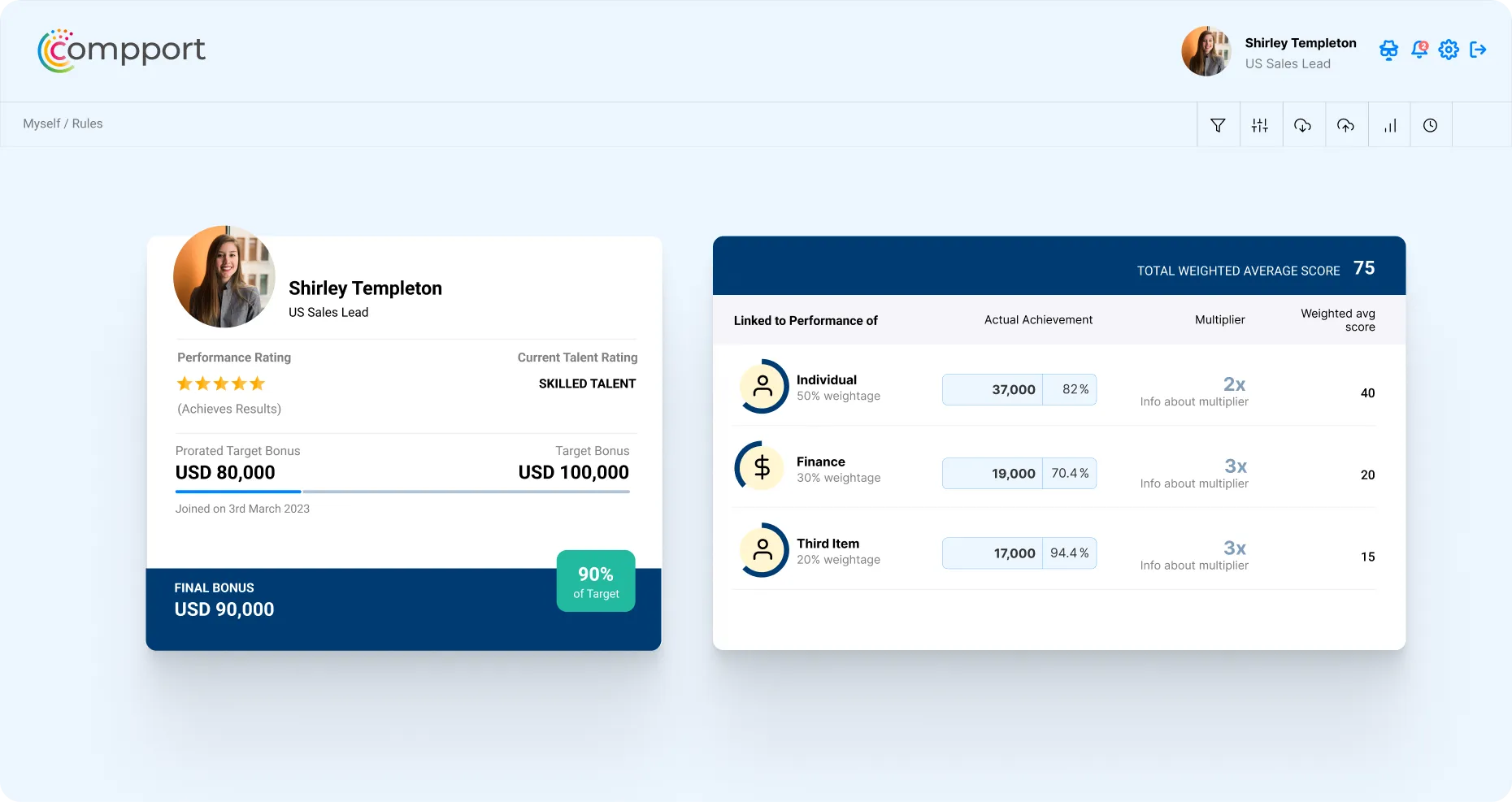
Compport is built for comp teams that have outgrown the spreadsheet but still need every payout to hold up under scrutiny. It runs annual bonus, STIP, merit-linked bonus, and LTI calculations on a single platform, and it handles complex cycles where the same plan must apply differently across currencies, divisions, and entities.
How it handles bonus calculation
- Configurable rule engine applies multi-metric formulas, discretion overlays, and eligibility rules automatically, so the same logic runs the same way every cycle
- Calculates variable pay across historical assignments and auto-generates prorated payouts based on the duration of each assignment, so a mid-year transfer or promotion doesn't need a manual workaround
- Sandbox mode lets you test plan changes and see the payout impact before anything goes live
- Guardrails and out-of-guideline flags catch outlier payouts at the point of decision, before finance catches the variance
- Built-in dashboards show root-cause analysis and payout distribution, so leadership gets a clear picture without a custom report request
- Full audit trail ties every payout back to the rule that produced it
Proof it works
Security Bank Corporation, one of the Philippines' leading financial institutions with 9,000+ employees, ran bonus and merit as two separate windows on a rigid internal system that couldn't handle its multi-division, multi-tiered pay structure.
After moving to Compport, the bank configured three pay review matrices across divisions and functions and collapsed separate bonus, merit, and promotion windows into a single two-week cycle.
"With Compport, we've grown leaps and bounds. Nearly 90% of our users gave positive feedback." — Larry Antonio, former Total Rewards Head, Security Bank CorporationRead the full case study →
2. HRSoft
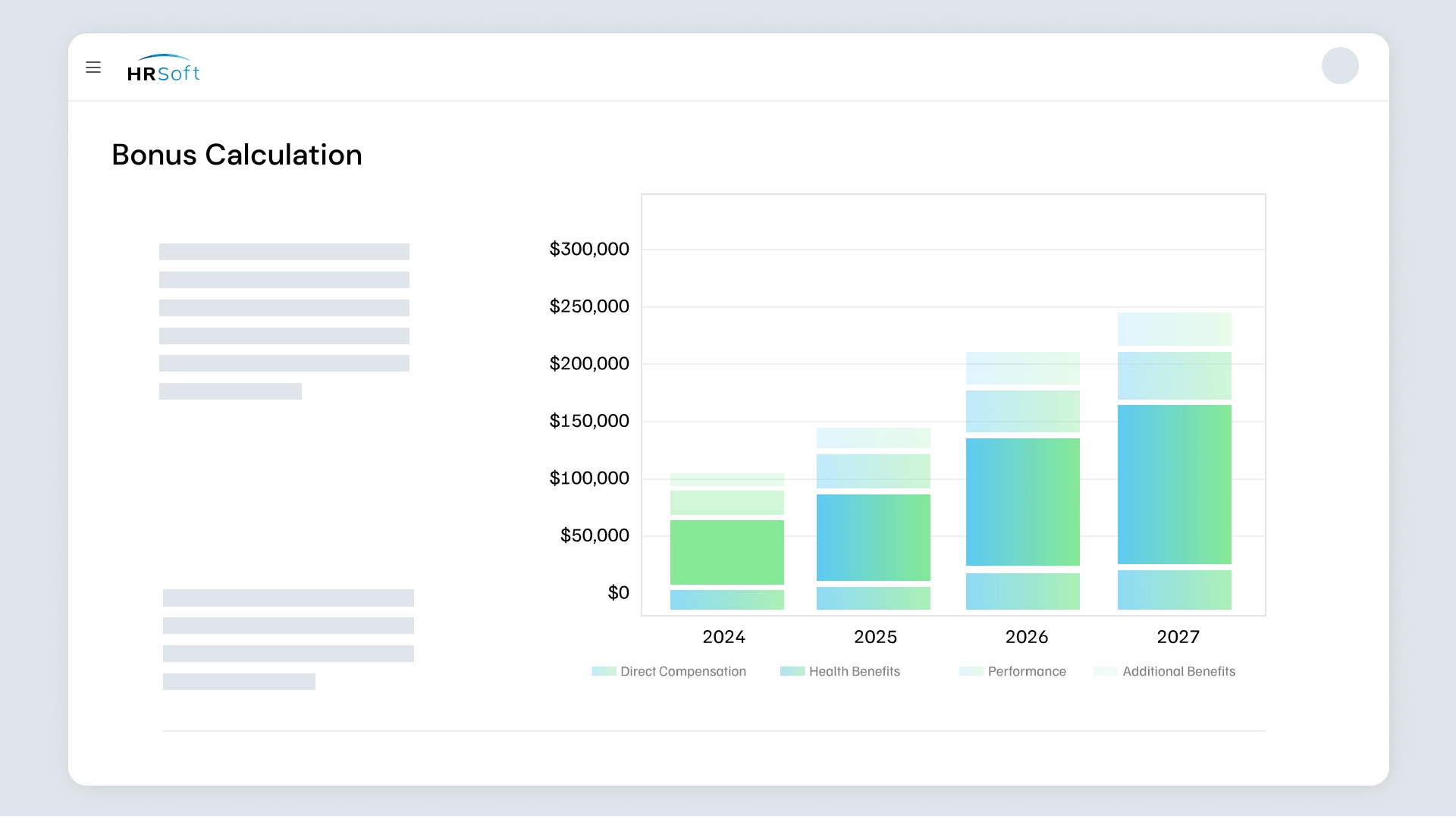
HRSoft manages the full compensation lifecycle and is well-established in industries where auditors expect to see exactly how a bonus number was calculated. It's a fit for mature comp teams with defined policies and strict compliance requirements.
How it handles bonus calculation
- The formula-driven engine applies detailed bonus rules and eligibility criteria consistently across the plan
- Holdback and reserve management for complex, multi-pool bonus scenarios
- Administrators can build and manage calculation logic with significant autonomy
Already on HRSoft and rethinking your bonus calculation setup? See the full list of HRSoft alternatives.
3. Beqom
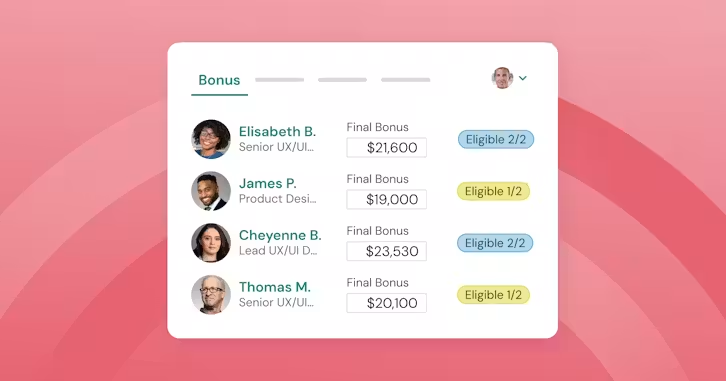
Beqom is an enterprise platform covering the full range of HR compensation, including bonus, LTI, and equity. It's built for global scale, layered approval structures, and bonus rules that shift by country and currency.
How it handles bonus calculation
- Calculates bonus, equity, and benefits payouts in one engine, with country-specific rule variations
- Scenario planning and ML-supported modeling for complex global bonus structures
- Global templates with local variations and multi-currency support
Already using Beqom and feeling its weight? See how the Beqom alternatives compare.
4. Payscale

Payfactors is Payscale's compensation management platform. It pairs Payscale's market dataset with bonus allocation and approval workflows, so payouts get calculated with benchmarking context built in rather than as an isolated formula.
How it handles bonus calculation
- Automates bonus allocations across the cycle, tied to role-based compensation structures
- Streamlines approval workflows through a shared dashboard
- Ties bonus decisions to Payscale's market data and pay equity analysis
Using Payscale, but want more from your bonus calculation workflow? Explore the Payscale alternatives.
How to choose the right bonus calculation software?
What separates these tools is what happens when a bonus cycle gets messy: a mid-year promotion, a plan change halfway through the year, an auditor asking how a specific number was produced.
How complex are your bonus rules? A single flat-rate bonus is simple. The moment you layer in multiple metrics, discretion overlays, and eligibility exceptions, you need a rule engine that can handle it all without a custom build for every plan variation.
How many countries, currencies, and entities? A single-country bonus pool is straightforward. Once bonus rules need to apply differently by country or entity while remaining consistent at the policy level, you need multi-dimensional calculation logic that holds up without spreadsheet workarounds.
Who makes changes to the rules, you or the vendor? If every rule tweak is a support ticket, your bonus cycle timeline isn't yours. Admin self-service is what separates a same-day fix from a two-week wait.
Find your fit
Answer two questions and we'll point you to the right tool.
Bonus calculation is where the cycle usually goes wrong
A formula doesn't account for a mid-year transfer. A discretion override never gets logged. An auditor asks how a number was produced and nobody can reproduce it exactly. Spreadsheets can't catch any of this in real time, and generic HRIS bonus modules were never built to.
All five tools here can calculate a bonus. They separate on what happens when the calculation gets complicated: multiple assignments, multiple countries, a number someone has to defend months later. For US mid-to-large enterprise teams that want a configurable rule engine, clean proration, and an audit trail in one platform, Compport is the one built for it end to end.
Storable, a property management software company with 900+ employees and global operations, had outgrown its old compensation platform. Custom scorecards and complex bonus structures didn't fit the rigid tools they'd tried, so the process sprawled across multiple systems and spreadsheets.
With Compport's Compensation Planning and Bonus modules, complex bonus proration and commission logic that was once nearly impossible in spreadsheets now runs automatically. Guardrails, approval workflows, and audit trails replaced manual tracking and the errors that came with it. Merit and bonus cycles that used to take weeks of consolidation now close in a fraction of the time, with one global framework holding country-specific rules and per-country letter templates in the same system. ADP integration went live in two days, and managers onboarded in under 20 minutes.

FAQs
How is bonus calculation software different from payroll software?
Payroll software executes the payout once a number is approved. Bonus calculation software applies plan rules, eligibility, and proration to produce that number in the first place.
What's the best tool for prorating bonuses across mid-year hires, transfers, and role changes?
Compport handles this well. It calculates variable pay across historical assignments and auto-generates prorated payouts based on the duration of each assignment, so transfers and promotions don't need a manual workaround.
Is there bonus calculation software with real-time scenario modeling?
Compport offers this through its sandbox mode, letting teams test plan changes and see the payout impact before anything goes live.
Which platform handles multi-country bonus calculations?
Compport supports multi-dimensional bonus calculation across geographies, entities, and currencies, with native HRIS sync keeping the underlying data current. beqom is also built for this at large multinational scale.
Why aren't spreadsheets enough for bonus calculations?
Spreadsheets lack automated proration, real-time guardrails, and audit trails, which makes it easy for calculation errors to reach payroll before anyone catches them.
What features should I prioritize when evaluating bonus calculation software?
Look for a flexible rule engine, accurate proration, audit trails, scenario modeling, real-time visibility, and HRIS integration.
Can bonus calculation software support global organizations?
Yes. Leading platforms support multiple currencies, countries, and entities while keeping bonus rules consistent at the policy level.
How important is HRIS integration for bonus calculation?
It keeps employee, role, and assignment data current automatically, which reduces manual uploads and the proration errors that come with stale data.
When should a company move from spreadsheets to bonus calculation software?
Most teams start evaluating dedicated software once bonus rules apply differently across managers, business units, countries, or plan types, and a spreadsheet formula can't hold all of it reliably.
What's a good tool for calculating short-term incentive plan (STIP) payouts?
Compport's configurable rule engine handles multi-metric STIP formulas and discretion overlays without requiring a rebuild for every plan variation.
Which comp planning tools offer audit trails for bonus payouts?
Compport and HRSoft both build in audit trails that tie every payout back to the rule that produced it, which matters when an auditor or employee asks how a number was calculated.
What's the best software for organizations running bonus calculations across multiple assignments or role changes in a single year?
Compport is built for this specifically, calculating variable pay across historical assignments and prorating automatically based on assignment duration.
%20(96).png)
%20(95).png)
%20(94).png)