

5 Oracle Compensation Management Alternatives for US HR & Comp Teams

Jacob Suchocki
July 29, 2026
Summarize with AI

Table of Contents

TL;DR

Oracle HCM is a strong system of record, but its comp module routes most rule changes through IT, slows under peak load, and leaves real modeling back in spreadsheets.

The top five Oracle compensation alternatives are Compport, HRSoft, Salary.com, Payscale, and Beqom, each strongest in a different area.

Compport leads on admin self-service, implementation speed, and running merit, bonus, LTI, pay equity, and total rewards natively in one cycle on top of Oracle.

HRSoft goes deepest on LTI governance, Salary.com and Payscale close market data gaps, and Beqom suits orgs that need HR and sales comp in one engine.

Before signing with any vendor, confirm whether their Oracle integration is API-based or file-based; that difference determines whether you get real-time sync or overnight batch files.

If your company runs Oracle HCM, opting for the Oracle compensation management module looks like the obvious choice.

Oracle HCM Cloud is a serious system of record, and reviewers genuinely value having workforce data, salaries, and comp planning under one roof, with budgets visible in a single place. And then your first merit cycle starts.

A statutory bonus rule needs to be changed, so it becomes an IT ticket. Reports crawl during your busiest planning week. A manager opens the worksheet and cannot work out what to do. And the real modeling, again, ends up in spreadsheets.

One Oracle admin summed it up in the title of a G2 review:

“The initial configuration and customization can be complex and may require significant effort or expert support, especially for organizations with unique compensation structures.” - A mid-market user on G2.

Beyond configuration, this is an architecture problem. Oracle HCM was built to be your system of record, not a purpose-built compensation engine. You do not need to replace Oracle to fix this. You need to replace the layer slowing your team down, and sync approved decisions back.

We read what Oracle comp users actually say on G2, Capterra, and Gartner Peer Insights. Here are five platforms built to do exactly that.

You’re reading this if

  • Your comp cycle technically runs on Oracle, but the real modeling still happens in spreadsheets
  • A rule change, like eligibility or a statutory bonus, means a ticket to IT or a consultant, not a 20-minute admin edit
  • Reports and dashboards slow down during your heaviest planning weeks
  • Managers dread the comp worksheet because the interface was not built for them
  • Pay equity or total rewards statements are on your roadmap, and Oracle is not making it easy to get there
  • You keep Oracle as your HRIS and have no intention of ripping it out

Why do Oracle users look for compensation alternatives?

We reviewed G2, Capterra, and Gartner Peer Insights to find out what is actually frustrating Oracle comp users. The same themes came up again and again.

Configuration is time-consuming and rarely self-service

Setting up and changing comp logic in Oracle is repeatedly described as heavy work. Admins do not turn plans around quickly on their own. The initial setup is flagged as complex and time-consuming by enterprise reviewers.

“Configuration is time-consuming, and it needs to be improved.” — Kabiru Y., G2

Complex rules need scripting or IT, not comp admins

Non-standard eligibility, proration, and statutory rules do not map cleanly to the interface, so they fall to someone who can script them.

“Customization options for complex eligibility rules can feel rigid without advanced scripting knowledge, sometimes requiring IT support.” — CMA Anurag T., G2

Reporting is limited out of the box

Getting usable analysis often means extra configuration or an export to a spreadsheet. The reporting that ships is not enough for most comp teams to run a cycle on.

“Some reports and analytics feel limited out of the box and often need additional configuration.” — M S., G2

The planner experience is not purpose-built

Managers get the same generic interface as the rest of the suite. When the tool feels like something to get through, managers disengage or revert to spreadsheets, and planning accuracy drops.

Why this matters

None of this is just annoying. Each one carries a cost.

  • Scripting dependency for rule changes means cycle delays and consultant spend
  • Slowdowns during peak cycles mean missed approvals and payroll cutoffs
  • Limited native reporting means manual spreadsheet reconciliation and audit risk
  • A planner interface managers avoid means lower planning accuracy and more escalations
  • Weak native pay equity tooling means exposure as pay transparency rules tighten

The pattern in 2026 is consistent. Enterprises keep Oracle as the system of record and run compensation in a purpose-built layer that syncs approved decisions back. Here is how we evaluated the five most viable options for doing that.

What are your Oracle comp workarounds really costing you?

Add up the IT tickets and consultant hours, the cycles that stall under load, and the time spent reconciling spreadsheets after the fact. Then run the number.

Calculate your comp ROI →

How we evaluated

📊 Sources: G2, Capterra, Gartner Peer Insights, plus Oracle's own integration documentation.

Criteria: Oracle HCM integration depth, configurability and admin self-service, implementation speed, planner UX, reporting, LTI and sales comp, pay equity, and global readiness.

🚫 Excluded: broad HCM suites that replace Oracle, and benchmarking-only data tools.

5 best Oracle alternatives for compensation management

Here are five platforms built to replace the comp layer, not Oracle itself.

Oracle Compensation Alternatives: At a Glance

Tool Why it works as an Oracle comp alternative Best for G2 rating
Compport Native bi-directional Oracle sync, self-service rule engine, all comp types in one cycle Global comp teams wanting speed and configurability without consultants ★★★★★ 4.7/5
HRSoft Governance-first depth in LTI, carried interest, and budget control Regulated enterprises with complex LTI and audit needs ★★★★★ 4.4/5
Salary.com (CompXL) Market-data leader with a spreadsheet-native planning layer Teams whose primary gap is benchmarking data ★★★★★ 4.4/5
Payscale Deep survey aggregation, with Paycycle as a newer merit layer US-heavy benchmarking teams moving off spreadsheets ★★★★★ 4.2/5
Beqom Unifies HR comp and sales performance in one engine Global enterprises managing HR plus sales comp ★★★★★ 4.3/5

G2 ratings as of September 2026: Compport 4.7, HRSoft 4.4, Salary.com 4.4, Payscale/Payfactors 4.2, Beqom 4.3.

1. Compport

G2 ★★★★★ 4.7/5

Where Oracle routes most rule changes through IT or a consultant, Compport puts that control directly in the hands of comp admins. It is a purpose-built compensation platform serving 300+ companies across 37+ countries, managing compensation for 1.5 million+ employees. It is built to sit on top of Oracle HCM, not replace it.

What it covers:

  • Compensation Planning: merit, ad-hoc, and market-based adjustments with a rule engine admins configure themselves, and changes made mid-cycle without relaunching
  • Bonus Planning and Short Term Incentives: full eligible-earnings logic and scenario modeling, the exact gap most HCM comp users work around
  • Long Term Incentives: LTI, deferred comp, and vesting in the same workflow as merit and bonus
  • Pay Equity Management: pay gap analytics with real-time alerts, and EU Pay Transparency Directive reporting without add-on licensing
  • Total Rewards Statements: personalized statements in 20+ languages, configurable by role, level, location, and tenure
  • Sales Incentives Planning: sales comp alongside HR comp in one platform, no separate ICM tool
  • HR Analytics: 200+ pre-built interactive reports and dashboards, no custom development
  • Candidate Offer Module: market-aligned offer creation in the same platform

Pros:

  • Self-service rule engine, so complex eligibility and proration are configured by admins, not scripted by IT
  • Fast implementation, typically 6 to 8 weeks, against the far longer timelines enterprise Oracle deployments report
  • All comp types run in one cycle: merit, bonus, LTI, and sales comp
  • Pay equity analytics built in, not a separate module or add-on
  • Support turnaround as fast as 4 hours, cited by reviewers as a standout

Cons:

  • Newer platform, smaller review base than legacy competitors

Oracle integration

Native bi-directional API. Employee data flows from Oracle HCM, planning and approvals happen in Compport, and approved changes sync back for payroll. No manual reconciliation, and no production freeze in Oracle while the cycle runs.

Also integrates with

SAP SuccessFactors Workday ADP BambooHR UKG Darwinbox

💡 Global companies across banking, energy, SaaS, and financial services run their comp cycles on Compport without freezing their HRIS or calling a consultant. See how they do it → Customer Stories

2. HRSoft

G2 ★★★★★ 4.4/5

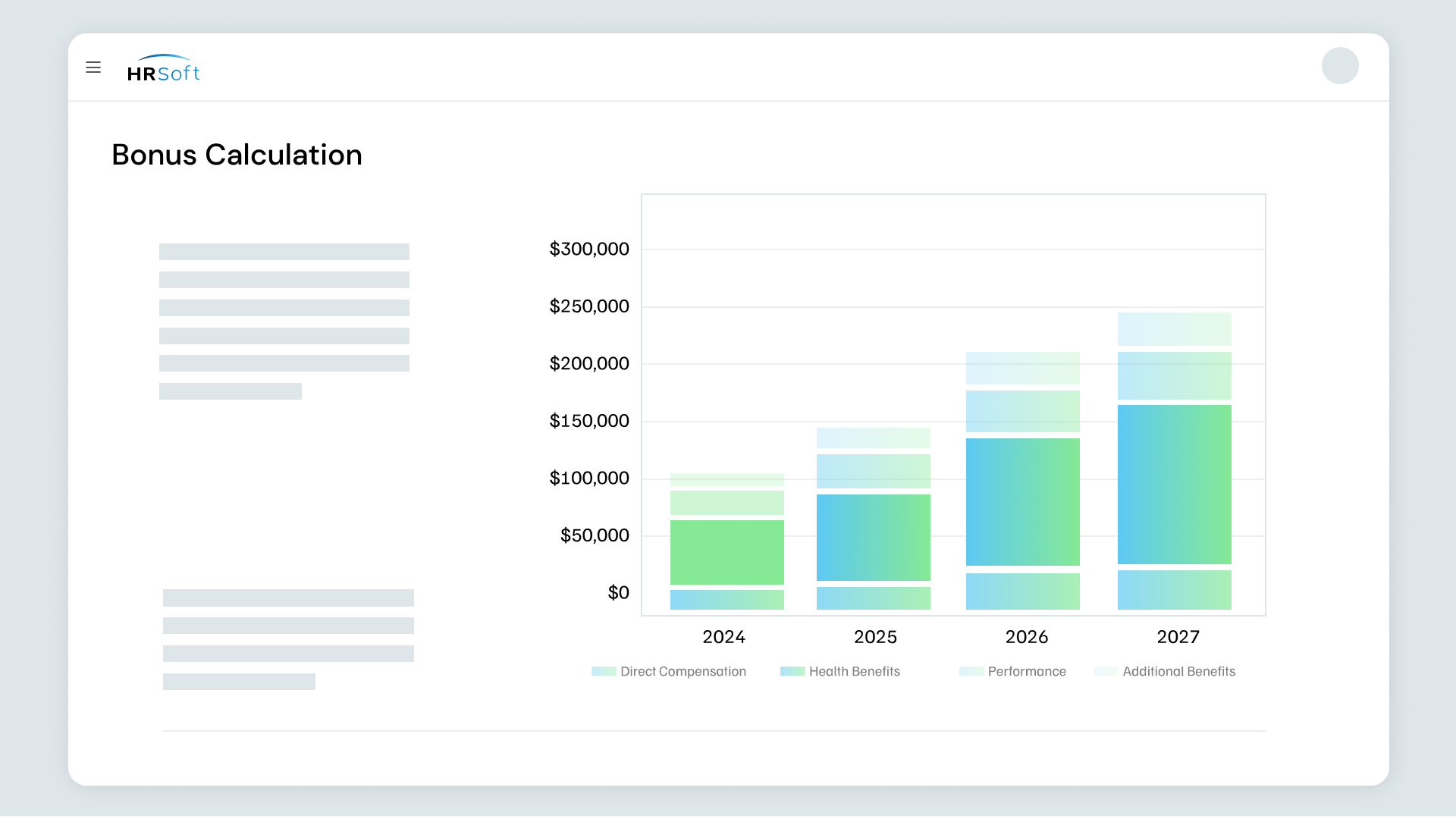
HRSoft is a governance-first compensation platform, best suited to organizations with complex audit requirements and mature comp functions. It goes deepest of this group on long-term incentives, carried interest, and budget control.

What it covers:

  • Merit and bonus planning with advanced budgeting, holdback management, and structured approval workflows
  • Dedicated LTI, carried interest, and deferred comp modules
  • Total rewards communication and real-time reporting

Pros:

  • Deep budget, holdback, and proration logic for complex scenarios
  • Strong governance and audit controls for regulated industries

Cons:

  • The planner and admin interface is described as dated, with worksheet-style screens lacking modern visual cues
  • Analytics depth and filtering do not match the platform’s budgeting sophistication 

Integrations: Connects with Oracle, UKG, ADP, and SAP SuccessFactors through APIs and data connectors. Confirm whether your Oracle sync is API-based or file-based during evaluation.

📚 Already using HRSoft and not happy with the experience? Explore HRSoft alternatives.

3. Salary.com

G2 ★★★★★ 4.4/5

Salary.com’s strength is market data. CompXL, its planning layer, is essentially a more secure, better-governed spreadsheet. That is useful if your primary gap is benchmarking. It is limiting if your primary gap is workflow.

What it covers:

  • An extensive HR-reported compensation dataset, refreshed regularly
  • CompXL: spreadsheet-native planning with governance controls, audit trails, and offline export
  • Pay equity suite and compliance monitoring

Pros:

  • Market data is trustworthy and easy to use, a consistent theme in reviews
  • Responsive support and straightforward implementation for the core data product

Cons:

  • Admin autonomy is moderate: statement setup and mid-cycle changes often route to Salary.com’s services team rather than self-service 
  • Reviewers ask for more HRIS integration options, and the planner interface feels dated next to purpose-built tools

Integrations: Integrates with major HRIS platforms via API and file-based methods. Note that CompXL, the planning layer, has limited standalone review coverage, so validate the Oracle connection directly.

📚 Already using Salary.com and not happy with the experience? Explore Salary.com alternatives.

4. Payscale

G2 ★★★★★ 4.2/5

Payscale is a data engine first. It runs Payfactors for comp management, MarketPay for enterprise survey aggregation, and Paycycle for merit-cycle planning. The data is the headline. Comp planning is secondary.

What it covers:

  • Aggregates hundreds of third-party surveys alongside crowdsourced data
  • Pay gap reporting and compliance monitoring
  • Paycycle: a newer merit-cycle planning layer for teams moving off spreadsheets

Pros:

  • Survey aggregation depth is strong for US-heavy benchmarking teams
  • Payscale rated Leading in handling complexity and budget management 

Cons:

  • Global data coverage outside the US is a documented gap
  • Comp planning is secondary to data, so complex bonus logic and LTI are not core strengths

Integrations: API-based HRIS integrations via Payfactors. Confirm the Oracle HCM connection method during evaluation.

📚 Already using Payscale and not happy with the experience? Explore Payscale alternatives.

5. Beqom

G2 ★★★★★ 4.3/5

Beqom unifies HR compensation and sales performance management in a single engine. It is built for global organizations where comp complexity and scale are the primary constraints. PayAnalytics, which Beqom acquired, adds pay gap analytics and EU Pay Transparency Directive reporting.

What it covers:

  • Salary, merit, and bonus with flexible configuration for multinational structures
  • LTI and deferred comp supported alongside HR comp
  • PayAnalytics for pay equity and EU pay transparency reporting

Pros:

  • Combines HR comp and sales performance management extensively
  • Handles large datasets across complex multinational structures

Cons:

  • Reviewers describe the flexibility as a double-edged sword, with complexity raising the risk of user errors and performance issues
  • Non-standard integrations and changes can be slow to implement, per G2 reviews

Integrations: Connects to Oracle through catalog connectors, including Oracle Fusion Cloud EPM and Oracle PeopleSoft, plus SAP SuccessFactors and Workday. Confirm Oracle Fusion HCM coverage specifically for your setup.

📚 Already using Beqom and not happy with the experience? Explore Beqom alternatives.

How to choose the right Oracle alternative

The single biggest question splits the whole field: is your primary gap workflow configurability, or market data?

If your gap is workflow, your team is losing time to IT tickets, scripting dependencies, slow cycles, or spreadsheet workarounds. Compport, HRSoft, and Beqom all address this in different ways. Compport solves it most directly: fully self-service, fastest to deploy, and built to run cycles without pulling in a consultant. HRSoft goes deepest on governance and LTI. Beqom fits when HR comp and sales comp need to live in a single engine.

If your gap is market data, your ranges are built on stale survey submissions, and Oracle does nothing to close that. Salary.com and Payscale both solve this. Salary.com brings trusted data with a tighter planning tie-in through CompXL. Payscale brings deeper survey aggregation, with Paycycle as a newer layer for teams ready to leave spreadsheets.

One Oracle-specific check before you sign. Confirm whether the tool syncs with Oracle via the native REST API or via file-based methods such as HCM Data Loader and HCM Extracts. That difference decides whether you get true bi-directional sync or overnight batch files.

Which Oracle alternative fits you?

Tap the one thing that matters most for your comp cycle.

Tap an option to see which platform fits.

For most mid-market to enterprise Oracle users, with a global footprint, multi-component plans, and consultant fatigue, Compport is the fastest path to a working comp layer that respects your existing Oracle investment.

Why should comp teams move to a purpose-built compensation tool? 

Enterprises keep Oracle as the system of record and run compensation in a dedicated layer that syncs back. Since Compport is built specifically for this, a direct comparison is worth making.

Decision criteria Compport Typical Oracle experience
Mid-cycle rule changes Configured by comp admins, anytime, without relaunching Complex rules can need scripting or IT support
Consultant / IT dependency Self-service rule engine "Rigid without advanced scripting knowledge, sometimes requiring IT support"
Implementation Typically 6 to 8 weeks Setup flagged as complex and time-consuming
Performance at peak cycle Built for full-cycle planning load "Slow when handling heavy compensation planning cycles"
Reporting 200+ pre-built reports and dashboards "Limited out of the box and often need additional configuration"
Admin self-service High; admins own configuration Tied to Core HR data structure; changes ripple across modules
Planner experience Managers onboard fast "Interface for managers could be more intuitive. Not plug and play"

Compport does not replace Oracle. It replaces the part that has been slowing your team down.

What’s next

Oracle HCM still earns its place as a system of record, and for some teams the native comp module is enough.

For everyone else: Compport for speed and self-service, HRSoft for LTI and governance depth, Salary.com and Payscale when market data is the real gap, and Beqom when HR and sales comp must share one engine.

The teams that move in 2026 are not ripping out Oracle. They are adding the layer Oracle was never built to be.

BOFU demo banner

See how Compport runs your entire compensation cycle in one place.

Book a demo →

FAQs

What are the best Oracle compensation alternatives in the US?

Compport leads as a top Oracle compensation alternative, with native bidirectional Oracle HCM sync, full admin self-service, and a 6- to 8-week implementation. HRSoft, Salary.com, Payscale, and Beqom round out the list, each strongest in a different area, from LTI governance to market data to multinational scale.

Can I replace just Oracle’s compensation module and keep Oracle HCM?

Yes. Every tool in this article sits atop Oracle HCM, your system of record. Employee data flows in, approved comp decisions sync back, and you keep one source of truth with better workflow on top.

Do these tools integrate with Oracle HCM Cloud?

Yes, though the method varies. Options range from native bi-directional APIs to catalog connectors and file-based syncs through HCM Data Loader or HCM Extracts. Always confirm whether a vendor’s Oracle integration is API-based or file-based during evaluation.

How long does it take to implement an Oracle comp alternative?

It depends on scope. Compport typically goes live in 8 to 12weeks. Others vary, and Beqom’s global deployments run longer. All are generally faster than a full Oracle Advanced Compensation rollout tied to a broader HCM program.

Which Oracle alternative handles pay equity best?

Compport and Beqom both offer built-in pay equity analytics and EU Pay Transparency Directive reporting, with Beqom via PayAnalytics. Salary.com and Payscale offer pay gap reporting tied to their market data. If pay equity is a near-term compliance driver, prioritize native analytics over a bolt-on.

Is it worth switching from Oracle for compensation?

If your comp cycle already runs in spreadsheets alongside Oracle, needs IT for routine rule changes, or slows down under load, a purpose-built layer usually pays for itself in cycle time and consultant spend. You keep Oracle as the system of record and only replace the planning layer.

5 Oracle Compensation Management Alternatives for US HR & Comp Teams

Jacob Suchocki, VP Growth at Compport
Jacob Suchocki
||
Published:
July 29, 2026
Jacob Suchocki, VP Growth at Compport
Jacob Suchocki
||
Published:
July 29, 2026
About Author
Oracle compensation management alternatives
Summarize with AI

If your company runs Oracle HCM, opting for the Oracle compensation management module looks like the obvious choice.

Oracle HCM Cloud is a serious system of record, and reviewers genuinely value having workforce data, salaries, and comp planning under one roof, with budgets visible in a single place. And then your first merit cycle starts.

A statutory bonus rule needs to be changed, so it becomes an IT ticket. Reports crawl during your busiest planning week. A manager opens the worksheet and cannot work out what to do. And the real modeling, again, ends up in spreadsheets.

One Oracle admin summed it up in the title of a G2 review:

“The initial configuration and customization can be complex and may require significant effort or expert support, especially for organizations with unique compensation structures.” - A mid-market user on G2.

Beyond configuration, this is an architecture problem. Oracle HCM was built to be your system of record, not a purpose-built compensation engine. You do not need to replace Oracle to fix this. You need to replace the layer slowing your team down, and sync approved decisions back.

We read what Oracle comp users actually say on G2, Capterra, and Gartner Peer Insights. Here are five platforms built to do exactly that.

You’re reading this if

  • Your comp cycle technically runs on Oracle, but the real modeling still happens in spreadsheets
  • A rule change, like eligibility or a statutory bonus, means a ticket to IT or a consultant, not a 20-minute admin edit
  • Reports and dashboards slow down during your heaviest planning weeks
  • Managers dread the comp worksheet because the interface was not built for them
  • Pay equity or total rewards statements are on your roadmap, and Oracle is not making it easy to get there
  • You keep Oracle as your HRIS and have no intention of ripping it out

Why do Oracle users look for compensation alternatives?

We reviewed G2, Capterra, and Gartner Peer Insights to find out what is actually frustrating Oracle comp users. The same themes came up again and again.

Configuration is time-consuming and rarely self-service

Setting up and changing comp logic in Oracle is repeatedly described as heavy work. Admins do not turn plans around quickly on their own. The initial setup is flagged as complex and time-consuming by enterprise reviewers.

“Configuration is time-consuming, and it needs to be improved.” — Kabiru Y., G2

Complex rules need scripting or IT, not comp admins

Non-standard eligibility, proration, and statutory rules do not map cleanly to the interface, so they fall to someone who can script them.

“Customization options for complex eligibility rules can feel rigid without advanced scripting knowledge, sometimes requiring IT support.” — CMA Anurag T., G2

Reporting is limited out of the box

Getting usable analysis often means extra configuration or an export to a spreadsheet. The reporting that ships is not enough for most comp teams to run a cycle on.

“Some reports and analytics feel limited out of the box and often need additional configuration.” — M S., G2

The planner experience is not purpose-built

Managers get the same generic interface as the rest of the suite. When the tool feels like something to get through, managers disengage or revert to spreadsheets, and planning accuracy drops.

Why this matters

None of this is just annoying. Each one carries a cost.

  • Scripting dependency for rule changes means cycle delays and consultant spend
  • Slowdowns during peak cycles mean missed approvals and payroll cutoffs
  • Limited native reporting means manual spreadsheet reconciliation and audit risk
  • A planner interface managers avoid means lower planning accuracy and more escalations
  • Weak native pay equity tooling means exposure as pay transparency rules tighten

The pattern in 2026 is consistent. Enterprises keep Oracle as the system of record and run compensation in a purpose-built layer that syncs approved decisions back. Here is how we evaluated the five most viable options for doing that.

What are your Oracle comp workarounds really costing you?

Add up the IT tickets and consultant hours, the cycles that stall under load, and the time spent reconciling spreadsheets after the fact. Then run the number.

Calculate your comp ROI →

How we evaluated

📊 Sources: G2, Capterra, Gartner Peer Insights, plus Oracle's own integration documentation.

Criteria: Oracle HCM integration depth, configurability and admin self-service, implementation speed, planner UX, reporting, LTI and sales comp, pay equity, and global readiness.

🚫 Excluded: broad HCM suites that replace Oracle, and benchmarking-only data tools.

5 best Oracle alternatives for compensation management

Here are five platforms built to replace the comp layer, not Oracle itself.

Oracle Compensation Alternatives: At a Glance

Tool Why it works as an Oracle comp alternative Best for G2 rating
Compport Native bi-directional Oracle sync, self-service rule engine, all comp types in one cycle Global comp teams wanting speed and configurability without consultants ★★★★★ 4.7/5
HRSoft Governance-first depth in LTI, carried interest, and budget control Regulated enterprises with complex LTI and audit needs ★★★★★ 4.4/5
Salary.com (CompXL) Market-data leader with a spreadsheet-native planning layer Teams whose primary gap is benchmarking data ★★★★★ 4.4/5
Payscale Deep survey aggregation, with Paycycle as a newer merit layer US-heavy benchmarking teams moving off spreadsheets ★★★★★ 4.2/5
Beqom Unifies HR comp and sales performance in one engine Global enterprises managing HR plus sales comp ★★★★★ 4.3/5

G2 ratings as of September 2026: Compport 4.7, HRSoft 4.4, Salary.com 4.4, Payscale/Payfactors 4.2, Beqom 4.3.

1. Compport

G2 ★★★★★ 4.7/5

Where Oracle routes most rule changes through IT or a consultant, Compport puts that control directly in the hands of comp admins. It is a purpose-built compensation platform serving 300+ companies across 37+ countries, managing compensation for 1.5 million+ employees. It is built to sit on top of Oracle HCM, not replace it.

What it covers:

  • Compensation Planning: merit, ad-hoc, and market-based adjustments with a rule engine admins configure themselves, and changes made mid-cycle without relaunching
  • Bonus Planning and Short Term Incentives: full eligible-earnings logic and scenario modeling, the exact gap most HCM comp users work around
  • Long Term Incentives: LTI, deferred comp, and vesting in the same workflow as merit and bonus
  • Pay Equity Management: pay gap analytics with real-time alerts, and EU Pay Transparency Directive reporting without add-on licensing
  • Total Rewards Statements: personalized statements in 20+ languages, configurable by role, level, location, and tenure
  • Sales Incentives Planning: sales comp alongside HR comp in one platform, no separate ICM tool
  • HR Analytics: 200+ pre-built interactive reports and dashboards, no custom development
  • Candidate Offer Module: market-aligned offer creation in the same platform

Pros:

  • Self-service rule engine, so complex eligibility and proration are configured by admins, not scripted by IT
  • Fast implementation, typically 6 to 8 weeks, against the far longer timelines enterprise Oracle deployments report
  • All comp types run in one cycle: merit, bonus, LTI, and sales comp
  • Pay equity analytics built in, not a separate module or add-on
  • Support turnaround as fast as 4 hours, cited by reviewers as a standout

Cons:

  • Newer platform, smaller review base than legacy competitors

Oracle integration

Native bi-directional API. Employee data flows from Oracle HCM, planning and approvals happen in Compport, and approved changes sync back for payroll. No manual reconciliation, and no production freeze in Oracle while the cycle runs.

Also integrates with

SAP SuccessFactors Workday ADP BambooHR UKG Darwinbox

💡 Global companies across banking, energy, SaaS, and financial services run their comp cycles on Compport without freezing their HRIS or calling a consultant. See how they do it → Customer Stories

2. HRSoft

G2 ★★★★★ 4.4/5

HRSoft is a governance-first compensation platform, best suited to organizations with complex audit requirements and mature comp functions. It goes deepest of this group on long-term incentives, carried interest, and budget control.

What it covers:

  • Merit and bonus planning with advanced budgeting, holdback management, and structured approval workflows
  • Dedicated LTI, carried interest, and deferred comp modules
  • Total rewards communication and real-time reporting

Pros:

  • Deep budget, holdback, and proration logic for complex scenarios
  • Strong governance and audit controls for regulated industries

Cons:

  • The planner and admin interface is described as dated, with worksheet-style screens lacking modern visual cues
  • Analytics depth and filtering do not match the platform’s budgeting sophistication 

Integrations: Connects with Oracle, UKG, ADP, and SAP SuccessFactors through APIs and data connectors. Confirm whether your Oracle sync is API-based or file-based during evaluation.

📚 Already using HRSoft and not happy with the experience? Explore HRSoft alternatives.

3. Salary.com

G2 ★★★★★ 4.4/5

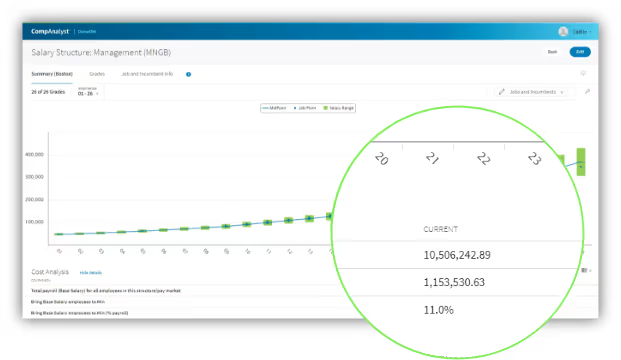
Salary.com’s strength is market data. CompXL, its planning layer, is essentially a more secure, better-governed spreadsheet. That is useful if your primary gap is benchmarking. It is limiting if your primary gap is workflow.

What it covers:

  • An extensive HR-reported compensation dataset, refreshed regularly
  • CompXL: spreadsheet-native planning with governance controls, audit trails, and offline export
  • Pay equity suite and compliance monitoring

Pros:

  • Market data is trustworthy and easy to use, a consistent theme in reviews
  • Responsive support and straightforward implementation for the core data product

Cons:

  • Admin autonomy is moderate: statement setup and mid-cycle changes often route to Salary.com’s services team rather than self-service 
  • Reviewers ask for more HRIS integration options, and the planner interface feels dated next to purpose-built tools

Integrations: Integrates with major HRIS platforms via API and file-based methods. Note that CompXL, the planning layer, has limited standalone review coverage, so validate the Oracle connection directly.

📚 Already using Salary.com and not happy with the experience? Explore Salary.com alternatives.

4. Payscale

G2 ★★★★★ 4.2/5

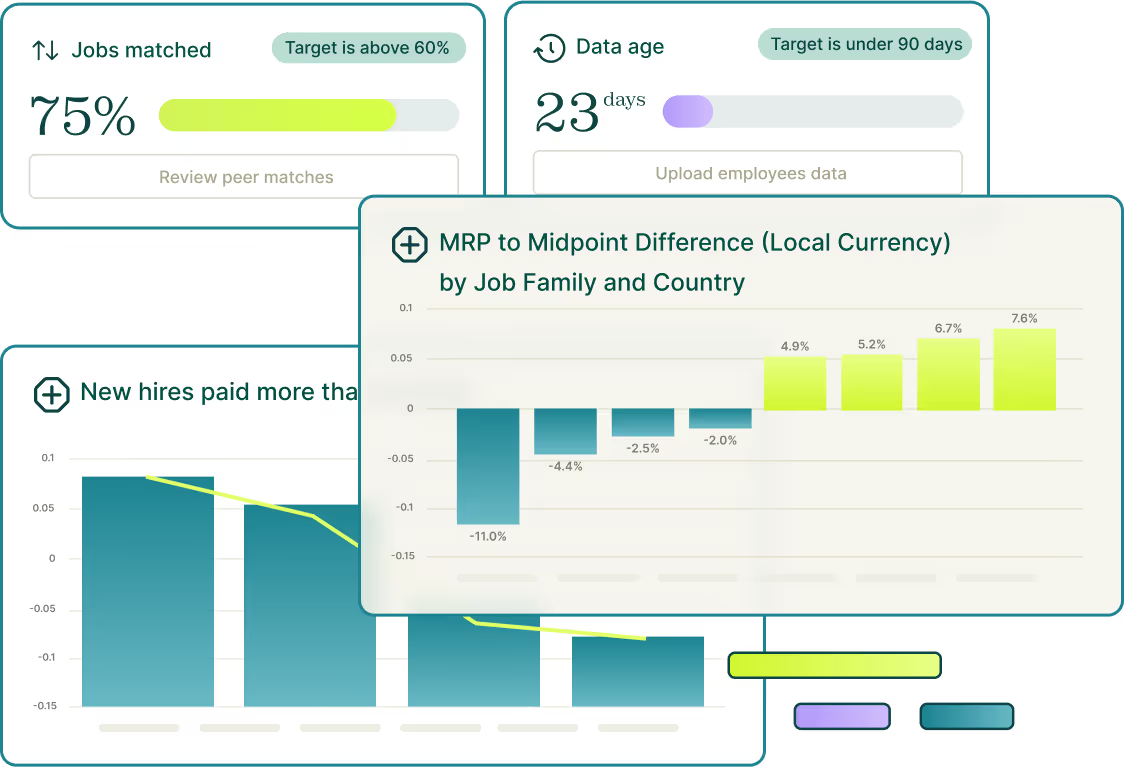
Payscale is a data engine first. It runs Payfactors for comp management, MarketPay for enterprise survey aggregation, and Paycycle for merit-cycle planning. The data is the headline. Comp planning is secondary.

What it covers:

  • Aggregates hundreds of third-party surveys alongside crowdsourced data
  • Pay gap reporting and compliance monitoring
  • Paycycle: a newer merit-cycle planning layer for teams moving off spreadsheets

Pros:

  • Survey aggregation depth is strong for US-heavy benchmarking teams
  • Payscale rated Leading in handling complexity and budget management 

Cons:

  • Global data coverage outside the US is a documented gap
  • Comp planning is secondary to data, so complex bonus logic and LTI are not core strengths

Integrations: API-based HRIS integrations via Payfactors. Confirm the Oracle HCM connection method during evaluation.

📚 Already using Payscale and not happy with the experience? Explore Payscale alternatives.

5. Beqom

G2 ★★★★★ 4.3/5

Beqom unifies HR compensation and sales performance management in a single engine. It is built for global organizations where comp complexity and scale are the primary constraints. PayAnalytics, which Beqom acquired, adds pay gap analytics and EU Pay Transparency Directive reporting.

What it covers:

  • Salary, merit, and bonus with flexible configuration for multinational structures
  • LTI and deferred comp supported alongside HR comp
  • PayAnalytics for pay equity and EU pay transparency reporting

Pros:

  • Combines HR comp and sales performance management extensively
  • Handles large datasets across complex multinational structures

Cons:

  • Reviewers describe the flexibility as a double-edged sword, with complexity raising the risk of user errors and performance issues
  • Non-standard integrations and changes can be slow to implement, per G2 reviews

Integrations: Connects to Oracle through catalog connectors, including Oracle Fusion Cloud EPM and Oracle PeopleSoft, plus SAP SuccessFactors and Workday. Confirm Oracle Fusion HCM coverage specifically for your setup.

📚 Already using Beqom and not happy with the experience? Explore Beqom alternatives.

How to choose the right Oracle alternative

The single biggest question splits the whole field: is your primary gap workflow configurability, or market data?

If your gap is workflow, your team is losing time to IT tickets, scripting dependencies, slow cycles, or spreadsheet workarounds. Compport, HRSoft, and Beqom all address this in different ways. Compport solves it most directly: fully self-service, fastest to deploy, and built to run cycles without pulling in a consultant. HRSoft goes deepest on governance and LTI. Beqom fits when HR comp and sales comp need to live in a single engine.

If your gap is market data, your ranges are built on stale survey submissions, and Oracle does nothing to close that. Salary.com and Payscale both solve this. Salary.com brings trusted data with a tighter planning tie-in through CompXL. Payscale brings deeper survey aggregation, with Paycycle as a newer layer for teams ready to leave spreadsheets.

One Oracle-specific check before you sign. Confirm whether the tool syncs with Oracle via the native REST API or via file-based methods such as HCM Data Loader and HCM Extracts. That difference decides whether you get true bi-directional sync or overnight batch files.

Which Oracle alternative fits you?

Tap the one thing that matters most for your comp cycle.

Tap an option to see which platform fits.

For most mid-market to enterprise Oracle users, with a global footprint, multi-component plans, and consultant fatigue, Compport is the fastest path to a working comp layer that respects your existing Oracle investment.

Why should comp teams move to a purpose-built compensation tool? 

Enterprises keep Oracle as the system of record and run compensation in a dedicated layer that syncs back. Since Compport is built specifically for this, a direct comparison is worth making.

Decision criteria Compport Typical Oracle experience
Mid-cycle rule changes Configured by comp admins, anytime, without relaunching Complex rules can need scripting or IT support
Consultant / IT dependency Self-service rule engine "Rigid without advanced scripting knowledge, sometimes requiring IT support"
Implementation Typically 6 to 8 weeks Setup flagged as complex and time-consuming
Performance at peak cycle Built for full-cycle planning load "Slow when handling heavy compensation planning cycles"
Reporting 200+ pre-built reports and dashboards "Limited out of the box and often need additional configuration"
Admin self-service High; admins own configuration Tied to Core HR data structure; changes ripple across modules
Planner experience Managers onboard fast "Interface for managers could be more intuitive. Not plug and play"

Compport does not replace Oracle. It replaces the part that has been slowing your team down.

What’s next

Oracle HCM still earns its place as a system of record, and for some teams the native comp module is enough.

For everyone else: Compport for speed and self-service, HRSoft for LTI and governance depth, Salary.com and Payscale when market data is the real gap, and Beqom when HR and sales comp must share one engine.

The teams that move in 2026 are not ripping out Oracle. They are adding the layer Oracle was never built to be.

BOFU demo banner

See how Compport runs your entire compensation cycle in one place.

Book a demo →

FAQs

What are the best Oracle compensation alternatives in the US?

Compport leads as a top Oracle compensation alternative, with native bidirectional Oracle HCM sync, full admin self-service, and a 6- to 8-week implementation. HRSoft, Salary.com, Payscale, and Beqom round out the list, each strongest in a different area, from LTI governance to market data to multinational scale.

Can I replace just Oracle’s compensation module and keep Oracle HCM?

Yes. Every tool in this article sits atop Oracle HCM, your system of record. Employee data flows in, approved comp decisions sync back, and you keep one source of truth with better workflow on top.

Do these tools integrate with Oracle HCM Cloud?

Yes, though the method varies. Options range from native bi-directional APIs to catalog connectors and file-based syncs through HCM Data Loader or HCM Extracts. Always confirm whether a vendor’s Oracle integration is API-based or file-based during evaluation.

How long does it take to implement an Oracle comp alternative?

It depends on scope. Compport typically goes live in 8 to 12weeks. Others vary, and Beqom’s global deployments run longer. All are generally faster than a full Oracle Advanced Compensation rollout tied to a broader HCM program.

Which Oracle alternative handles pay equity best?

Compport and Beqom both offer built-in pay equity analytics and EU Pay Transparency Directive reporting, with Beqom via PayAnalytics. Salary.com and Payscale offer pay gap reporting tied to their market data. If pay equity is a near-term compliance driver, prioritize native analytics over a bolt-on.

Is it worth switching from Oracle for compensation?

If your comp cycle already runs in spreadsheets alongside Oracle, needs IT for routine rule changes, or slows down under load, a purpose-built layer usually pays for itself in cycle time and consultant spend. You keep Oracle as the system of record and only replace the planning layer.

Share this post

Recommended articles

Incentive compensation management software evaluation
August 14, 2026

How to evaluate incentive compensation management software before you replace your sales commission tool

Read More
Oracle compensation management alternatives
July 29, 2026

5 Oracle Compensation Management Alternatives for US HR & Comp Teams

Read More
Compensation software vs. spreadsheet
July 23, 2026

Compensation management software vs spreadsheets: cost, risk, and where things break

Read More
LETS Talk

Learn how Compport can help your team

Get a demo