


Best compensation planning software for UK-based businesses in 2027

Senem Birim
October 21, 2026
Summarize with AI

Table of Contents

TL;DR

UK comp software now has to plan the cycle and keep the evidence behind every pay difference

Compport runs merit, bonus, LTI and pay equity on one platform, with CompportIQ checking pay equity on live data

beqom suits large total comp programs, and Syndio suits teams that lead with pay equity analysis and reporting

Before you buy, test gender pay gap data, equal pay evidence, salary ranges and AI governance on your own data

In September 2026, Next won its appeal against a £30m equal pay ruling after the Employment Appeal Tribunal accepted that recruitment pressures justified paying warehouse staff more than shop-floor workers doing work of equal value. 

Asda's case is still running. In 2025, a tribunal found that 12 of 14 store roles were of equal value to warehouse roles, and the claim, which lawyers value at up to £1.2bn, has moved to the stage where Asda has to explain the pay gap.

Both cases turn on the same question: can the employer show why pay differs? That question is about to come up more often. The government's consultation on pay transparency, which includes pay in job adverts and a possible Equal Pay Enforcement Unit, closes on 27 October 2026.

The Employment Rights Act 2025 is being phased in, and large employers will soon be required to add equality action plans to their gender pay gap reports.

For UK comp teams, that changes what compensation planning software has to do. Running the pay review is only part of the job. The system also has to hold the reasoning behind every decision. This guide compares three tools on that basis, then covers the rules, the features to look for and the questions to ask.

You're reading this if

  • You run pay reviews for a UK workforce, on their own or alongside EU and other entities
  • Your gender pay gap report still starts with a spreadsheet export
  • You need to explain pay differences to leadership, employees or a tribunal
  • You want salary ranges ready in case pay in job adverts becomes law
  • You are comparing compensation planning software and want to know what each tool covers in the UK

Definition

Compensation planning software runs your pay review cycles in one place: merit increases, bonuses, long-term incentives, budgets and approvals. For UK employers, it also needs to hold the data and reasoning behind pay decisions, so you can produce gender pay gap figures, justify differences under equal pay law and publish salary ranges with confidence.

The best compensation planning software for UK businesses at a glance

ToolBest forFull comp cyclesPay equityUK gender pay gap reportingAI
Compport
Editor's pick
UK and multi-country employers that want planning and pay equity on one platformYes: merit, bonus, LTI, sales incentives, total rewardsNative Pay Equity Management, plus the CompportIQ Pay Equity agentYes: gender pay gap calculations with an audit trailCompportIQ, Compport's compensation intelligence layer, with six live agents
beqomLarge enterprises running complex total comp and sales incentive programsYes: compensation and sales performance managementPayEquity by beqom, from its 2023 PayAnalytics acquisitionYes, a UK report from PayEquity by beqomAgents within its Intentional AI approach
SyndioTeams that lead with pay equity analysis, reporting and decision guidanceGuidance on individual pay decisions; full cycle management not describedPayEQ audits and remediationYes, through Global Pay ReportsSyndi, with agentic AI being expanded

How we evaluated

📊 Sources: vendor product pages, Gartner Peer Insights and Capterra reviews, UK government guidance and news coverage, as of October 2026.

✅ Criteria: full comp cycle coverage, pay equity depth, UK gender pay gap support, salary range management, AI governance and HRIS integration.

🚫 Excluded: payroll-only tools, salary benchmarking-only tools and broad HCM suites with a comp module.

1. Compport

‍

Compport is a compensation management platform for comp teams that run complex, multi-country pay cycles. Merit, bonus, long-term incentives, sales incentives, total rewards statements, and pay equity all run on a single platform that supports 1.5M+ users across 300+ customers in 37+ countries.

For UK employers, two layers matter. Compport's Pay Equity Management tools handle the core work of UK pay transparency: gender pay gap calculations, salary bands and documented justifications. On top of that, CompportIQ, Compport's compensation intelligence layer, analyzes and explains pay equity on your live data.

"Customizable features fit evolving needs, forward-thinking approach stands out."

HR manager, retail, on Gartner Peer Insights (July 2026)

‍

Pay equity and pay transparency in Compport

  • Gender pay gap calculations: automate data collection for your gender pay gap figures and keep an audit trail behind every submission.
  • Ready for ethnicity and disability reporting: manage demographic data securely, so you can run the same analysis by ethnicity and disability when reporting becomes law.
  • Salary bands you can publish: build bands by country, function, sub-function, business unit, level and grade. Design pay progression, ranges and job families in one place, then share ranges internally or in job adverts when the rules take effect.
  • Market data kept current: bring internal and external benchmarking data into a single view, with automatic checks that remove anomalies and data aging, keeping bands competitive.
  • Pay for new roles: price a job with no external benchmark by blending skills from existing roles.
  • Documented justifications: analyze pay across demographics and job families, and record the reasons behind pay differences through built-in audit workflows. That record is what an equal pay defense relies on.
  • Consistent offers: the Candidate Offer Module builds offers inside your ranges, so the pay you advertise matches the pay you offer.
  • Controlled access: decide who sees which ranges and pay data, down to the stakeholder.
  • Dashboards that answer the hard questions: track the pay equity gap, compa-ratio changes, possible bias in pay recommendations, and budget position.

CompportIQ: the intelligence layer on top

CompportIQ adds six purpose-built agents to Compport, including Pay Equity, Benchmarking and Comp Planner. They work on your live Compport data, inside your bands, rules and approval chains. For UK pay equity, that adds:

  • Explaining gaps: see the adjusted pay gap, whether it is statistically significant, which cohorts are affected and how many employees are at risk, then drill into the factors driving it.
  • Separating real gaps from data issues: when a cohort's gap looks implausibly large, CompportIQ flags it for a reasonableness check instead of reporting it as a finding.
  • Representation by level: see where men and women sit in your hierarchy, which helps explain your pay quartile figures and shape your equality action plan.
  • Closing gaps through the pay review: describe a goal, such as closing gaps over three years within the same budget, and the Comp Planner builds the merit plan with the cost of each year for the comp leader to review and approve.
  • Audit-ready output: export an auditor packet with the inputs and method behind a result.

CompportIQ, an AI pay equity software, is also built for the questions the ICO is asking about AI in employment decisions. Figures come from deterministic, tested calculations, and the language model only explains them. Agents run with the permissions of the person asking; every recommendation goes through your approval workflow, every action is logged, and your data never trains any model.
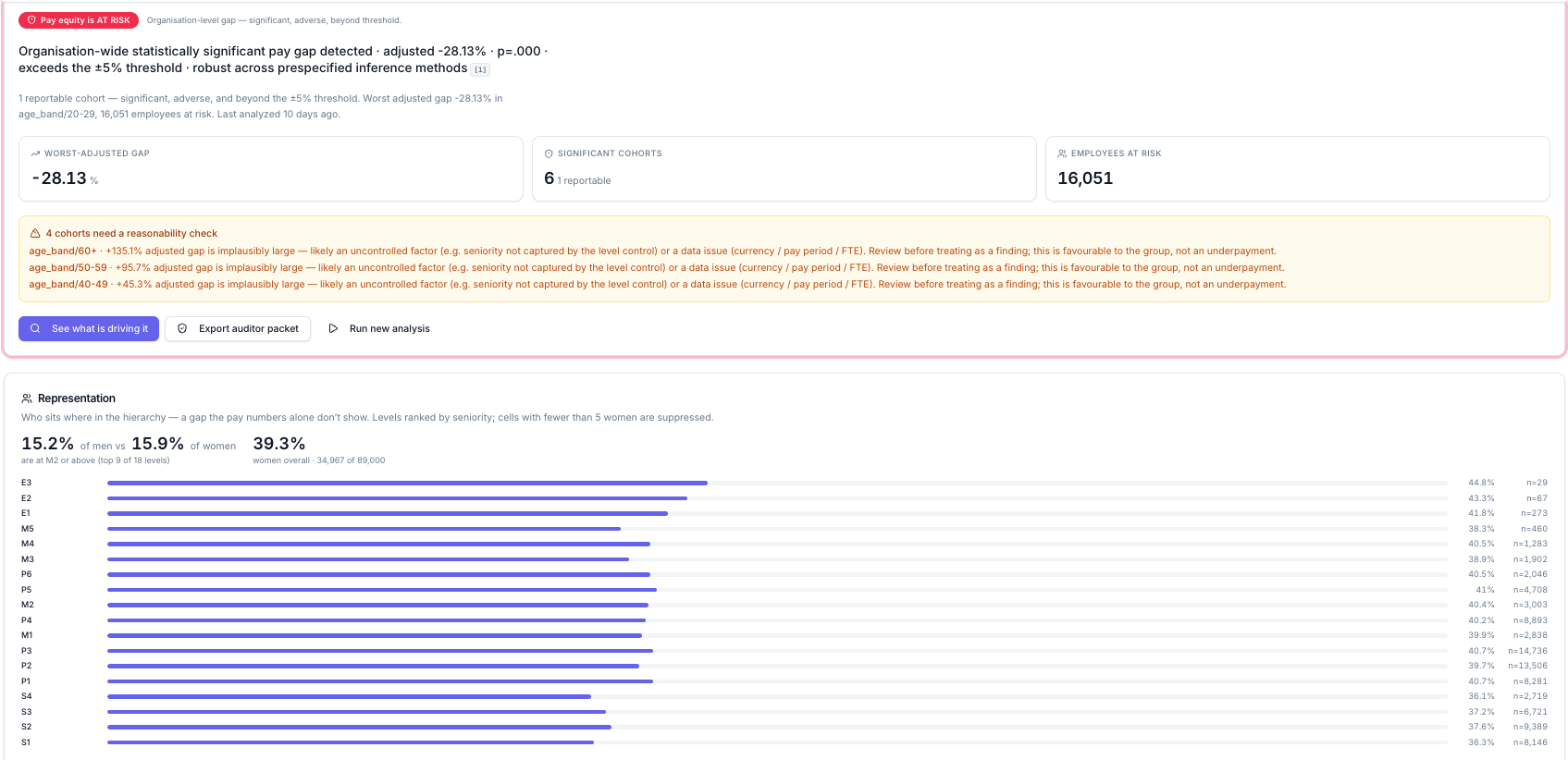
Pay equity analysis on live data, with a reasonableness check and representation by level

Everything else Compport covers

Pros

  • Pay equity, salary bands, planning and approvals on one platform, so the reasoning behind every pay decision stays with it
  • Gender pay gap calculations with an audit trail, and data management ready for ethnicity and disability reporting
  • CompportIQ explains what drives a gap, and every figure comes from a calculation on your data
  • Multi-country, multi-entity cycles for UK employers with international operations
  • Implementation within 12weeks, with support turnaround as fast as 4 hours
  • ISO 27001 and SOC 2 Type II certified, with published GDPR compliance information

Cons

  • Newer platform compared with legacy competitors

Integrates with

📚 For a deeper look at the rules, read our UK pay transparency laws guide.

See how CompportIQ checks pay equity on your own comp data Explore CompportIQ, Compport's compensation intelligence layer →

2. beqom

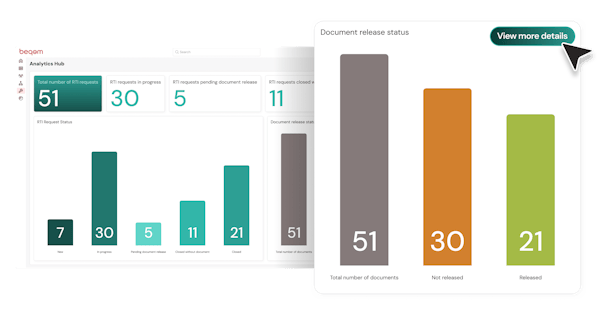
RTI analytics hub product ui screen
Source: Beqom

beqom is a total compensation platform for  enterprises, covering compensation planning and sales performance management. Its pay equity product, PayEquity by beqom, came through its 2023 acquisition of PayAnalytics and includes UK-specific reporting.

What it covers

  • Compensation management: salary review, bonus and long-term incentive planning
  • Sales performance management: commission and incentive calculations
  • Pay equity: adjusted pay gap analysis with suggested raises for specific employees
  • Workplace equity: workforce diversity composition and how it changes over time
  • Compensation Assistant: helps keep a closed gap from reopening through promotion or new-hire decisions

UK capabilities

beqom says PayEquity by beqom can create a UK gender pay gap report in a few clicks, with exports to PDF and PowerPoint.

Pros

  • Covers compensation and sales incentives on one platform
  • UK gender pay gap reporting built into its pay equity product
  • Configurable for complex business rules

Cons

  • Reviewers describe the flexibility as coming with longer implementation and more training

Things to check

PayEquity by beqom was acquired and is still sold under its own name. Ask how tightly it connects to beqom's comp cycles in your deployment. For a fuller look, see our beqom review.

Already using beqom?

If the experience isn't working for your comp team, see how the top alternatives compare.

See beqom alternatives →

3. Syndio

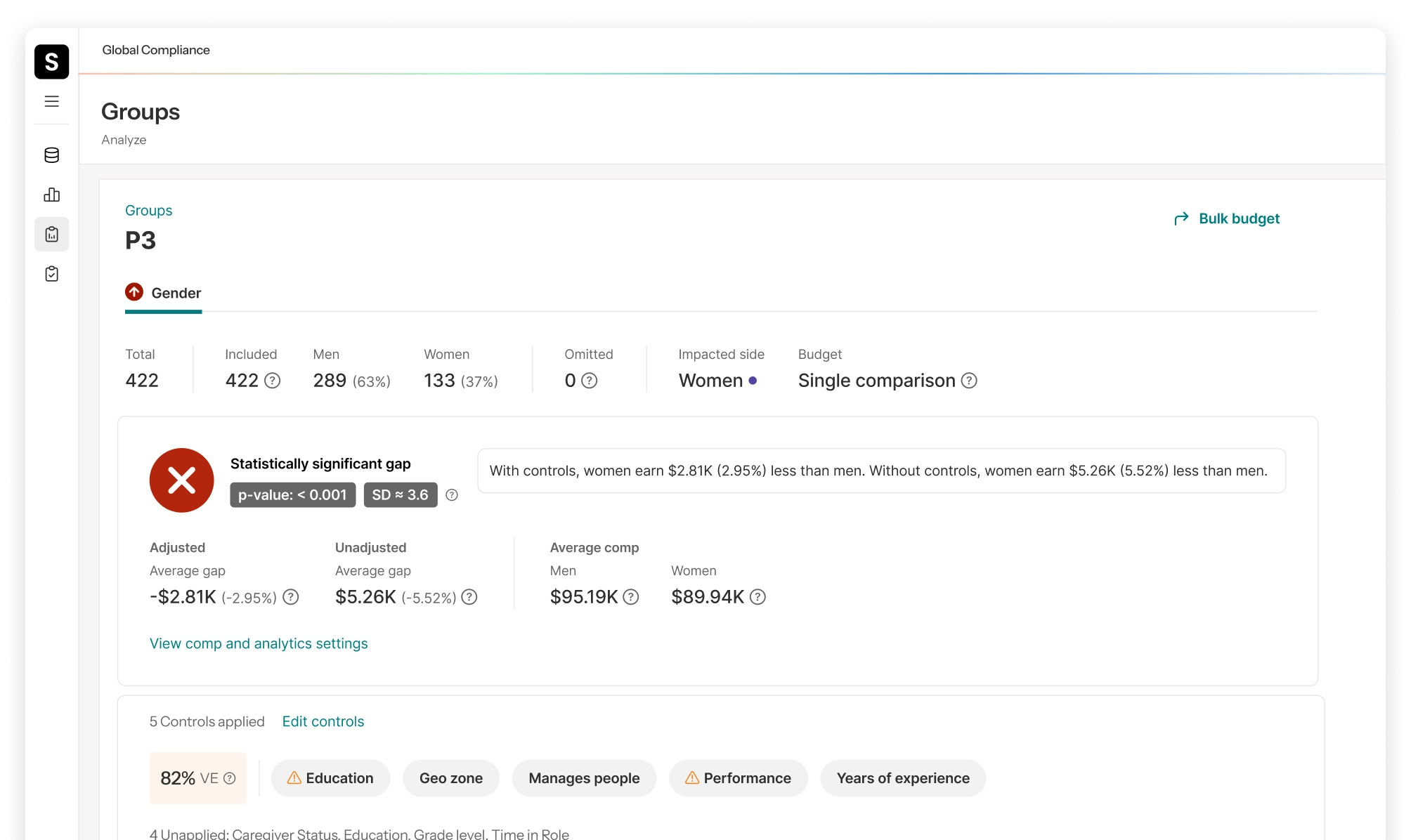
Essentials-hero-product-us
Source: Syndio

Syndio started in pay equity analysis and now positions itself around what it calls Decision Intelligence for Pay.

What it covers

  • PayEQ: pay and opportunity audits to analyze and resolve gaps
  • Decisions: guidance on new hire offers, promotions, merit increases, transfers and off-cycle adjustments, delivered in tools such as Workday, Slack and Teams
  • Syndi: Syndio's AI, which checks decisions against equity, market data and policy

UK capabilities

Global Pay Reports centralizes UK reporting with a data template, and Syndio offers country-specific reporting guidance through its AI assistant.

Pros

  • Strong focus on pay equity analysis and reporting
  • Pay guidance delivered inside tools teams already use
  • Covers UK and EU reporting in one place

Things to check

Syndio's Decisions page describes guidance at the point of each pay decision, but it doesn't describe building budgets, merit matrices or approval workflows for a full pay review. If you need to run the whole cycle, confirm what Syndio covers and what stays in your HRIS. Syndio is also expanding its agentic AI through its June 2026 acquisition of Embrace.ai, so ask which capabilities are live today.

The UK pay rules your compensation software has to handle

UK pay regulation is changing on several fronts at once. Some rules are already in force, some are on their way, and some are still proposals. Here is where each one stands.

RuleWho it applies toStatus (October 2026)What your software needs to do
Equal pay (Equality Act 2010)All employersIn forceKeep the reasons behind pay differences between roles of equal value
Gender pay gap reportingEmployers with 250+ employeesIn forceProduce hourly pay, bonus and quartile figures from a clean snapshot
Equality action plansEmployers with 250+ employeesVoluntary for reports due April 2027, mandatory afterTrack the actions behind your gender pay gap figures
Ethnicity and disability pay gap reportingExpected: employers with 250+ employeesPlanned in a draft bill, not yet lawHold ethnicity and disability data securely, ready for analysis
Pay in job advertsProposed: all employersConsultation closes 27 October 2026Maintain defensible salary ranges for every role
National Living WageAll employers£12.71 an hour (21+) from 1 April 2026Flag pay below the right rate for each age band
Employment Rights Act 2025All employersPhased in from 2026Plan pay changes with fire and rehire limits and longer claim windows in mind
AI and automated decisions (UK GDPR)Employers using AI in decisionsIn force, with ICO guidance being updatedKeep a person in every pay decision and log how it was made
EU Pay Transparency DirectiveUK groups with EU employeesEU deadline passed 7 June 2026Run EU reporting and pay information requests for EU entities

Equal pay under the Equality Act 2010

Men and women performing equal work, including work of equal value, are entitled to equal pay unless the employer can show a material reason for the difference unrelated to sex. The Next and Asda cases show how much rests on that reason. Next won its appeal because the tribunal accepted its recruitment justification. Your software should record the factors behind pay differences at the moment decisions are made, not reconstruct them years later.

Gender pay gap reporting

Employers with 250 or more employees must report their gender pay gap every year. Figures include the mean and median hourly pay gap, the mean and median bonus gap, the share of men and women receiving a bonus, and the split of men and women across pay quartiles. The snapshot date is 5 April for private and voluntary sector employers and 31 March for most public authorities, and reports are due within a year.

Equality action plans

Under the Employment Rights Act 2025, employers with 250 or more employees will publish equality action plans alongside their gender pay gap figures, covering steps on the gender pay gap and on menopause support. Plans are voluntary for reports due in April 2027 and become mandatory after that. Your software should help you see where gaps come from, so the actions you commit to are the right ones.

Ethnicity and disability pay gap reporting

The government plans to extend pay gap reporting to ethnicity and disability through the Equality (Race and Disability) Bill, which is expected to mirror gender pay gap reporting for employers with 250 or more employees. It isn't law yet, but it is worth choosing software that can analyze pay by any attribute you hold, not just sex.

Pay transparency and the 2026 consultation

The government's July 2026 consultation proposes that all employers include pay information in job adverts, or give it in writing before interview where there is no advert. It also asks how employers should find and fix unequal pay, whether tribunals should order pay audits, and whether to create an Equal Pay Enforcement Unit. It closes on 27 October 2026. Whatever the final rules, defensible salary ranges for every role are the place to start.

National Living Wage and minimum wage rates

The National Living Wage rose to £12.71 an hour for workers aged 21 and over on 1 April 2026, with separate rates for younger workers and apprentices. Enforcement now sits with the new Fair Work Agency. Your software should flag any planned pay that falls below the right rate for each employee's age band.

The Employment Rights Act 2025

The Act received Royal Assent in December 2025 and is being phased in. Day-one statutory sick pay started in April 2026. From October 2026, dismissing someone for refusing certain changes to core terms, including pay, becomes automatically unfair in most cases, and the time limit for tribunal claims doubles to six months. Pay restructures now need more planning and better records.

AI in pay decisions and UK GDPR

If you use AI in pay decisions, UK data protection law applies. The ICO expects meaningful human involvement, transparency about how automated decisions are made, a way for people to challenge them, and regular bias testing. Look for software where a person approves every decision and every action is logged.

UK groups with EU employees

The EU Pay Transparency Directive doesn't apply to UK entities, but it does apply to your EU employees. The deadline for member states passed on 7 June 2026, and only a few had fully transposed it by then. If you run pay across the UK and EU, your software needs to handle both sets of rules in one cycle.

Financial services remuneration

For banks and building societies, the PRA and FCA cut bonus deferral periods for senior staff from eight years to four in October 2025, with more flexibility on the mix of cash and instruments. If you're in financial services, check that your bonus planning can model the new rules.

What to look for in compensation planning software in the UK

With those rules in mind, these are the capabilities that separate software built for UK pay from software that only runs the cycle.

Gender pay gap data built in

Your gender pay gap figures should come from the same data you plan pay with, including ordinary pay and bonus pay, not from a separate export rebuilt every spring.

Pay equity analysis that explains the gap

Look for analysis with declared control factors, a method an expert can review, and drill-downs that show what drives a gap. That is the evidence you need if a difference is challenged.

Salary ranges you can publish

If pay in job adverts becomes law, the ranges you publish need to match the ones you actually pay. Ranges should connect to offers, promotions and merit decisions.

Wage floor checks in planning

National Living Wage checks should run during planning and offers, by age band, so problems are caught before payroll.

Multi-entity, multi-country cycles

UK employers with EU or global operations need one cycle across entities, with local rules applied in each country.

Human approval and a full audit trail

Any AI recommendation should go through your approval workflow, with every action logged against the person who took it.

Data protection and security

Ask where data is hosted, which security certifications the vendor holds, and whether your data trains any AI model.

Integration with your HRIS and payroll

Employee data should flow in from your HRIS, and approved changes should reach payroll without manual reconciliation.

What's your biggest UK pay challenge right now?

Tap the one that fits best.

Tap an option to see what fits.

AI pay equity

Comparing AI tools for pay equity specifically?

We compared the 5 best AI pay equity software in 2027 on statistical method, data checks, and whether the analysis runs inside your comp cycle.

See the 5 best AI pay equity software →

Questions to ask before you buy compensation planning software in the UK

Take these questions into every demo, and ask to see each answer working on your own data.

Question to askWhat a good answer looks likeRed flag
Can you produce our UK gender pay gap figures from the system?All six figures from one snapshot, with the underlying data you can checkExport to a spreadsheet and calculate it yourself
How do we document why two people in equal-value roles are paid differently?Factors, justification and approver logged against each decisionNotes kept outside the system, or nothing at all
Which factors does your pay equity analysis control for, and can we see the method?Declared control factors and a method an expert can reproduce"Proprietary model" with no explanation
How do you manage salary ranges we may have to publish?Ranges by role and level, tied to offers and merit decisionsRanges kept in a separate file
Do you flag pay below the National Living Wage?Checks by age band during planning and offersOnly caught by payroll after the fact
Could we report ethnicity and disability pay gaps later?Secure fields and analysis by any attribute you holdGender only, hard-coded
Where is our data hosted, and does it train your AI?A clear hosting answer, security certifications and no training on your dataVague answers on location or model training
Who approves an AI recommendation, and is it logged?A named person approves, with a full audit trailAI changes pay without review
Can we run UK and EU entities in one cycle?Multi-entity, multi-currency cycles with local rulesA separate setup per country
How long does implementation take?A dated plan, measured in weeks"It depends", with no timeline

Buyer's checklist

Wondering how to pick AI-native compensation management software?

Start with the right questions. Our guide covers 12 questions to ask an AI compensation vendor before you buy, with what a good answer sounds like and the red flags to watch for.

Read the 12 questions →

How to choose the right compensation planning software for your UK business

Two questions narrow the field quickly.

Do you need to run the whole pay review, or mainly analyze and report on it?

If you need to run merit, bonus, and incentive cycles end to end, look at Compport or beqom. If your main need is pay gap analysis and reporting, with pay guidance at the point of individual decisions, Syndio is built around that.

Where do you want pay equity to happen?

If you want pay equity checked while pay decisions are being made, on the same platform and data, Compport keeps planning, analysis and approvals together, with CompportIQ explaining the results. beqom pairs its comp suite with an acquired pay equity product, and Syndio leads with analysis and reporting alongside your existing systems.

Pay reviews you can explain

UK pay rules are heading in one direction: more reporting, more transparency and more pressure to show the reasoning behind pay. beqom suits enterprises with complex total comp and sales incentive programs. Syndio suits teams that lead with pay equity analysis and reporting. Compport brings planning, pay equity and approvals onto one platform, with CompportIQ explaining what drives a gap and a person approving every decision.

Whichever tool you choose, make sure it can answer the question every tribunal, regulator and employee will eventually ask: why is this person paid what they are paid? That is comp you can defend.

Run UK pay reviews you can explain to anyone who asks Book a demo →

FAQs

What is the best compensation planning software for UK businesses?

The best fit depends on what you need the software to do. Compport runs merit, bonus, LTI and pay equity on one platform, with CompportIQ adding pay equity analysis on live data. beqom suits large enterprises with complex total comp and sales incentive programs, and Syndio suits teams focused on pay equity analysis and reporting.

Is gender pay gap reporting mandatory in the UK?

Yes, for employers with 250 or more employees on the snapshot date. They must publish their mean and median hourly pay gaps, bonus gaps, the share of men and women receiving a bonus and the pay quartile split every year. From reports due after April 2027, they will also need equality action plans.

Do UK employers have to include salaries in job adverts?

Not yet. A government consultation published in July 2026 proposes requiring all employers to include pay information in job adverts, or to give it in writing before interview. The consultation closes on 27 October 2026, and any new rules would follow through regulations.

Does the EU Pay Transparency Directive apply to UK companies?

It doesn't apply to UK entities directly, but it does apply to employees in EU member states. UK groups with EU subsidiaries need to meet each member state's rules for those employees. Compensation software that runs UK and EU entities in one cycle makes that easier to manage.

Can AI be used in pay decisions under UK GDPR?

Yes, with safeguards. The ICO expects meaningful human involvement, transparency about how decisions are made, a way for people to challenge them and regular bias testing. CompportIQ, for example, keeps a person approving every recommendation and logs every action.

What should compensation planning software do for equal pay compliance?

It should record the factors and reasoning behind pay differences when decisions are made, analyze pay gaps with a method an expert can review, and show what drives each gap. Recent UK equal pay cases, such as Next and Asda, turned on whether the employer could explain why pay differed.

How long does it take to implement compensation planning software?

It varies by vendor and complexity. Compport typically implements in 6 to 8 weeks. Ask every vendor for a dated implementation plan, and check reviews for how long other customers took to go live.


Best compensation planning software for UK-based businesses in 2027

Senem Birim, Co-founder & COO, Senior HR | Compport Author
Senem Birim
||
Published:
October 21, 2026
Senem Birim, Co-founder & COO, Senior HR | Compport Author
Senem Birim
||
Published:
October 21, 2026
About Author
Compensation planning software for UK-based businesses
Summarize with AI

In September 2026, Next won its appeal against a £30m equal pay ruling after the Employment Appeal Tribunal accepted that recruitment pressures justified paying warehouse staff more than shop-floor workers doing work of equal value. 

Asda's case is still running. In 2025, a tribunal found that 12 of 14 store roles were of equal value to warehouse roles, and the claim, which lawyers value at up to £1.2bn, has moved to the stage where Asda has to explain the pay gap.

Both cases turn on the same question: can the employer show why pay differs? That question is about to come up more often. The government's consultation on pay transparency, which includes pay in job adverts and a possible Equal Pay Enforcement Unit, closes on 27 October 2026.

The Employment Rights Act 2025 is being phased in, and large employers will soon be required to add equality action plans to their gender pay gap reports.

For UK comp teams, that changes what compensation planning software has to do. Running the pay review is only part of the job. The system also has to hold the reasoning behind every decision. This guide compares three tools on that basis, then covers the rules, the features to look for and the questions to ask.

You're reading this if

  • You run pay reviews for a UK workforce, on their own or alongside EU and other entities
  • Your gender pay gap report still starts with a spreadsheet export
  • You need to explain pay differences to leadership, employees or a tribunal
  • You want salary ranges ready in case pay in job adverts becomes law
  • You are comparing compensation planning software and want to know what each tool covers in the UK

Definition

Compensation planning software runs your pay review cycles in one place: merit increases, bonuses, long-term incentives, budgets and approvals. For UK employers, it also needs to hold the data and reasoning behind pay decisions, so you can produce gender pay gap figures, justify differences under equal pay law and publish salary ranges with confidence.

The best compensation planning software for UK businesses at a glance

ToolBest forFull comp cyclesPay equityUK gender pay gap reportingAI
Compport
Editor's pick
UK and multi-country employers that want planning and pay equity on one platformYes: merit, bonus, LTI, sales incentives, total rewardsNative Pay Equity Management, plus the CompportIQ Pay Equity agentYes: gender pay gap calculations with an audit trailCompportIQ, Compport's compensation intelligence layer, with six live agents
beqomLarge enterprises running complex total comp and sales incentive programsYes: compensation and sales performance managementPayEquity by beqom, from its 2023 PayAnalytics acquisitionYes, a UK report from PayEquity by beqomAgents within its Intentional AI approach
SyndioTeams that lead with pay equity analysis, reporting and decision guidanceGuidance on individual pay decisions; full cycle management not describedPayEQ audits and remediationYes, through Global Pay ReportsSyndi, with agentic AI being expanded

How we evaluated

📊 Sources: vendor product pages, Gartner Peer Insights and Capterra reviews, UK government guidance and news coverage, as of October 2026.

✅ Criteria: full comp cycle coverage, pay equity depth, UK gender pay gap support, salary range management, AI governance and HRIS integration.

🚫 Excluded: payroll-only tools, salary benchmarking-only tools and broad HCM suites with a comp module.

1. Compport

‍

Compport is a compensation management platform for comp teams that run complex, multi-country pay cycles. Merit, bonus, long-term incentives, sales incentives, total rewards statements, and pay equity all run on a single platform that supports 1.5M+ users across 300+ customers in 37+ countries.

For UK employers, two layers matter. Compport's Pay Equity Management tools handle the core work of UK pay transparency: gender pay gap calculations, salary bands and documented justifications. On top of that, CompportIQ, Compport's compensation intelligence layer, analyzes and explains pay equity on your live data.

"Customizable features fit evolving needs, forward-thinking approach stands out."

HR manager, retail, on Gartner Peer Insights (July 2026)

‍

Pay equity and pay transparency in Compport

  • Gender pay gap calculations: automate data collection for your gender pay gap figures and keep an audit trail behind every submission.
  • Ready for ethnicity and disability reporting: manage demographic data securely, so you can run the same analysis by ethnicity and disability when reporting becomes law.
  • Salary bands you can publish: build bands by country, function, sub-function, business unit, level and grade. Design pay progression, ranges and job families in one place, then share ranges internally or in job adverts when the rules take effect.
  • Market data kept current: bring internal and external benchmarking data into a single view, with automatic checks that remove anomalies and data aging, keeping bands competitive.
  • Pay for new roles: price a job with no external benchmark by blending skills from existing roles.
  • Documented justifications: analyze pay across demographics and job families, and record the reasons behind pay differences through built-in audit workflows. That record is what an equal pay defense relies on.
  • Consistent offers: the Candidate Offer Module builds offers inside your ranges, so the pay you advertise matches the pay you offer.
  • Controlled access: decide who sees which ranges and pay data, down to the stakeholder.
  • Dashboards that answer the hard questions: track the pay equity gap, compa-ratio changes, possible bias in pay recommendations, and budget position.

CompportIQ: the intelligence layer on top

CompportIQ adds six purpose-built agents to Compport, including Pay Equity, Benchmarking and Comp Planner. They work on your live Compport data, inside your bands, rules and approval chains. For UK pay equity, that adds:

  • Explaining gaps: see the adjusted pay gap, whether it is statistically significant, which cohorts are affected and how many employees are at risk, then drill into the factors driving it.
  • Separating real gaps from data issues: when a cohort's gap looks implausibly large, CompportIQ flags it for a reasonableness check instead of reporting it as a finding.
  • Representation by level: see where men and women sit in your hierarchy, which helps explain your pay quartile figures and shape your equality action plan.
  • Closing gaps through the pay review: describe a goal, such as closing gaps over three years within the same budget, and the Comp Planner builds the merit plan with the cost of each year for the comp leader to review and approve.
  • Audit-ready output: export an auditor packet with the inputs and method behind a result.

CompportIQ, an AI pay equity software, is also built for the questions the ICO is asking about AI in employment decisions. Figures come from deterministic, tested calculations, and the language model only explains them. Agents run with the permissions of the person asking; every recommendation goes through your approval workflow, every action is logged, and your data never trains any model.

Pay equity analysis on live data, with a reasonableness check and representation by level

Everything else Compport covers

Pros

  • Pay equity, salary bands, planning and approvals on one platform, so the reasoning behind every pay decision stays with it
  • Gender pay gap calculations with an audit trail, and data management ready for ethnicity and disability reporting
  • CompportIQ explains what drives a gap, and every figure comes from a calculation on your data
  • Multi-country, multi-entity cycles for UK employers with international operations
  • Implementation within 12weeks, with support turnaround as fast as 4 hours
  • ISO 27001 and SOC 2 Type II certified, with published GDPR compliance information

Cons

  • Newer platform compared with legacy competitors

Integrates with

📚 For a deeper look at the rules, read our UK pay transparency laws guide.

See how CompportIQ checks pay equity on your own comp data Explore CompportIQ, Compport's compensation intelligence layer →

2. beqom

RTI analytics hub product ui screen
Source: Beqom

beqom is a total compensation platform for  enterprises, covering compensation planning and sales performance management. Its pay equity product, PayEquity by beqom, came through its 2023 acquisition of PayAnalytics and includes UK-specific reporting.

What it covers

  • Compensation management: salary review, bonus and long-term incentive planning
  • Sales performance management: commission and incentive calculations
  • Pay equity: adjusted pay gap analysis with suggested raises for specific employees
  • Workplace equity: workforce diversity composition and how it changes over time
  • Compensation Assistant: helps keep a closed gap from reopening through promotion or new-hire decisions

UK capabilities

beqom says PayEquity by beqom can create a UK gender pay gap report in a few clicks, with exports to PDF and PowerPoint.

Pros

  • Covers compensation and sales incentives on one platform
  • UK gender pay gap reporting built into its pay equity product
  • Configurable for complex business rules

Cons

  • Reviewers describe the flexibility as coming with longer implementation and more training

Things to check

PayEquity by beqom was acquired and is still sold under its own name. Ask how tightly it connects to beqom's comp cycles in your deployment. For a fuller look, see our beqom review.

Already using beqom?

If the experience isn't working for your comp team, see how the top alternatives compare.

See beqom alternatives →

3. Syndio

Essentials-hero-product-us
Source: Syndio

Syndio started in pay equity analysis and now positions itself around what it calls Decision Intelligence for Pay.

What it covers

  • PayEQ: pay and opportunity audits to analyze and resolve gaps
  • Decisions: guidance on new hire offers, promotions, merit increases, transfers and off-cycle adjustments, delivered in tools such as Workday, Slack and Teams
  • Syndi: Syndio's AI, which checks decisions against equity, market data and policy

UK capabilities

Global Pay Reports centralizes UK reporting with a data template, and Syndio offers country-specific reporting guidance through its AI assistant.

Pros

  • Strong focus on pay equity analysis and reporting
  • Pay guidance delivered inside tools teams already use
  • Covers UK and EU reporting in one place

Things to check

Syndio's Decisions page describes guidance at the point of each pay decision, but it doesn't describe building budgets, merit matrices or approval workflows for a full pay review. If you need to run the whole cycle, confirm what Syndio covers and what stays in your HRIS. Syndio is also expanding its agentic AI through its June 2026 acquisition of Embrace.ai, so ask which capabilities are live today.

The UK pay rules your compensation software has to handle

UK pay regulation is changing on several fronts at once. Some rules are already in force, some are on their way, and some are still proposals. Here is where each one stands.

RuleWho it applies toStatus (October 2026)What your software needs to do
Equal pay (Equality Act 2010)All employersIn forceKeep the reasons behind pay differences between roles of equal value
Gender pay gap reportingEmployers with 250+ employeesIn forceProduce hourly pay, bonus and quartile figures from a clean snapshot
Equality action plansEmployers with 250+ employeesVoluntary for reports due April 2027, mandatory afterTrack the actions behind your gender pay gap figures
Ethnicity and disability pay gap reportingExpected: employers with 250+ employeesPlanned in a draft bill, not yet lawHold ethnicity and disability data securely, ready for analysis
Pay in job advertsProposed: all employersConsultation closes 27 October 2026Maintain defensible salary ranges for every role
National Living WageAll employers£12.71 an hour (21+) from 1 April 2026Flag pay below the right rate for each age band
Employment Rights Act 2025All employersPhased in from 2026Plan pay changes with fire and rehire limits and longer claim windows in mind
AI and automated decisions (UK GDPR)Employers using AI in decisionsIn force, with ICO guidance being updatedKeep a person in every pay decision and log how it was made
EU Pay Transparency DirectiveUK groups with EU employeesEU deadline passed 7 June 2026Run EU reporting and pay information requests for EU entities

Equal pay under the Equality Act 2010

Men and women performing equal work, including work of equal value, are entitled to equal pay unless the employer can show a material reason for the difference unrelated to sex. The Next and Asda cases show how much rests on that reason. Next won its appeal because the tribunal accepted its recruitment justification. Your software should record the factors behind pay differences at the moment decisions are made, not reconstruct them years later.

Gender pay gap reporting

Employers with 250 or more employees must report their gender pay gap every year. Figures include the mean and median hourly pay gap, the mean and median bonus gap, the share of men and women receiving a bonus, and the split of men and women across pay quartiles. The snapshot date is 5 April for private and voluntary sector employers and 31 March for most public authorities, and reports are due within a year.

Equality action plans

Under the Employment Rights Act 2025, employers with 250 or more employees will publish equality action plans alongside their gender pay gap figures, covering steps on the gender pay gap and on menopause support. Plans are voluntary for reports due in April 2027 and become mandatory after that. Your software should help you see where gaps come from, so the actions you commit to are the right ones.

Ethnicity and disability pay gap reporting

The government plans to extend pay gap reporting to ethnicity and disability through the Equality (Race and Disability) Bill, which is expected to mirror gender pay gap reporting for employers with 250 or more employees. It isn't law yet, but it is worth choosing software that can analyze pay by any attribute you hold, not just sex.

Pay transparency and the 2026 consultation

The government's July 2026 consultation proposes that all employers include pay information in job adverts, or give it in writing before interview where there is no advert. It also asks how employers should find and fix unequal pay, whether tribunals should order pay audits, and whether to create an Equal Pay Enforcement Unit. It closes on 27 October 2026. Whatever the final rules, defensible salary ranges for every role are the place to start.

National Living Wage and minimum wage rates

The National Living Wage rose to £12.71 an hour for workers aged 21 and over on 1 April 2026, with separate rates for younger workers and apprentices. Enforcement now sits with the new Fair Work Agency. Your software should flag any planned pay that falls below the right rate for each employee's age band.

The Employment Rights Act 2025

The Act received Royal Assent in December 2025 and is being phased in. Day-one statutory sick pay started in April 2026. From October 2026, dismissing someone for refusing certain changes to core terms, including pay, becomes automatically unfair in most cases, and the time limit for tribunal claims doubles to six months. Pay restructures now need more planning and better records.

AI in pay decisions and UK GDPR

If you use AI in pay decisions, UK data protection law applies. The ICO expects meaningful human involvement, transparency about how automated decisions are made, a way for people to challenge them, and regular bias testing. Look for software where a person approves every decision and every action is logged.

UK groups with EU employees

The EU Pay Transparency Directive doesn't apply to UK entities, but it does apply to your EU employees. The deadline for member states passed on 7 June 2026, and only a few had fully transposed it by then. If you run pay across the UK and EU, your software needs to handle both sets of rules in one cycle.

Financial services remuneration

For banks and building societies, the PRA and FCA cut bonus deferral periods for senior staff from eight years to four in October 2025, with more flexibility on the mix of cash and instruments. If you're in financial services, check that your bonus planning can model the new rules.

What to look for in compensation planning software in the UK

With those rules in mind, these are the capabilities that separate software built for UK pay from software that only runs the cycle.

Gender pay gap data built in

Your gender pay gap figures should come from the same data you plan pay with, including ordinary pay and bonus pay, not from a separate export rebuilt every spring.

Pay equity analysis that explains the gap

Look for analysis with declared control factors, a method an expert can review, and drill-downs that show what drives a gap. That is the evidence you need if a difference is challenged.

Salary ranges you can publish

If pay in job adverts becomes law, the ranges you publish need to match the ones you actually pay. Ranges should connect to offers, promotions and merit decisions.

Wage floor checks in planning

National Living Wage checks should run during planning and offers, by age band, so problems are caught before payroll.

Multi-entity, multi-country cycles

UK employers with EU or global operations need one cycle across entities, with local rules applied in each country.

Human approval and a full audit trail

Any AI recommendation should go through your approval workflow, with every action logged against the person who took it.

Data protection and security

Ask where data is hosted, which security certifications the vendor holds, and whether your data trains any AI model.

Integration with your HRIS and payroll

Employee data should flow in from your HRIS, and approved changes should reach payroll without manual reconciliation.

What's your biggest UK pay challenge right now?

Tap the one that fits best.

Tap an option to see what fits.

AI pay equity

Comparing AI tools for pay equity specifically?

We compared the 5 best AI pay equity software in 2027 on statistical method, data checks, and whether the analysis runs inside your comp cycle.

See the 5 best AI pay equity software →

Questions to ask before you buy compensation planning software in the UK

Take these questions into every demo, and ask to see each answer working on your own data.

Question to askWhat a good answer looks likeRed flag
Can you produce our UK gender pay gap figures from the system?All six figures from one snapshot, with the underlying data you can checkExport to a spreadsheet and calculate it yourself
How do we document why two people in equal-value roles are paid differently?Factors, justification and approver logged against each decisionNotes kept outside the system, or nothing at all
Which factors does your pay equity analysis control for, and can we see the method?Declared control factors and a method an expert can reproduce"Proprietary model" with no explanation
How do you manage salary ranges we may have to publish?Ranges by role and level, tied to offers and merit decisionsRanges kept in a separate file
Do you flag pay below the National Living Wage?Checks by age band during planning and offersOnly caught by payroll after the fact
Could we report ethnicity and disability pay gaps later?Secure fields and analysis by any attribute you holdGender only, hard-coded
Where is our data hosted, and does it train your AI?A clear hosting answer, security certifications and no training on your dataVague answers on location or model training
Who approves an AI recommendation, and is it logged?A named person approves, with a full audit trailAI changes pay without review
Can we run UK and EU entities in one cycle?Multi-entity, multi-currency cycles with local rulesA separate setup per country
How long does implementation take?A dated plan, measured in weeks"It depends", with no timeline

Buyer's checklist

Wondering how to pick AI-native compensation management software?

Start with the right questions. Our guide covers 12 questions to ask an AI compensation vendor before you buy, with what a good answer sounds like and the red flags to watch for.

Read the 12 questions →

How to choose the right compensation planning software for your UK business

Two questions narrow the field quickly.

Do you need to run the whole pay review, or mainly analyze and report on it?

If you need to run merit, bonus, and incentive cycles end to end, look at Compport or beqom. If your main need is pay gap analysis and reporting, with pay guidance at the point of individual decisions, Syndio is built around that.

Where do you want pay equity to happen?

If you want pay equity checked while pay decisions are being made, on the same platform and data, Compport keeps planning, analysis and approvals together, with CompportIQ explaining the results. beqom pairs its comp suite with an acquired pay equity product, and Syndio leads with analysis and reporting alongside your existing systems.

Pay reviews you can explain

UK pay rules are heading in one direction: more reporting, more transparency and more pressure to show the reasoning behind pay. beqom suits enterprises with complex total comp and sales incentive programs. Syndio suits teams that lead with pay equity analysis and reporting. Compport brings planning, pay equity and approvals onto one platform, with CompportIQ explaining what drives a gap and a person approving every decision.

Whichever tool you choose, make sure it can answer the question every tribunal, regulator and employee will eventually ask: why is this person paid what they are paid? That is comp you can defend.

Run UK pay reviews you can explain to anyone who asks Book a demo →

FAQs

What is the best compensation planning software for UK businesses?

The best fit depends on what you need the software to do. Compport runs merit, bonus, LTI and pay equity on one platform, with CompportIQ adding pay equity analysis on live data. beqom suits large enterprises with complex total comp and sales incentive programs, and Syndio suits teams focused on pay equity analysis and reporting.

Is gender pay gap reporting mandatory in the UK?

Yes, for employers with 250 or more employees on the snapshot date. They must publish their mean and median hourly pay gaps, bonus gaps, the share of men and women receiving a bonus and the pay quartile split every year. From reports due after April 2027, they will also need equality action plans.

Do UK employers have to include salaries in job adverts?

Not yet. A government consultation published in July 2026 proposes requiring all employers to include pay information in job adverts, or to give it in writing before interview. The consultation closes on 27 October 2026, and any new rules would follow through regulations.

Does the EU Pay Transparency Directive apply to UK companies?

It doesn't apply to UK entities directly, but it does apply to employees in EU member states. UK groups with EU subsidiaries need to meet each member state's rules for those employees. Compensation software that runs UK and EU entities in one cycle makes that easier to manage.

Can AI be used in pay decisions under UK GDPR?

Yes, with safeguards. The ICO expects meaningful human involvement, transparency about how decisions are made, a way for people to challenge them and regular bias testing. CompportIQ, for example, keeps a person approving every recommendation and logs every action.

What should compensation planning software do for equal pay compliance?

It should record the factors and reasoning behind pay differences when decisions are made, analyze pay gaps with a method an expert can review, and show what drives each gap. Recent UK equal pay cases, such as Next and Asda, turned on whether the employer could explain why pay differed.

How long does it take to implement compensation planning software?

It varies by vendor and complexity. Compport typically implements in 6 to 8 weeks. Ask every vendor for a dated implementation plan, and check reviews for how long other customers took to go live.

Share this post

Recommended articles

Compensation planning software for UK-based businesses
October 21, 2026

Best compensation planning software for UK-based businesses in 2027

Read More
AI pay equity software
October 13, 2026

5 Best AI pay equity software in 2027

Read More
compensation management in US financial services
October 9, 2026

Compensation management for US financial services sector: what makes it different?

Read More
LETS Talk

Learn how Compport can help your team

Get a demo