

5 Trusaic alternatives for pay equity management in 2027

Senem Birim
November 6, 2026
Summarize with AI

Table of Contents

TL;DR

Trusaic is strong on compliance-led pay equity audits, but the fixes it finds still have to be made in whatever system runs your comp cycle.

The five alternatives covered here are Compport + CompportIQ, PayAnalytics by Beqom, Syndio, Pave and Payscale Ascent.

Compport runs pay equity on the same platform as merit, bonus, LTI and total rewards, and CompportIQ checks equity while decisions are being made.

When you compare tools, ask where a pay gap gets fixed, not just where it gets found.

Trusaic has built a strong reputation for compliance-led pay equity audits. PayParity, its pay equity product, analyzes gender, race, age, and other characteristics in a single model, models remediation through its R.O.S.A. engine, and produces reports for the EU Pay Transparency Directive, OFCCP audits, and EEO-1. It also works with your counsel so audits can stay under attorney-client privilege. For a lot of teams, that covers the hard part. Finding a pay gap, though, is only half the job. 

The fix happens in the next merit cycle, usually in a different system, and that is where many comp teams start looking at alternatives.

It doesn't help that there is little peer feedback to go on. One of the few public reviews of the platform, on Gartner Peer Insights, puts it plainly:

"The platform is not yet mature and is still being worked on heavily." - Human Resources Associate, IT services company, Gartner Peer Insights, July 2026

This guide looks at what teams run into with Trusaic, then compares five Trusaic alternatives on how they find, explain, and fix pay gaps.

Want to skip straight to the Trusaic alternatives?

See the alternatives ↓

You're reading this if

  • Your pay equity audit runs separately from your merit and bonus cycles
  • Remediation plans have to be rebuilt in another tool or a spreadsheet before anyone can approve them
  • You want pay equity checked before increases are approved, not after the cycle closes
  • US state pay transparency laws or the EU Pay Transparency Directive apply to you
  • You are weighing a dedicated audit tool against a comp platform with pay equity built in

Why do teams look for Trusaic alternatives?

We checked G2, Capterra, Gartner Peer Insights, and TrustRadius, along with Trusaic's own product pages, to see where teams run into limits. Three patterns stood out.

1. Pay equity findings sit outside the comp cycle

Trusaic's lineup covers pay equity audits (PayParity), Salary Range Finder, Global Pay Data Reporting, ACA Complete and TaxAdvantage, according to its homepage. None of these runs merit, bonus, or budget cycles, and the PayParity page doesn't describe compensation planning workflows. 

Job evaluation also comes from outside: Trusaic partnered with gradar in March 2026 to pair gradar's job evaluation with PayParity's analytics.

In practice, that means the remediation plan R.O.S.A. produces has to be carried into whatever system runs your comp cycle, then rebuilt, budgeted, and approved there. Every handoff adds time, and gives a gap another cycle to grow.

2. A platform that is still maturing, with integration delays

The verified reviewer on Gartner Peer Insights rated Trusaic well for ease of use and its team's expertise, but held back on platform maturity. They also described delays in approving some features and Workday integrations, including the Right to Request Information module, and felt these "could have been addressed better through communication and transparency."

"There are many improvements that could/should be made."
Source: Gartner Peer Insights

AI is part of the same picture. Trusaic announced in June 2025 that Trusaic AI was "coming soon" to PayParity, so it's worth confirming in a demo which AI capabilities are live today.

3. Few independent reviews to check before you buy

As of November 2026, Trusaic's pay equity product has no reviews on G2, Capterra, or TrustRadius, and three ratings on Gartner Peer Insights. That isn't a verdict on the product, but it makes it harder to hear from peers before committing to a tool that will hold some of your most sensitive data.

Why this matters for comp teams in the US and EU

Pay equity is no longer an annual project you can schedule around. On both sides of the Atlantic, the rules now require employers to identify gaps, explain them, fix them, and show their reasoning.

  • In the US, more than a dozen states now require salary ranges in job postings, making pay decisions more visible and more likely to be questioned. A gap that is found after approvals means another approval round and a harder conversation with employees.
  • In the EU, the deadline for member states to bring the Pay Transparency Directive into national law passed in June 2026, and the first gender pay gap reports for larger employers are due from June 2027. An audit that sits apart from the comp cycle means remediation lands a cycle late, just as reporting starts.

Watch our latest podcast on the EU Pay Transparency Directive implementation featuring Artila Metaliaj, Founder of Fair.

  • Across both, pay data is among the most sensitive data you hold. A tool that touches it has to comply with GDPR in Europe and the CCPA in California, which puts security and certifications on the shortlist, not just features.

How we evaluated

📊 Sources: G2, Capterra, Gartner Peer Insights, TrustRadius, vendor product pages and news coverage, as of November 2026.

✅ Criteria: statistical method and explainability, data quality checks, remediation modeling, pay equity checks inside the comp cycle, AI status (live or coming), HRIS integration, and support for US and EU pay transparency rules.

🚫 Excluded: broad HCM suites and consultancy-only audit services.

5 Trusaic alternatives at a glance

ToolHow it works as a Trusaic alternativeBest forG2 rating
Compport + CompportIQ
Editor's pick
Runs pay equity analysis on the same platform as merit, bonus, LTI and total rewards, so gaps are found and fixed in one cycleComp teams that want pay equity checked and fixed while pay decisions are being made4.7 / 5
PayAnalytics by BeqomRegression-based pay gap analysis and remediation, now sold within Beqom's compensation suiteTeams already on Beqom, or those that want a dedicated pay equity tool4.7 / 5
SyndioPay equity monitoring plus pay guidance delivered inside HRIS and collaboration toolsEnterprises focused on ongoing pay equity monitoring and governance4.5 / 5
PaveFlags pay equity, compression and out-of-band risks inside market pricing and planningMarket-driven comp teams that price roles on real-time data4.7 / 5
Payscale AscentBenchmarking platform, with pay equity analysis available as a separate Payscale productTeams that want market data and pay equity from one vendor family4.3 / 5

G2 ratings as of November 2026.

The 5 best Trusaic alternatives for pay equity management

1. Compport + CompportIQ

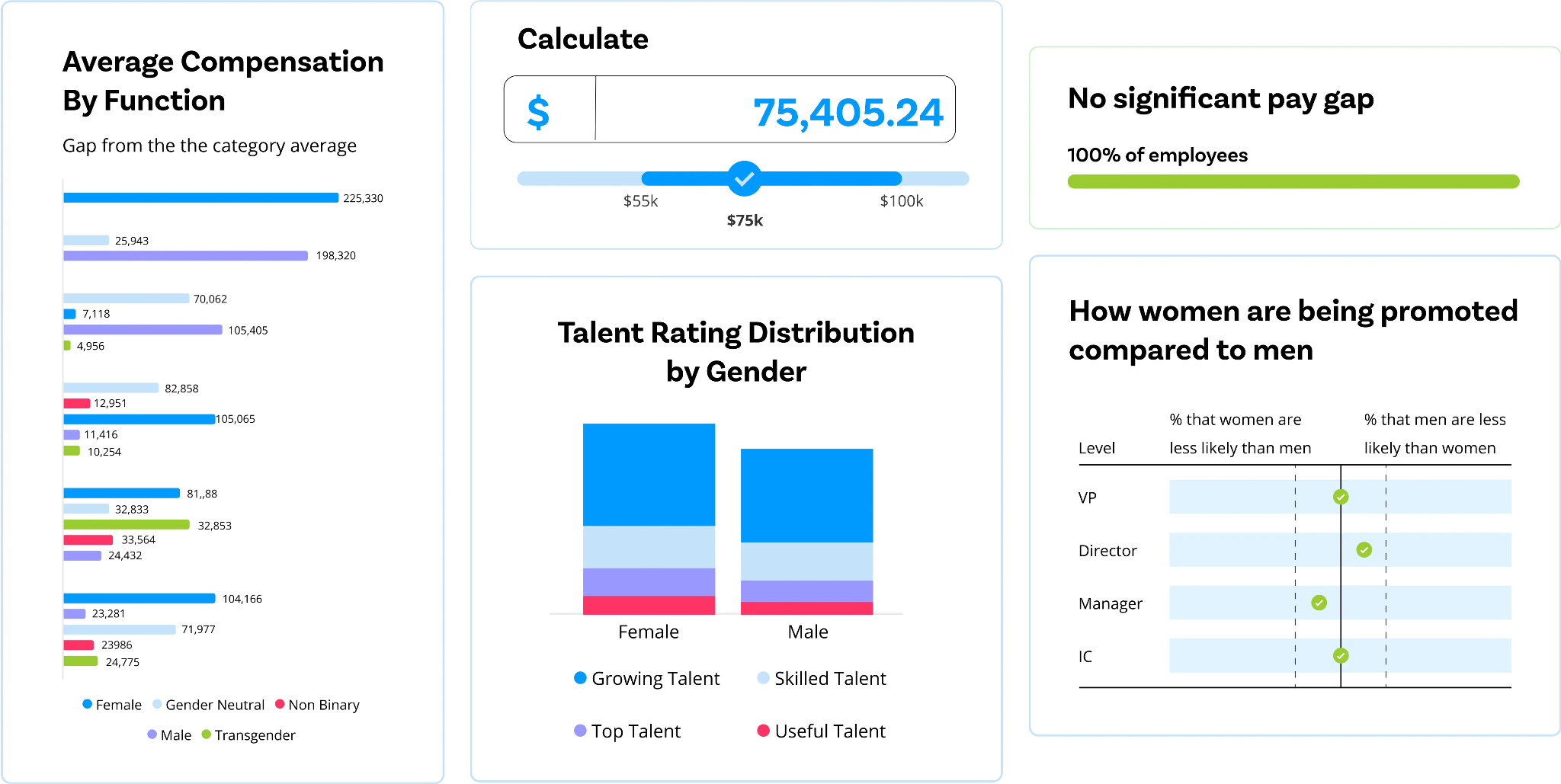
For over 8 years, Compport has been a purpose-built compensation management platform. It runs compensation cycles for 300+ companies across 37+ countries, covering 1.5M+ employees. Instead of treating pay equity as a separate audit, Compport runs it on the same platform as everything else that sets pay.
G2 rating: 4.7 / 5

Every module, such as compensation planning, long- and short-term incentives, total rewards, and pay equity management, is built on Compport. Nothing was acquired or bolted on, so pay equity, planning, budgeting, and approvals all use the same employee data, bands, and rules.

Now with CompportIQ, pay equity intelligence inside the cycle

CompportIQ is Compport's compensation intelligence layer. Six purpose-built agents are live today: Pay Equity, Benchmarking, Comp Planner, Budget Management, Calibration and Analytics. The Pay Equity agent works on your live Compport data, inside your bands, rules and approval chains, so there's nothing to export and nothing to re-import.

What it covers

Pay equity analysis

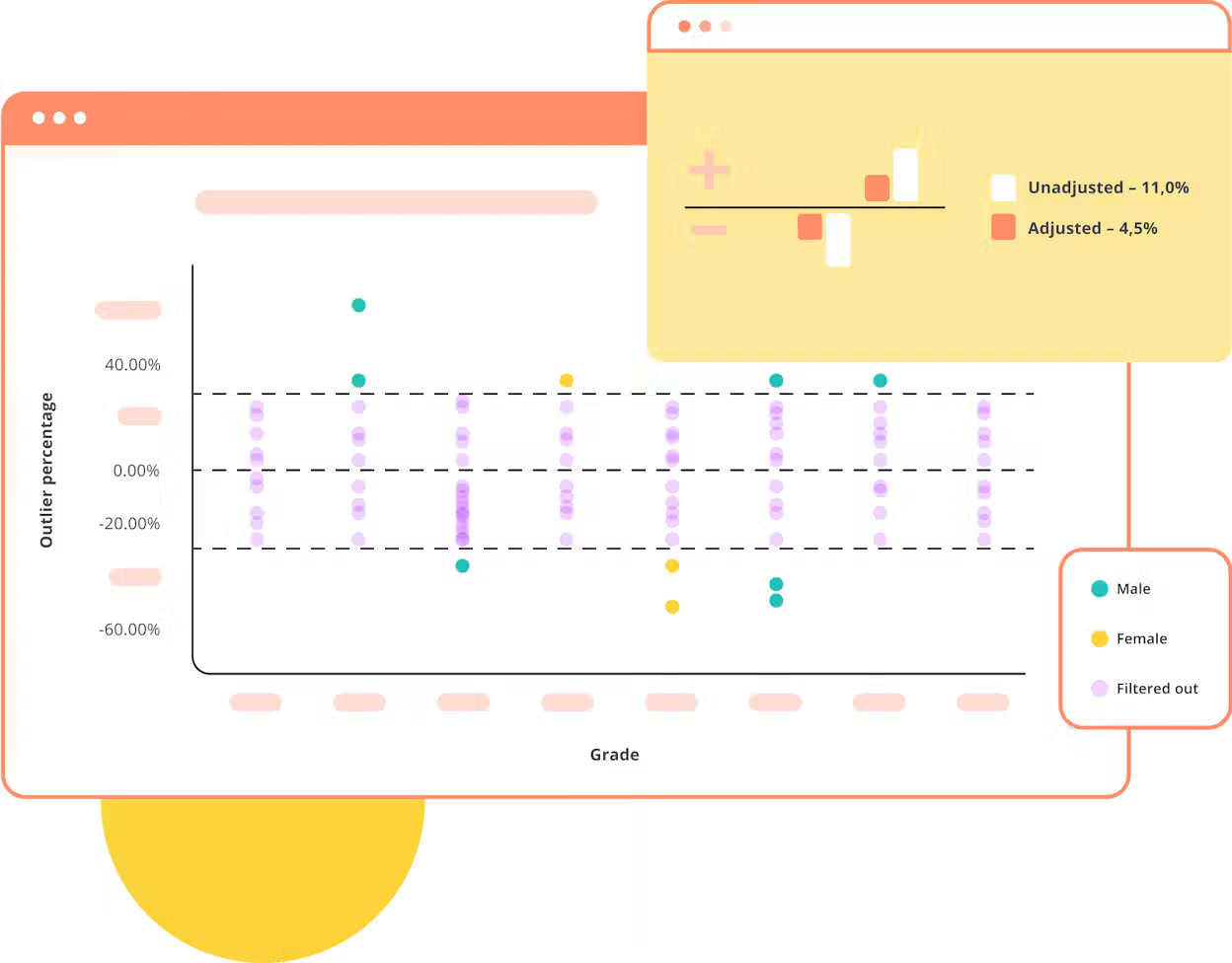
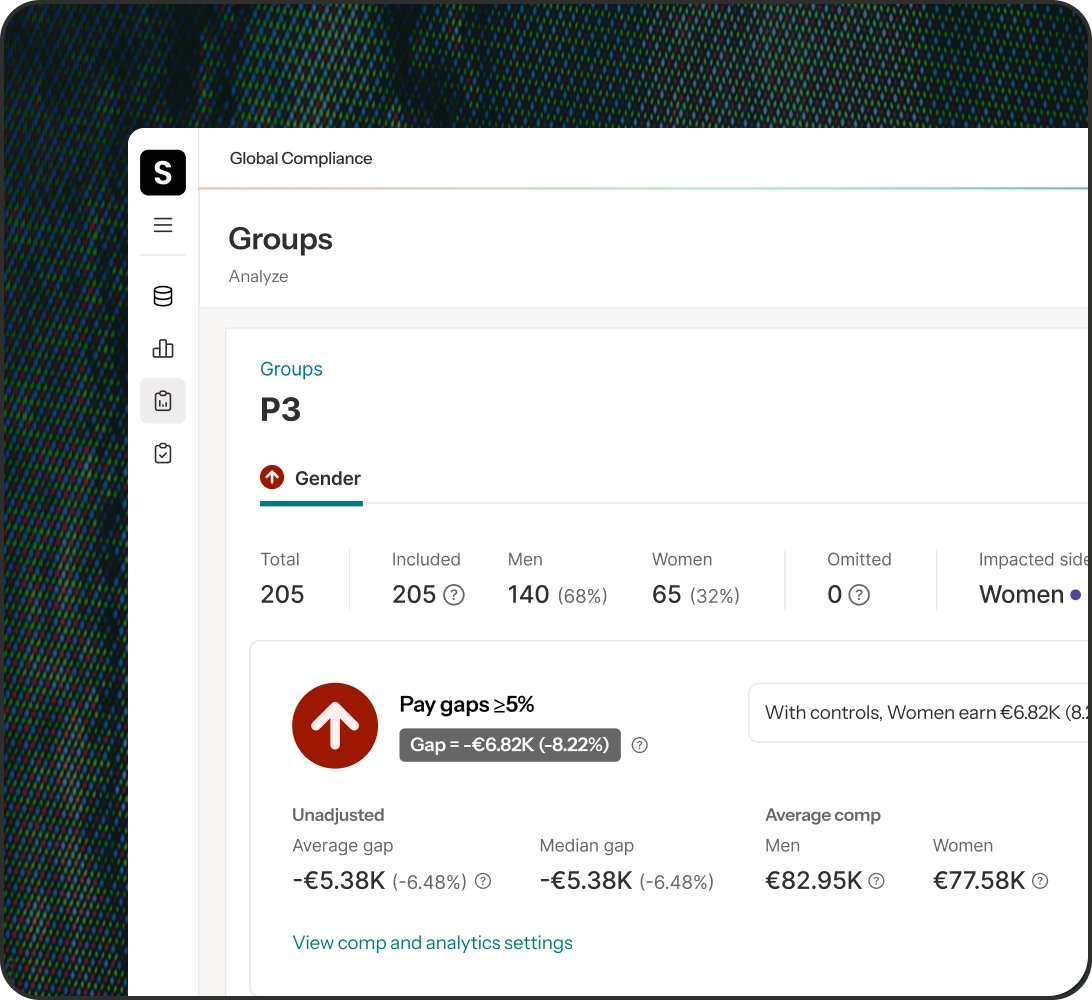
  • Audits on live data. See the adjusted gap, whether it is statistically significant, which cohorts are affected, how many employees are at risk, and whether the gap crosses a threshold such as ±5%.
  • Representation by level. See where groups sit in the hierarchy, a gap pay numbers alone don't show.
  • Reasonability checks. When a cohort's gap looks implausibly large, CompportIQ flags it as a likely data issue or uncontrolled factor instead of reporting it as a finding.
  • What is driving a gap. Drill into the factors behind a result, then export an auditor packet for review.
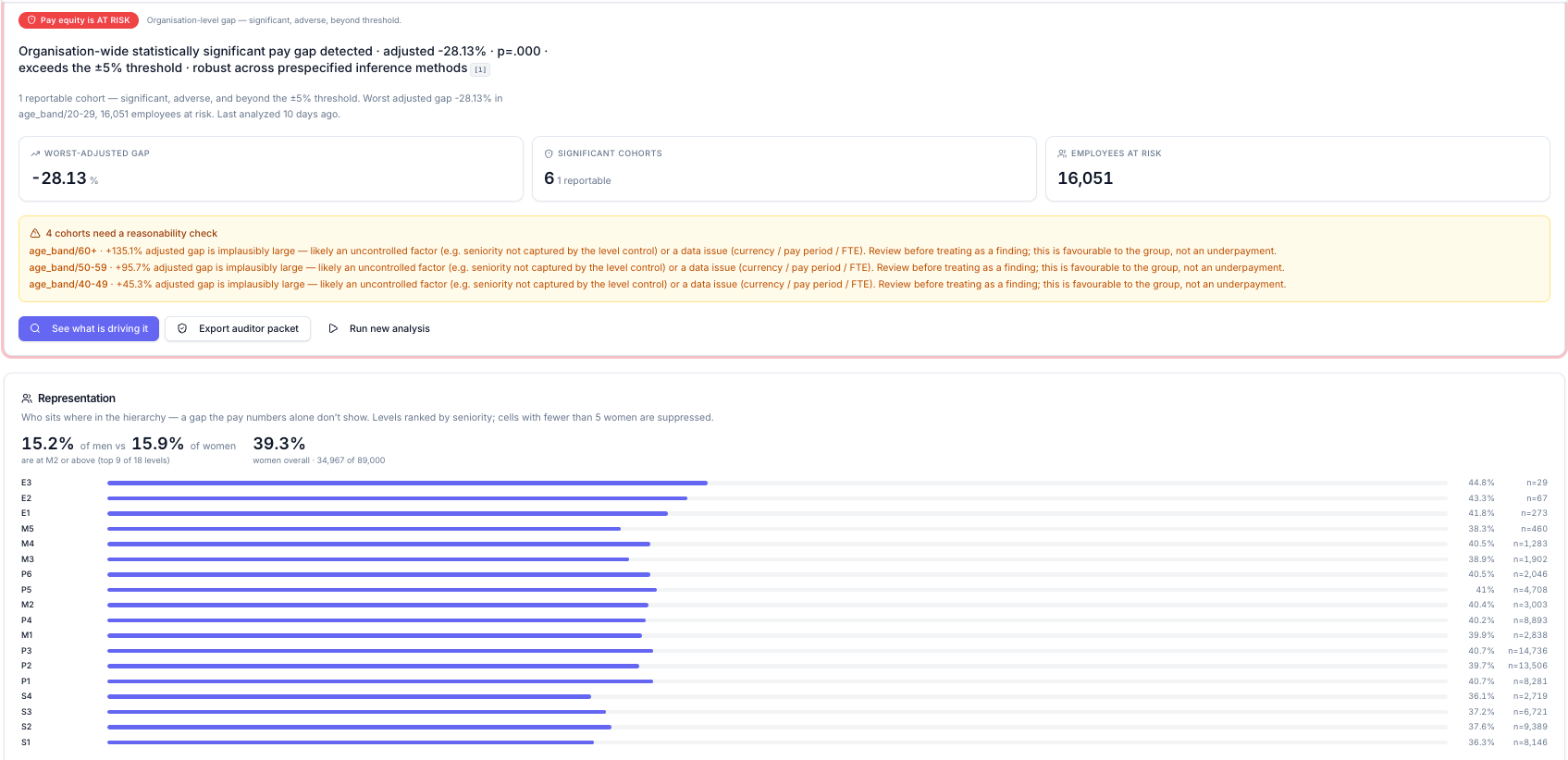
Pay equity analysis on live data, with cohort drill-downs and representation by level

Fixing gaps inside the cycle

  • Mid-cycle checks. See whether proposed increases would create or widen a gap, and which decisions to revisit before approvals close.
  • Remediation through the merit plan. Describe the goal, such as closing gaps for an acquired workforce over three years within the same budget, and CompportIQ builds the merit matrix and budget with the cost for each year.
  • Remediation after M&A. Harmonize two job architectures and run the equity and cost-to-remediate analysis in the same pass.
  • Pay-performance gaps. Find high performers paid below the midpoint and low performers paid above the maximum of the range by department, along with the cost to fix.

From audit to employee

Because everything sits on one platform, the steps connect. A gap is found in the pay equity analysis; the fix is built into the merit plan and budget; managers and comp leaders approve it in the existing workflow; and the adjusted pay flows into each employee's total rewards statement. There is no handoff between an audit tool and a comp tool.

Built for explainability and control

  • Numbers computed, not generated. Pay equity figures are derived from statistical tests, such as regression with declared control factors. The language model interprets the question and explains the result, so the same inputs always give the same answer.
  • People approve every decision. Recommendations go through your approval workflow, and every action is logged with the user, timestamp, and basis.
  • Role-aware access. Each agent works with the permissions of the person who asked, which are enforced at the data layer.
  • Your data stays yours. Customer data never trains any AI model, and each customer's data is kept separate.
  • Certified for US, EU, and global privacy rules. CompportIQ is certified and compliant with GDPR, CCPA, ISO 27001, ISO 42001, SOC 2, and India's DPDP Act.

Cons

  • A new tool compared to some of the legacy vendors in this list 

Compport integrates with

Workday ↗ SAP SuccessFactors ↗ Oracle HCM ↗ ADP UKG BambooHR Darwinbox and more

Want to know more about CompportIQ?

Download the one-pager: how it works, 10 practical applications across the compensation lifecycle, and how your data stays secure.

Download the one-pager →

2. PayAnalytics by Beqom

Source: PayAnalytics
G2 rating: 4.7 / 5

PayAnalytics started as a standalone pay equity tool. Beqom acquired it in 2023 and added it to its compensation suite, where it is now sold as PayAnalytics by Beqom. 

Beqom describes the product as built on its unified PaySuite. 

What it covers

  • Regression-based analysis of adjusted and unadjusted pay gaps
  • Remediation scenarios and their budget impact
  • Pay transparency reporting, including the EU directive
  • A Compensation Assistant that surfaces pay recommendations at decision points

Pros

  • Dedicated pay equity heritage, from a tool built specifically for gap analysis
  • Available inside a broader compensation suite for teams already on Beqom

Cons

  • The pay equity capability was acquired and added to the suite, so check how tightly it connects to Beqom's comp cycles in your setup

Beqom alternatives

Weighing Beqom against other options?

See our guide to the 5 best Beqom competitors for HR and comp teams, with pros, cons and what each one is best for.

See the Beqom alternatives →

3. Syndio

Source: Syndio
G2 rating: 4.5 / 5

Syndio built its business on pay equity analysis and now positions itself as a guide to pay decisions as they are made. While Trusaic centers on audits and filings, Syndio places greater emphasis on monitoring and in-workflow guidance.

What it covers

  • Ongoing pay equity monitoring and risk alerts
  • Syndi, its AI, which checks pay decisions against internal equity, market data, policy rules, and compliance requirements
  • Guidance delivered inside tools such as Workday, Slack, and Microsoft Teams
  • Pay transparency reporting, including the EU Pay Transparency Directive

Pros

  • Deep focus on pay equity
  • Guidance appears inside workflows teams already use

Cons

  • Agentic AI is being expanded through its June 2026 acquisition of Embrace.ai, so confirm which capabilities are live today
  • Comp cycles themselves still run in your HRIS or another tool

4. Pave
Source: Pave
G2 rating: 4.7 / 5

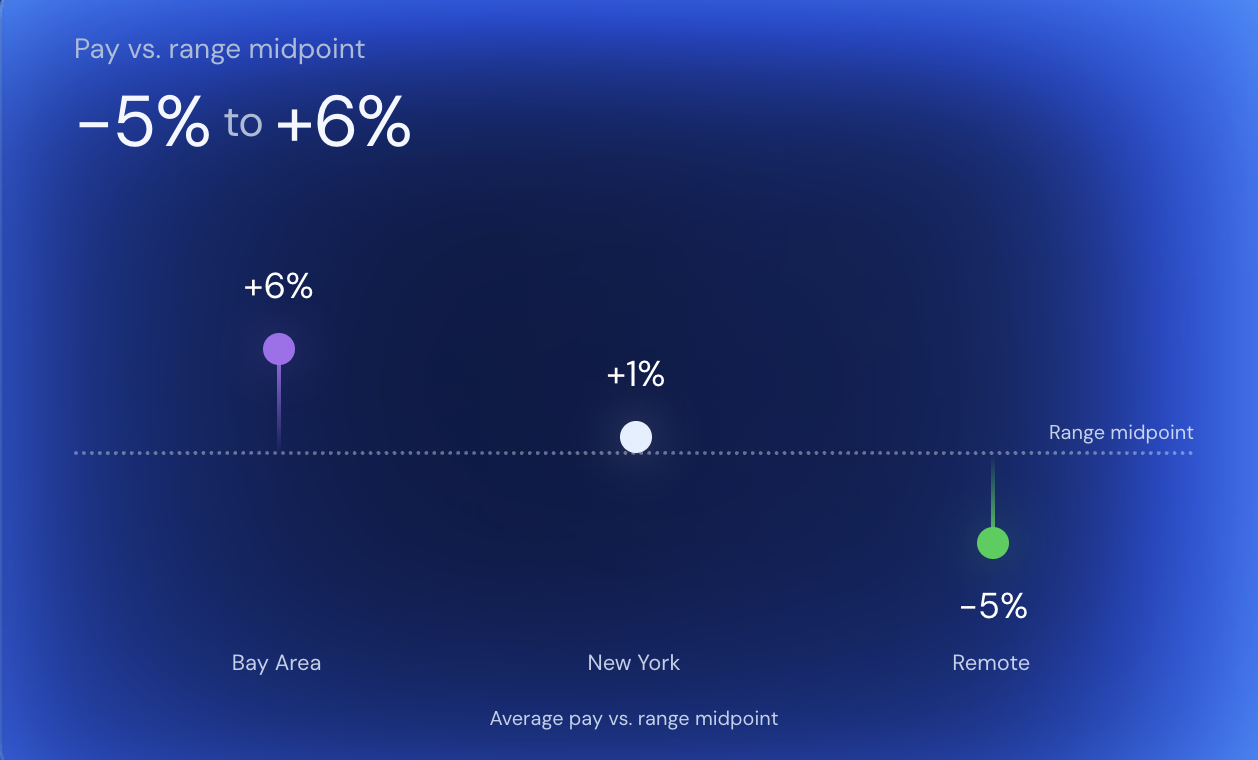
Pave is a compensation platform built around real-time market data from connected HRIS, ATS, and equity systems. It comes from the market side on pay equity, flagging risks during pricing and planning rather than running a standalone audit.

What it covers

  • Market benchmarking on real-time data
  • The Pave Agent, which flags pay equity issues, compression and retention risks
  • Out-of-band pay alerts
  • Comp planning workflows

Pros

  • Strong market data for teams that price roles often
  • Pay equity risks surface inside planning

Cons

  • Pave's product pages describe pay equity as a flagged risk rather than a dedicated statistical audit module, so confirm the depth of analysis in a demo

5. Payscale Ascent
Source: Payscale
G2 rating: 4.3 / 5

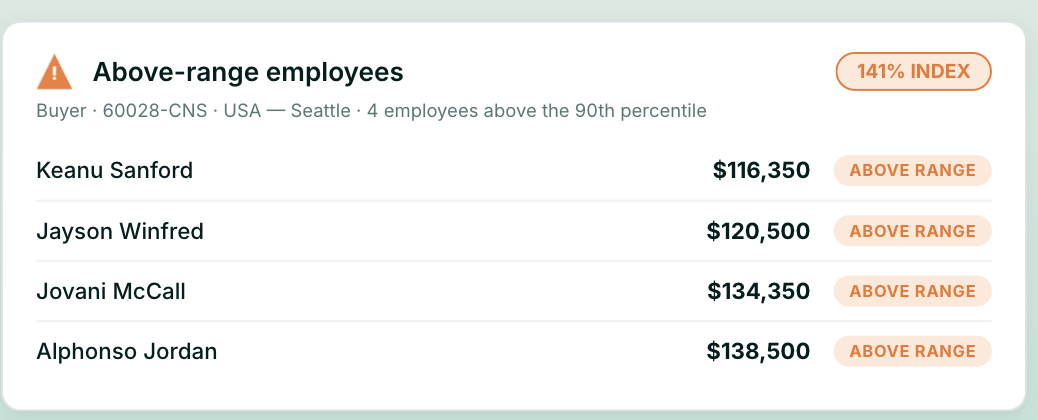
Payscale launched Ascent in September 2026 as an AI-first benchmarking platform. Pay equity analysis is a separate Payscale product, and merit planning runs in Paycycle. Payscale and Trusaic also announced a partnership in September 2025 on pay transparency and pay equity compliance, which is worth knowing if you are moving away from Trusaic.

What it covers

  • Benchmarking with AI-driven pricing, plain-language reporting and peer comparison (Ascent)
  • Controlled and uncontrolled pay equity analysis, remediation planning and continuous monitoring (Payscale pay equity)
  • Merit cycle planning (Paycycle)

Pros

  • Large review base and broad market data
  • Market data, pay equity and merit planning available from one vendor family

Cons

  • Benchmarking, pay equity and merit planning are separate products, so check how they connect in practice

Payscale alternatives

Comparing Payscale with other comp tools?

See our guide to the top 5 Payscale competitors for HR and comp teams, with pros, cons and what each one is best for.

See the Payscale alternatives →

How to choose the right Trusaic alternative

The deciding question is simple: where do you want pay gaps fixed?

  • If you only need a compliance-led audit, a dedicated pay equity tool such as PayAnalytics by Beqom covers it, or Trusaic itself may still fit.
  • If you want guidance inside your HRIS, Syndio delivers recommendations where managers already work.
  • If market data drives your comp decisions, Pave and Payscale Ascent flag equity risks alongside pricing.
  • If you want gaps found, fixed, and approved in one place, Compport + CompportIQ runs pay equity on the same platform as merit, bonus, LTI, and total rewards, so the fix is part of the cycle, not a separate project.

For comp teams moving off a standalone audit tool, the last option is the one that removes the handoff between finding a gap and fixing it.

Find your fit

What do you need most from a Trusaic alternative?

Compport vs Trusaic for pay equity

Decision criteriaCompport + CompportIQTrusaic
Where pay equity runsOn the same platform as merit, bonus, LTI, sales incentives and total rewardsIn dedicated pay equity and compliance products, with comp cycles run elsewhere
Fixing gapsRemediation built into the merit matrix and budget, then approved in your workflowR.O.S.A. simulates adjustments, which are then carried into your comp system
Comp planning coverageCompensation planning, bonus, LTI, sales incentives, total rewards statements and offersSalary Range Finder; no merit or bonus cycle workflows described on its product pages
Job architectureCompportIQ harmonizes job architectures and costs remediation in the same passJob evaluation offered through a 2026 partnership with gradar
AICompportIQ, with six agents live today, including Pay EquityTrusaic AI announced as coming to PayParity; confirm what is live
ExplainabilityReproducible statistics with declared controls, reasonability checks and an auditor packetStatistically based models with jurisdiction-specific reports
Security and privacyCertified and compliant with GDPR, CCPA, ISO 27001, ISO 42001, SOC 2 and DPDPSOC 2 Type II, with GDPR and CCPA referenced on its PayParity page
Peer reviews4.7 / 5 on G2 Pay equity product not yet reviewed on G2 or Capterra

Based on vendor product pages, review sites and news coverage as of November 2026.

What's next

Trusaic still has a real place for teams whose main need is a privileged, compliance-led audit. If you also need to fix gaps inside the cycle that sets pay, here is how the alternatives line up:

  • Compport + CompportIQ: pay equity, comp planning and total rewards on one platform, with gaps fixed through the merit plan
  • PayAnalytics by Beqom: dedicated pay gap analysis, now inside Beqom's suite
  • Syndio: pay equity monitoring and guidance inside existing workflows
  • Pave: equity risk flags inside market pricing and planning
  • Payscale Ascent: benchmarking, with pay equity as a separate product

When pay equity runs on the same data, rules, and approvals as the cycle that sets pay, every gap you find is one you can actually fix. And every decision comes with the reasoning to back it up. That's comp you can defend.

See how Compport finds and fixes pay gaps inside your comp cycle Book a demo →

FAQs

What are the best Trusaic alternatives for pay equity?

The strongest Trusaic alternatives are Compport + CompportIQ, PayAnalytics by Beqom, Syndio, Pave and Payscale Ascent. Compport suits teams that want pay equity on the same platform as comp planning, while Syndio focuses on monitoring and guidance and Pave on market-driven equity risk flags.

Is Trusaic a compensation management platform?

Trusaic focuses on pay equity audits, pay data reporting, salary ranges and ACA compliance. Its product pages don't describe merit, bonus, or budget cycle workflows, so most teams run their comp cycles in a separate system. Compport combines pay equity with compensation planning on one platform.

Can you run pay equity analysis during the merit cycle?

Yes, if pay equity runs on the same platform as your merit planning. With Compport + CompportIQ, you can check whether proposed increases would create or widen a gap before approvals close, and build fixes into the merit matrix and budget.

Which pay equity tools support the EU Pay Transparency Directive?

Several do, including Trusaic, Syndio and PayAnalytics by Beqom, which offer EU-focused reporting. Whatever tool you choose, look for reproducible statistics with declared control factors and audit-ready output, since the directive expects employers to explain and fix unjustified gaps.

Does Compport integrate with our HRIS?

Yes. Compport has native, bi-directional API integrations with Workday, SAP SuccessFactors, Oracle HCM, ADP, UKG, BambooHR and Darwinbox. Employee data flows in, planning and pay equity analysis happen in Compport, and approved changes sync back.

How does CompportIQ keep pay equity results explainable?

CompportIQ keeps AI and calculation apart. Pay equity figures come from tested statistical engines with declared control factors, and the AI explains the result rather than generating numbers. Every recommendation shows its basis, and every action is logged.

Which certifications should a pay equity vendor have?

Look for security certifications such as ISO 27001 and SOC 2, an AI management certification such as ISO 42001, and compliance with the privacy laws that apply to you, such as GDPR in the EU and CCPA in California. CompportIQ is certified and compliant with GDPR, CCPA, ISO 27001, ISO 42001, SOC 2, and India's DPDP Act.


Share this post

Frequently Asked Questions

Everything comp teams ask before switching from Workday.

5 Trusaic alternatives for pay equity management in 2027

Senem Birim, Co-founder & COO, Senior HR | Compport Author
Senem Birim
||
Published:
November 6, 2026
Senem Birim, Co-founder & COO, Senior HR | Compport Author
Senem Birim
||
Published:
November 6, 2026
About Author
Trusaic alternatives
Summarize with AI

Trusaic has built a strong reputation for compliance-led pay equity audits. PayParity, its pay equity product, analyzes gender, race, age, and other characteristics in a single model, models remediation through its R.O.S.A. engine, and produces reports for the EU Pay Transparency Directive, OFCCP audits, and EEO-1. It also works with your counsel so audits can stay under attorney-client privilege. For a lot of teams, that covers the hard part. Finding a pay gap, though, is only half the job. 

The fix happens in the next merit cycle, usually in a different system, and that is where many comp teams start looking at alternatives.

It doesn't help that there is little peer feedback to go on. One of the few public reviews of the platform, on Gartner Peer Insights, puts it plainly:

"The platform is not yet mature and is still being worked on heavily." - Human Resources Associate, IT services company, Gartner Peer Insights, July 2026

This guide looks at what teams run into with Trusaic, then compares five Trusaic alternatives on how they find, explain, and fix pay gaps.

Want to skip straight to the Trusaic alternatives?

See the alternatives ↓

You're reading this if

  • Your pay equity audit runs separately from your merit and bonus cycles
  • Remediation plans have to be rebuilt in another tool or a spreadsheet before anyone can approve them
  • You want pay equity checked before increases are approved, not after the cycle closes
  • US state pay transparency laws or the EU Pay Transparency Directive apply to you
  • You are weighing a dedicated audit tool against a comp platform with pay equity built in

Why do teams look for Trusaic alternatives?

We checked G2, Capterra, Gartner Peer Insights, and TrustRadius, along with Trusaic's own product pages, to see where teams run into limits. Three patterns stood out.

1. Pay equity findings sit outside the comp cycle

Trusaic's lineup covers pay equity audits (PayParity), Salary Range Finder, Global Pay Data Reporting, ACA Complete and TaxAdvantage, according to its homepage. None of these runs merit, bonus, or budget cycles, and the PayParity page doesn't describe compensation planning workflows. 

Job evaluation also comes from outside: Trusaic partnered with gradar in March 2026 to pair gradar's job evaluation with PayParity's analytics.

In practice, that means the remediation plan R.O.S.A. produces has to be carried into whatever system runs your comp cycle, then rebuilt, budgeted, and approved there. Every handoff adds time, and gives a gap another cycle to grow.

2. A platform that is still maturing, with integration delays

The verified reviewer on Gartner Peer Insights rated Trusaic well for ease of use and its team's expertise, but held back on platform maturity. They also described delays in approving some features and Workday integrations, including the Right to Request Information module, and felt these "could have been addressed better through communication and transparency."

"There are many improvements that could/should be made."
Source: Gartner Peer Insights

AI is part of the same picture. Trusaic announced in June 2025 that Trusaic AI was "coming soon" to PayParity, so it's worth confirming in a demo which AI capabilities are live today.

3. Few independent reviews to check before you buy

As of November 2026, Trusaic's pay equity product has no reviews on G2, Capterra, or TrustRadius, and three ratings on Gartner Peer Insights. That isn't a verdict on the product, but it makes it harder to hear from peers before committing to a tool that will hold some of your most sensitive data.

Why this matters for comp teams in the US and EU

Pay equity is no longer an annual project you can schedule around. On both sides of the Atlantic, the rules now require employers to identify gaps, explain them, fix them, and show their reasoning.

  • In the US, more than a dozen states now require salary ranges in job postings, making pay decisions more visible and more likely to be questioned. A gap that is found after approvals means another approval round and a harder conversation with employees.
  • In the EU, the deadline for member states to bring the Pay Transparency Directive into national law passed in June 2026, and the first gender pay gap reports for larger employers are due from June 2027. An audit that sits apart from the comp cycle means remediation lands a cycle late, just as reporting starts.

Watch our latest podcast on the EU Pay Transparency Directive implementation featuring Artila Metaliaj, Founder of Fair.

  • Across both, pay data is among the most sensitive data you hold. A tool that touches it has to comply with GDPR in Europe and the CCPA in California, which puts security and certifications on the shortlist, not just features.

How we evaluated

📊 Sources: G2, Capterra, Gartner Peer Insights, TrustRadius, vendor product pages and news coverage, as of November 2026.

✅ Criteria: statistical method and explainability, data quality checks, remediation modeling, pay equity checks inside the comp cycle, AI status (live or coming), HRIS integration, and support for US and EU pay transparency rules.

🚫 Excluded: broad HCM suites and consultancy-only audit services.

5 Trusaic alternatives at a glance

ToolHow it works as a Trusaic alternativeBest forG2 rating
Compport + CompportIQ
Editor's pick
Runs pay equity analysis on the same platform as merit, bonus, LTI and total rewards, so gaps are found and fixed in one cycleComp teams that want pay equity checked and fixed while pay decisions are being made4.7 / 5
PayAnalytics by BeqomRegression-based pay gap analysis and remediation, now sold within Beqom's compensation suiteTeams already on Beqom, or those that want a dedicated pay equity tool4.7 / 5
SyndioPay equity monitoring plus pay guidance delivered inside HRIS and collaboration toolsEnterprises focused on ongoing pay equity monitoring and governance4.5 / 5
PaveFlags pay equity, compression and out-of-band risks inside market pricing and planningMarket-driven comp teams that price roles on real-time data4.7 / 5
Payscale AscentBenchmarking platform, with pay equity analysis available as a separate Payscale productTeams that want market data and pay equity from one vendor family4.3 / 5

G2 ratings as of November 2026.

The 5 best Trusaic alternatives for pay equity management

1. Compport + CompportIQ

For over 8 years, Compport has been a purpose-built compensation management platform. It runs compensation cycles for 300+ companies across 37+ countries, covering 1.5M+ employees. Instead of treating pay equity as a separate audit, Compport runs it on the same platform as everything else that sets pay.

G2 rating: 4.7 / 5

Every module, such as compensation planning, long- and short-term incentives, total rewards, and pay equity management, is built on Compport. Nothing was acquired or bolted on, so pay equity, planning, budgeting, and approvals all use the same employee data, bands, and rules.

Now with CompportIQ, pay equity intelligence inside the cycle

CompportIQ is Compport's compensation intelligence layer. Six purpose-built agents are live today: Pay Equity, Benchmarking, Comp Planner, Budget Management, Calibration and Analytics. The Pay Equity agent works on your live Compport data, inside your bands, rules and approval chains, so there's nothing to export and nothing to re-import.

What it covers

Pay equity analysis

  • Audits on live data. See the adjusted gap, whether it is statistically significant, which cohorts are affected, how many employees are at risk, and whether the gap crosses a threshold such as ±5%.
  • Representation by level. See where groups sit in the hierarchy, a gap pay numbers alone don't show.
  • Reasonability checks. When a cohort's gap looks implausibly large, CompportIQ flags it as a likely data issue or uncontrolled factor instead of reporting it as a finding.
  • What is driving a gap. Drill into the factors behind a result, then export an auditor packet for review.
Pay equity analysis on live data, with cohort drill-downs and representation by level

Fixing gaps inside the cycle

  • Mid-cycle checks. See whether proposed increases would create or widen a gap, and which decisions to revisit before approvals close.
  • Remediation through the merit plan. Describe the goal, such as closing gaps for an acquired workforce over three years within the same budget, and CompportIQ builds the merit matrix and budget with the cost for each year.
  • Remediation after M&A. Harmonize two job architectures and run the equity and cost-to-remediate analysis in the same pass.
  • Pay-performance gaps. Find high performers paid below the midpoint and low performers paid above the maximum of the range by department, along with the cost to fix.

From audit to employee

Because everything sits on one platform, the steps connect. A gap is found in the pay equity analysis; the fix is built into the merit plan and budget; managers and comp leaders approve it in the existing workflow; and the adjusted pay flows into each employee's total rewards statement. There is no handoff between an audit tool and a comp tool.

Built for explainability and control

  • Numbers computed, not generated. Pay equity figures are derived from statistical tests, such as regression with declared control factors. The language model interprets the question and explains the result, so the same inputs always give the same answer.
  • People approve every decision. Recommendations go through your approval workflow, and every action is logged with the user, timestamp, and basis.
  • Role-aware access. Each agent works with the permissions of the person who asked, which are enforced at the data layer.
  • Your data stays yours. Customer data never trains any AI model, and each customer's data is kept separate.
  • Certified for US, EU, and global privacy rules. CompportIQ is certified and compliant with GDPR, CCPA, ISO 27001, ISO 42001, SOC 2, and India's DPDP Act.

Cons

  • A new tool compared to some of the legacy vendors in this list 

Compport integrates with

Workday ↗ SAP SuccessFactors ↗ Oracle HCM ↗ ADP UKG BambooHR Darwinbox and more

Want to know more about CompportIQ?

Download the one-pager: how it works, 10 practical applications across the compensation lifecycle, and how your data stays secure.

Download the one-pager →

2. PayAnalytics by Beqom

Source: PayAnalytics
G2 rating: 4.7 / 5

PayAnalytics started as a standalone pay equity tool. Beqom acquired it in 2023 and added it to its compensation suite, where it is now sold as PayAnalytics by Beqom. 

Beqom describes the product as built on its unified PaySuite. 

What it covers

  • Regression-based analysis of adjusted and unadjusted pay gaps
  • Remediation scenarios and their budget impact
  • Pay transparency reporting, including the EU directive
  • A Compensation Assistant that surfaces pay recommendations at decision points

Pros

  • Dedicated pay equity heritage, from a tool built specifically for gap analysis
  • Available inside a broader compensation suite for teams already on Beqom

Cons

  • The pay equity capability was acquired and added to the suite, so check how tightly it connects to Beqom's comp cycles in your setup

Beqom alternatives

Weighing Beqom against other options?

See our guide to the 5 best Beqom competitors for HR and comp teams, with pros, cons and what each one is best for.

See the Beqom alternatives →

3. Syndio

Source: Syndio
G2 rating: 4.5 / 5

Syndio built its business on pay equity analysis and now positions itself as a guide to pay decisions as they are made. While Trusaic centers on audits and filings, Syndio places greater emphasis on monitoring and in-workflow guidance.

What it covers

  • Ongoing pay equity monitoring and risk alerts
  • Syndi, its AI, which checks pay decisions against internal equity, market data, policy rules, and compliance requirements
  • Guidance delivered inside tools such as Workday, Slack, and Microsoft Teams
  • Pay transparency reporting, including the EU Pay Transparency Directive

Pros

  • Deep focus on pay equity
  • Guidance appears inside workflows teams already use

Cons

  • Agentic AI is being expanded through its June 2026 acquisition of Embrace.ai, so confirm which capabilities are live today
  • Comp cycles themselves still run in your HRIS or another tool

4. Pave

Source: Pave
G2 rating: 4.7 / 5

Pave is a compensation platform built around real-time market data from connected HRIS, ATS, and equity systems. It comes from the market side on pay equity, flagging risks during pricing and planning rather than running a standalone audit.

What it covers

  • Market benchmarking on real-time data
  • The Pave Agent, which flags pay equity issues, compression and retention risks
  • Out-of-band pay alerts
  • Comp planning workflows

Pros

  • Strong market data for teams that price roles often
  • Pay equity risks surface inside planning

Cons

  • Pave's product pages describe pay equity as a flagged risk rather than a dedicated statistical audit module, so confirm the depth of analysis in a demo

5. Payscale Ascent

Source: Payscale
G2 rating: 4.3 / 5

Payscale launched Ascent in September 2026 as an AI-first benchmarking platform. Pay equity analysis is a separate Payscale product, and merit planning runs in Paycycle. Payscale and Trusaic also announced a partnership in September 2025 on pay transparency and pay equity compliance, which is worth knowing if you are moving away from Trusaic.

What it covers

  • Benchmarking with AI-driven pricing, plain-language reporting and peer comparison (Ascent)
  • Controlled and uncontrolled pay equity analysis, remediation planning and continuous monitoring (Payscale pay equity)
  • Merit cycle planning (Paycycle)

Pros

  • Large review base and broad market data
  • Market data, pay equity and merit planning available from one vendor family

Cons

  • Benchmarking, pay equity and merit planning are separate products, so check how they connect in practice

Payscale alternatives

Comparing Payscale with other comp tools?

See our guide to the top 5 Payscale competitors for HR and comp teams, with pros, cons and what each one is best for.

See the Payscale alternatives →

How to choose the right Trusaic alternative

The deciding question is simple: where do you want pay gaps fixed?

  • If you only need a compliance-led audit, a dedicated pay equity tool such as PayAnalytics by Beqom covers it, or Trusaic itself may still fit.
  • If you want guidance inside your HRIS, Syndio delivers recommendations where managers already work.
  • If market data drives your comp decisions, Pave and Payscale Ascent flag equity risks alongside pricing.
  • If you want gaps found, fixed, and approved in one place, Compport + CompportIQ runs pay equity on the same platform as merit, bonus, LTI, and total rewards, so the fix is part of the cycle, not a separate project.

For comp teams moving off a standalone audit tool, the last option is the one that removes the handoff between finding a gap and fixing it.

Find your fit

What do you need most from a Trusaic alternative?

Compport vs Trusaic for pay equity

Decision criteriaCompport + CompportIQTrusaic
Where pay equity runsOn the same platform as merit, bonus, LTI, sales incentives and total rewardsIn dedicated pay equity and compliance products, with comp cycles run elsewhere
Fixing gapsRemediation built into the merit matrix and budget, then approved in your workflowR.O.S.A. simulates adjustments, which are then carried into your comp system
Comp planning coverageCompensation planning, bonus, LTI, sales incentives, total rewards statements and offersSalary Range Finder; no merit or bonus cycle workflows described on its product pages
Job architectureCompportIQ harmonizes job architectures and costs remediation in the same passJob evaluation offered through a 2026 partnership with gradar
AICompportIQ, with six agents live today, including Pay EquityTrusaic AI announced as coming to PayParity; confirm what is live
ExplainabilityReproducible statistics with declared controls, reasonability checks and an auditor packetStatistically based models with jurisdiction-specific reports
Security and privacyCertified and compliant with GDPR, CCPA, ISO 27001, ISO 42001, SOC 2 and DPDPSOC 2 Type II, with GDPR and CCPA referenced on its PayParity page
Peer reviews4.7 / 5 on G2 Pay equity product not yet reviewed on G2 or Capterra

Based on vendor product pages, review sites and news coverage as of November 2026.

What's next

Trusaic still has a real place for teams whose main need is a privileged, compliance-led audit. If you also need to fix gaps inside the cycle that sets pay, here is how the alternatives line up:

  • Compport + CompportIQ: pay equity, comp planning and total rewards on one platform, with gaps fixed through the merit plan
  • PayAnalytics by Beqom: dedicated pay gap analysis, now inside Beqom's suite
  • Syndio: pay equity monitoring and guidance inside existing workflows
  • Pave: equity risk flags inside market pricing and planning
  • Payscale Ascent: benchmarking, with pay equity as a separate product

When pay equity runs on the same data, rules, and approvals as the cycle that sets pay, every gap you find is one you can actually fix. And every decision comes with the reasoning to back it up. That's comp you can defend.

See how Compport finds and fixes pay gaps inside your comp cycle Book a demo →

FAQs

What are the best Trusaic alternatives for pay equity?

The strongest Trusaic alternatives are Compport + CompportIQ, PayAnalytics by Beqom, Syndio, Pave and Payscale Ascent. Compport suits teams that want pay equity on the same platform as comp planning, while Syndio focuses on monitoring and guidance and Pave on market-driven equity risk flags.

Is Trusaic a compensation management platform?

Trusaic focuses on pay equity audits, pay data reporting, salary ranges and ACA compliance. Its product pages don't describe merit, bonus, or budget cycle workflows, so most teams run their comp cycles in a separate system. Compport combines pay equity with compensation planning on one platform.

Can you run pay equity analysis during the merit cycle?

Yes, if pay equity runs on the same platform as your merit planning. With Compport + CompportIQ, you can check whether proposed increases would create or widen a gap before approvals close, and build fixes into the merit matrix and budget.

Which pay equity tools support the EU Pay Transparency Directive?

Several do, including Trusaic, Syndio and PayAnalytics by Beqom, which offer EU-focused reporting. Whatever tool you choose, look for reproducible statistics with declared control factors and audit-ready output, since the directive expects employers to explain and fix unjustified gaps.

Does Compport integrate with our HRIS?

Yes. Compport has native, bi-directional API integrations with Workday, SAP SuccessFactors, Oracle HCM, ADP, UKG, BambooHR and Darwinbox. Employee data flows in, planning and pay equity analysis happen in Compport, and approved changes sync back.

How does CompportIQ keep pay equity results explainable?

CompportIQ keeps AI and calculation apart. Pay equity figures come from tested statistical engines with declared control factors, and the AI explains the result rather than generating numbers. Every recommendation shows its basis, and every action is logged.

Which certifications should a pay equity vendor have?

Look for security certifications such as ISO 27001 and SOC 2, an AI management certification such as ISO 42001, and compliance with the privacy laws that apply to you, such as GDPR in the EU and CCPA in California. CompportIQ is certified and compliant with GDPR, CCPA, ISO 27001, ISO 42001, SOC 2, and India's DPDP Act.

Share this post

Recommended articles

Download guides used by 5,000+ comp & rewards professionals.
Trusaic alternatives
November 6, 2026

5 Trusaic alternatives for pay equity management in 2027

Read More
Is Your Comp Function Ready for Agentic AI? Get Your Score
November 4, 2026

Is your compensation function ready for agentic AI?

Read More
Compensation use cases
October 26, 2026

Agentic AI in compensation: Use cases for every comp professional

Read More
LETS Talk

Learn how Compport can help your team

Get a demo